Gas at the pump
Watch
$4.27/gal
down from $4.48/gal a month ago, near its highest in the past year.
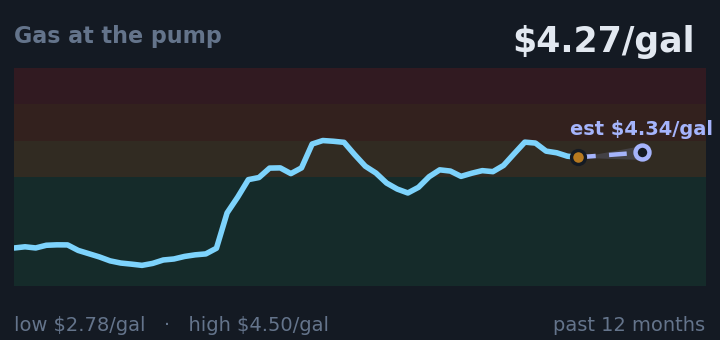
Gas at $4.27 per gallon is what you pay each day to get to work, buy groceries, or visit family; when this rises, it eats directly into household budgets.
Connects to: New Zealand Prime Minister After Election; Democrats' Core Four Senate Sweep; Ulf Kristersson Next Swedish Prime Minister
Source: FRED
10-year Treasury rate
Warning
5.05%
down from 5.24% a month ago, in the middle of its range for the past year.
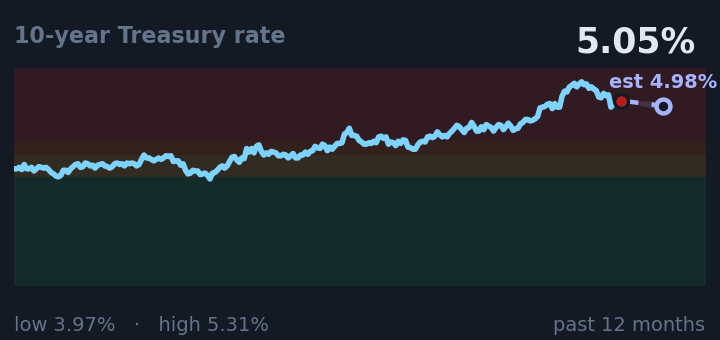
The 10-year Treasury rate at 4.99% reflects how investors view the government's ability to manage its debt; when this rises, it pressures interest rates throughout the economy.
Source: FRED
30-year Treasury rate
Warning
5.37%
down from 5.56% a month ago, in the middle of its range for the past year.
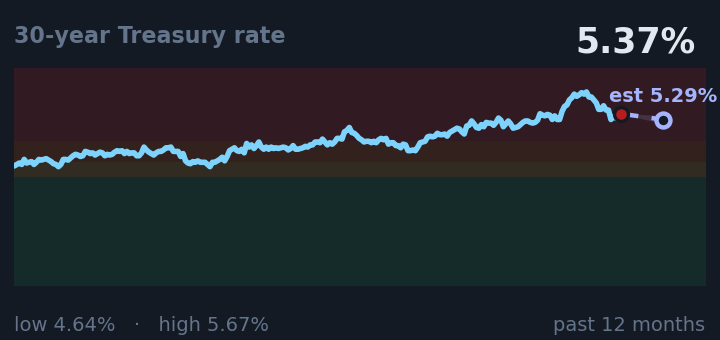
The 30-year Treasury rate at 5.30% is the interest rate the government pays to borrow money; when this stays high, it makes mortgages and car loans more expensive because banks use it to price their lending.
Source: FRED
30-year mortgage rate
Warning
7.24%
up from 7.03% a month ago, near its highest in the past year.
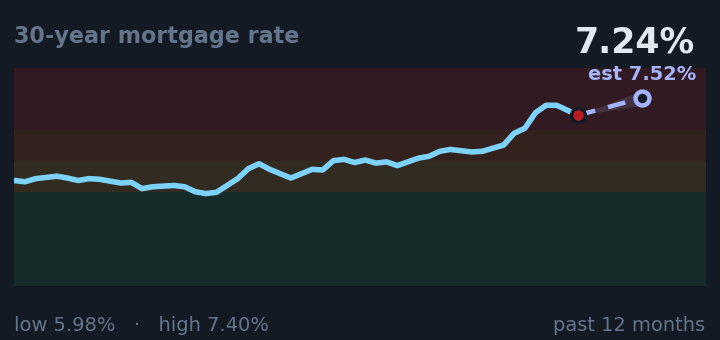
When you are considering whether to refinance a mortgage or buy a home, a 7.32% rate determines how much your monthly payment costs and is tied to how banks price lending risk.
Source: FRED
Consumer sentiment
Warning
48
down from 52 a month ago, in the middle of its range for the past year.
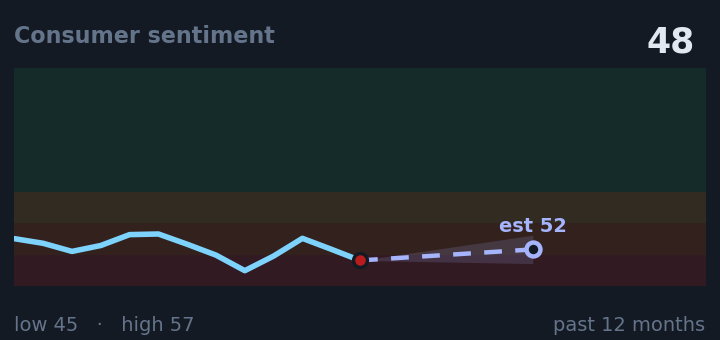
Consumer sentiment at 48 measures how households rate their own financial prospects; at this level, it signals people are cautious about spending and more likely to save or cut back on purchases.
Connects to: New Zealand Prime Minister After Election; Democrats' Core Four Senate Sweep; Ulf Kristersson Next Swedish Prime Minister
Source: FRED
Market volatility (VIX)
Normal
16.9
up from 16.1 a month ago, in the middle of its range for the past year.
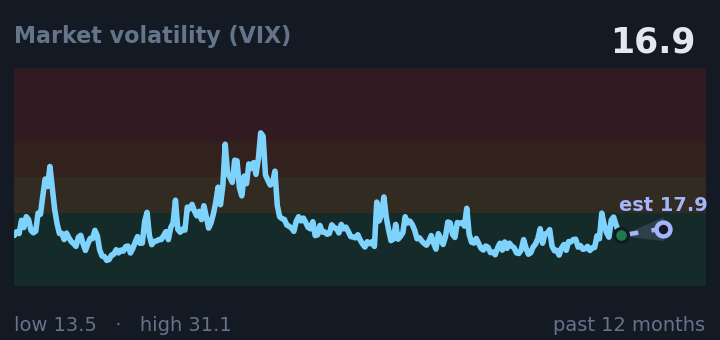
Market volatility at 17.5 reflects how nervous investors are about sudden price swings; when this rises sharply, stock portfolios and retirement accounts lose value.
Source: FRED
People filing for unemployment
Normal
194k
down from 198k a month ago, near its lowest in the past year.
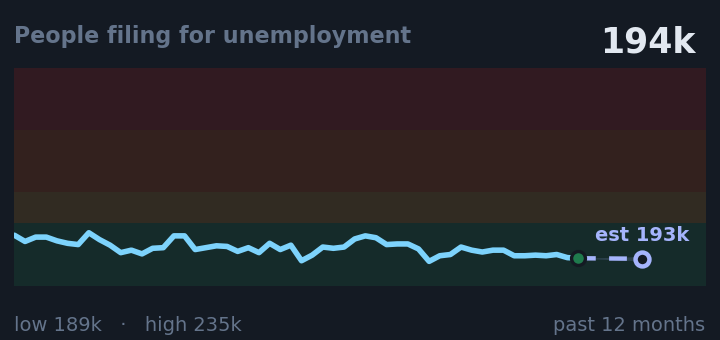
Jobless claims at 194,000 mean that fewer people are filing for unemployment benefits; this low number signals employers are confident and are not laying off workers in large numbers.
Source: FRED
Yield curve (10yr minus 2yr)
Caution
+0.37%
about the same as a month ago, in the middle of its range for the past year.
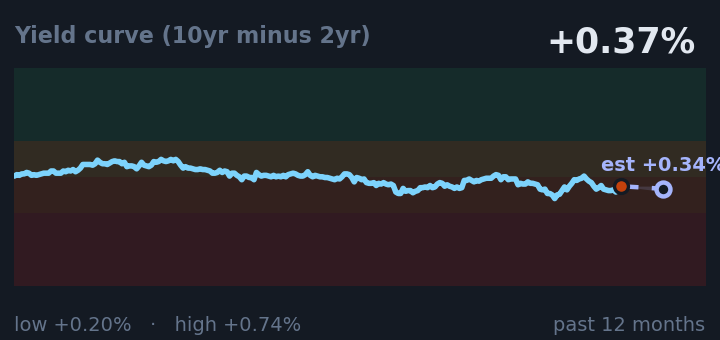
The yield curve at 0.38% measures the gap between short-term and long-term interest rates; when this gap narrows, it reflects shifting expectations about the economy's direction.
Source: FRED