Market volatility (VIX)
Normal
19.0
up from 14.2 a month ago, in the middle of its range for the past year.
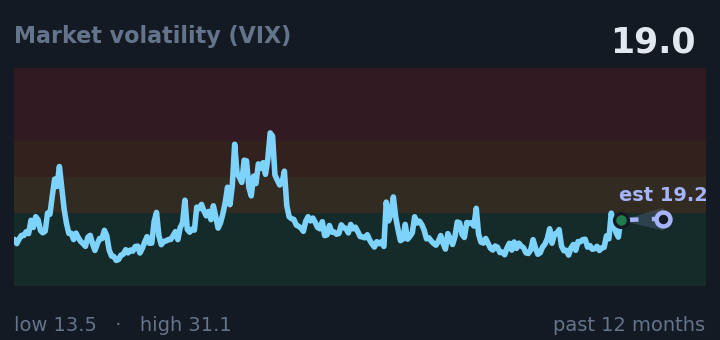
Rising volatility signals investor fear and often precedes economic slowdowns that affect job security and investment losses.
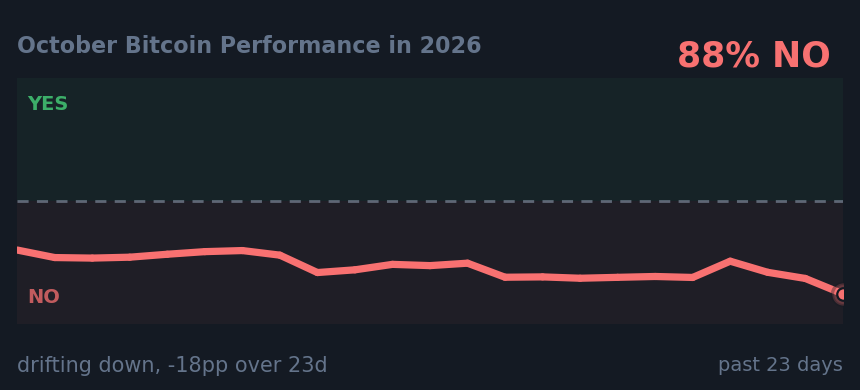
Connects to: October Bitcoin Performance in 2026
Source: FRED
30-year mortgage rate
Warning
7.32%
up from 6.95% a month ago, near its highest in the past year.
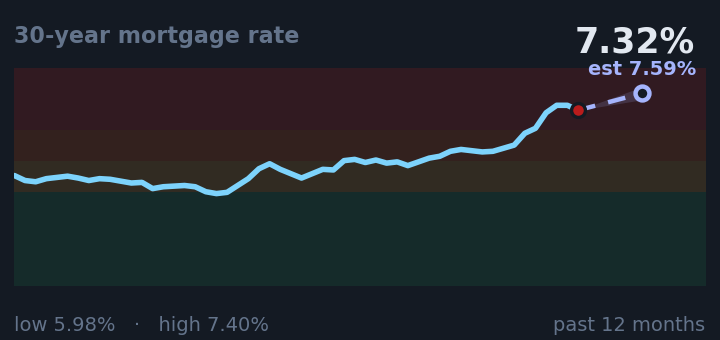
Mortgage rates at 7.32% directly set the monthly cost of borrowing for a home, and higher rates price out more households from buying.
Source: FRED
Consumer sentiment
Warning
48
down from 52 a month ago, in the middle of its range for the past year.
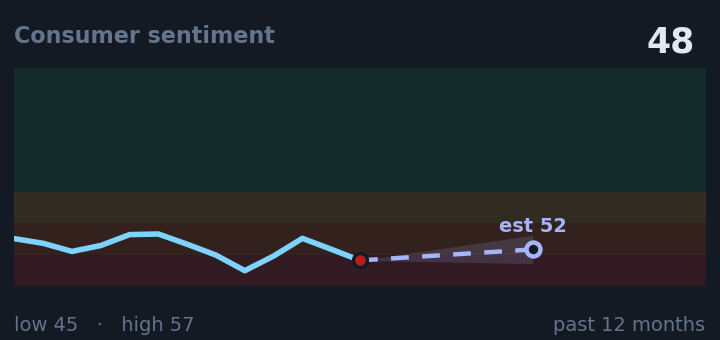
Consumer sentiment at 48 reflects whether households feel confident spending and taking on debt, and lower sentiment predicts less spending and fewer jobs.
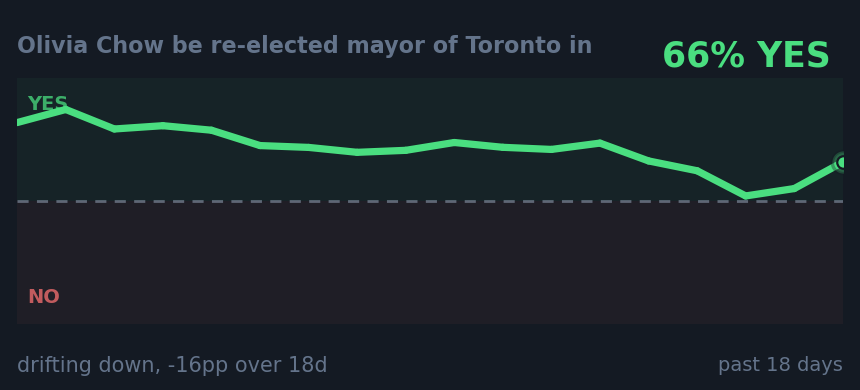
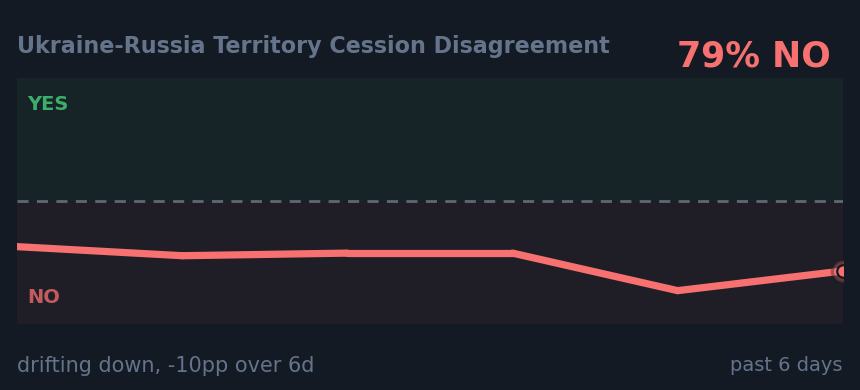
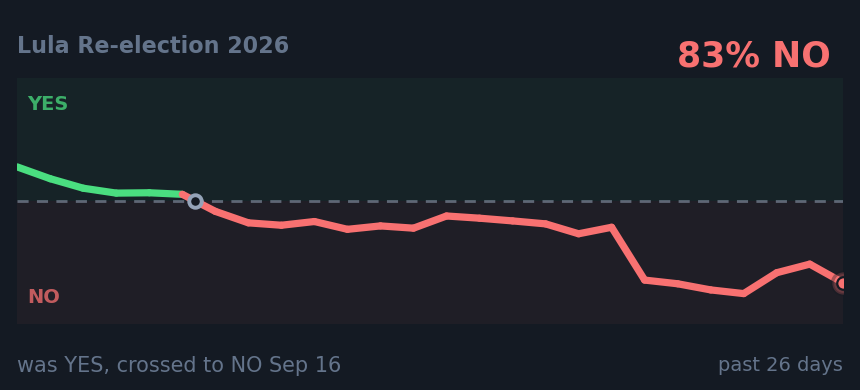
Connects to: Olivia Chow Toronto Mayoral Re-election 2026; Ukraine-Russia Territory Cession Disagreement; Lula Re-election 2026
Source: FRED
Yield curve (10yr minus 2yr)
Caution
+0.31%
up from +0.26% a month ago, in the middle of its range for the past year.
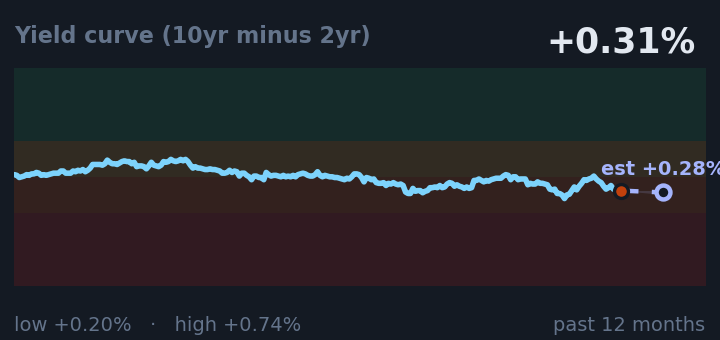
A flattening yield curve, measured at 0.31%, historically precedes recessions and signals that long-term economic growth is in question.
Source: FRED
Gas at the pump
Watch
$4.28/gal
about the same as a month ago, near its highest in the past year.
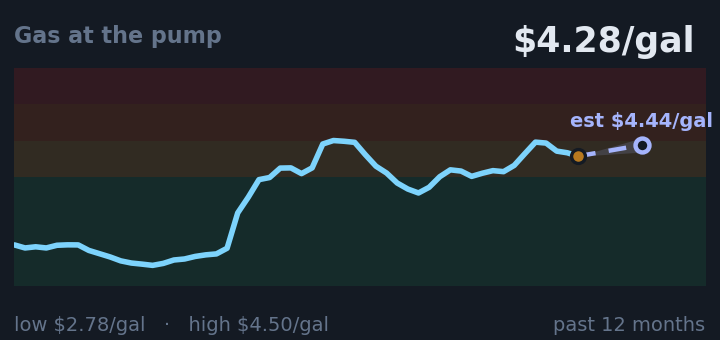
Gas at $4.28 per gallon directly hits household budgets for commuting, shopping, and transportation.
Connects to: Olivia Chow Toronto Mayoral Re-election 2026; Ukraine-Russia Territory Cession Disagreement; Lula Re-election 2026
Source: FRED
People filing for unemployment
Normal
194k
down from 198k a month ago, near its lowest in the past year.
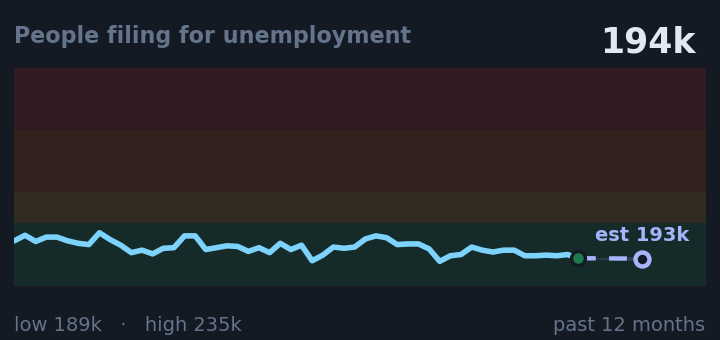
Jobless claims at 194,000 measure how many people are newly out of work each week; lower numbers suggest the labor market is holding steady.
Source: FRED
10-year Treasury rate
Warning
4.96%
about the same as a month ago, in the middle of its range for the past year.
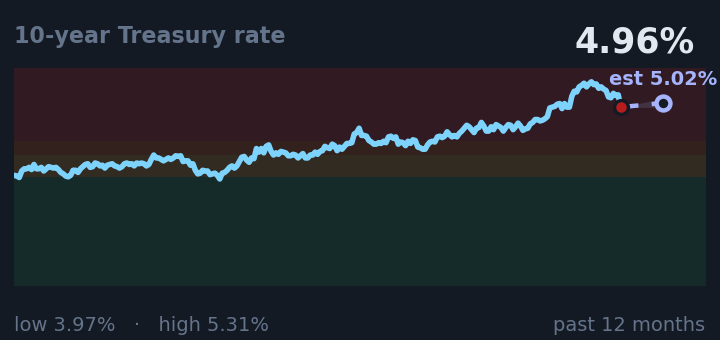
The 10-year Treasury rate at 4.96% is the baseline for government and mortgage borrowing costs, and rising rates squeeze household and government budgets.
Connects to: October Bitcoin Performance in 2026
Source: FRED
30-year Treasury rate
Warning
5.29%
about the same as a month ago, in the middle of its range for the past year.
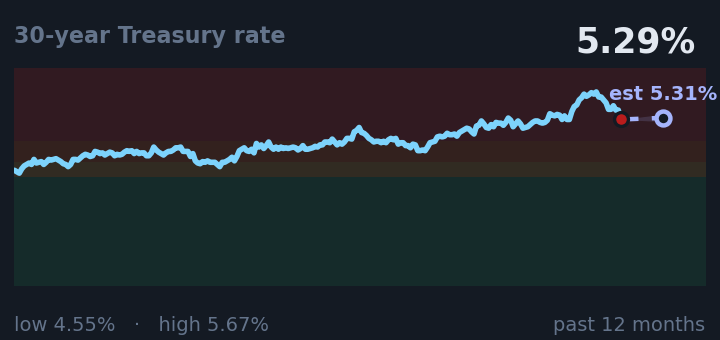
The 30-year Treasury rate at 5.29% reflects long-term fiscal pressures, and elevated rates drive up mortgage costs and strain household budgets.
Connects to: October Bitcoin Performance in 2026
Source: FRED