30-year mortgage rate
Warning
7.40%
up from 6.76% a month ago, near its highest in the past year.
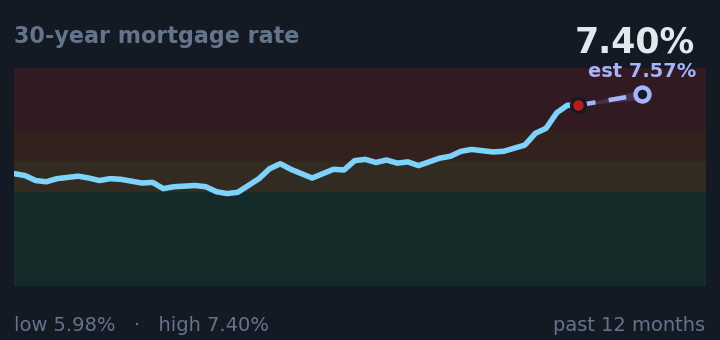
The 30-year mortgage rate sets the monthly payment on most home loans, so when it climbs, buying or refinancing a house costs more each month.
Source: FRED
Market volatility (VIX)
Normal
18.4
up from 14.8 a month ago, in the middle of its range for the past year.
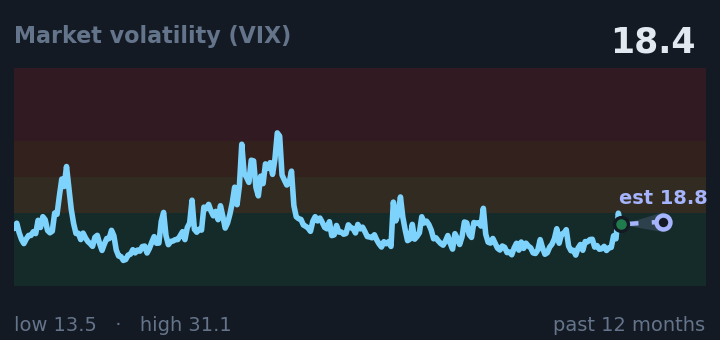
Market volatility measures how sharply investors expect stock prices to swing, and a jump in it means retirement and savings accounts are likely to move more.
Connects to: OpenAI Lead Bank IPO
Source: FRED
Consumer sentiment
Caution
52
down from 55 a month ago, in the middle of its range for the past year.
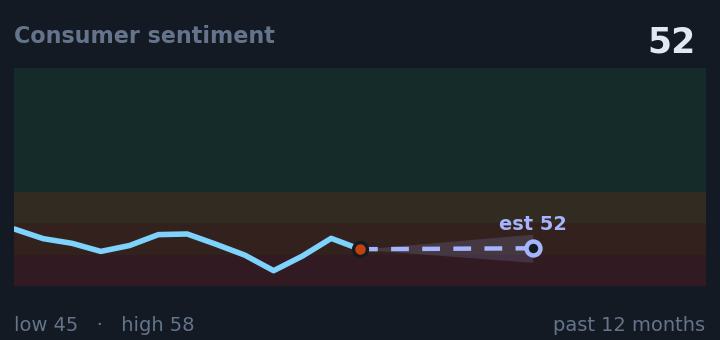
Consumer sentiment tracks how secure households feel about their finances, and when that feeling sours, people tend to spend less, which bears on the businesses that hire.
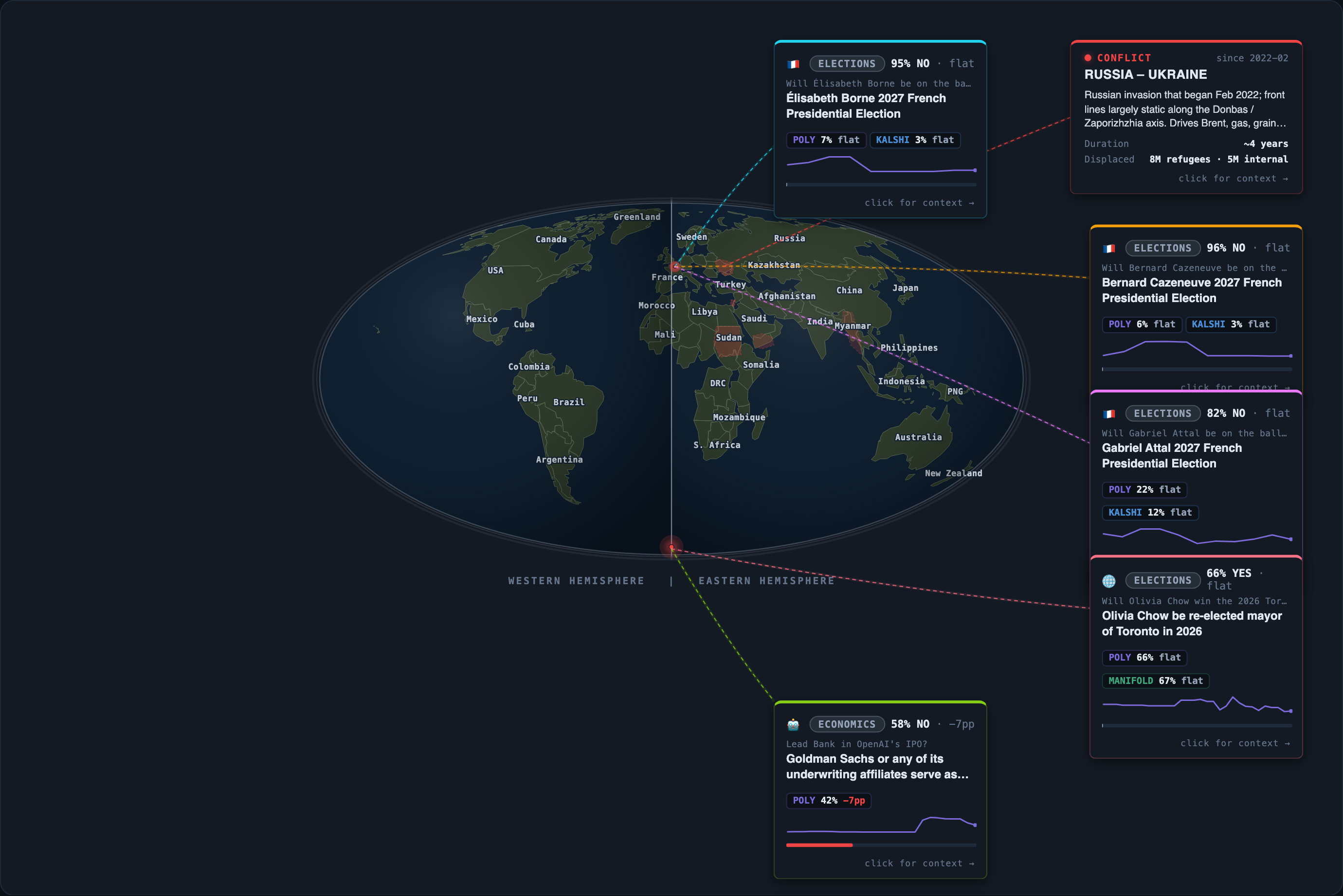
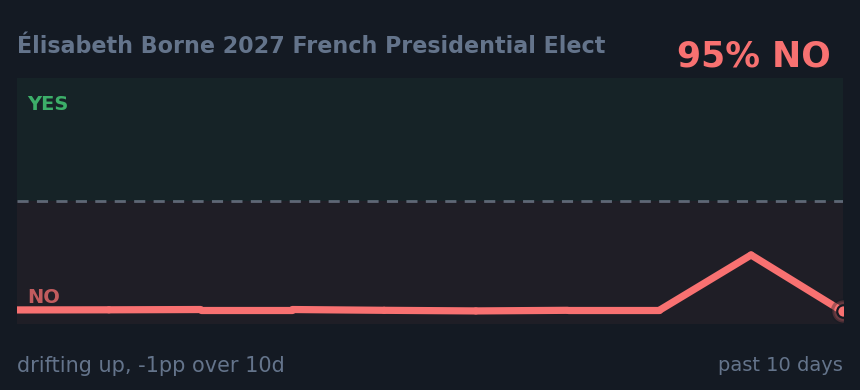
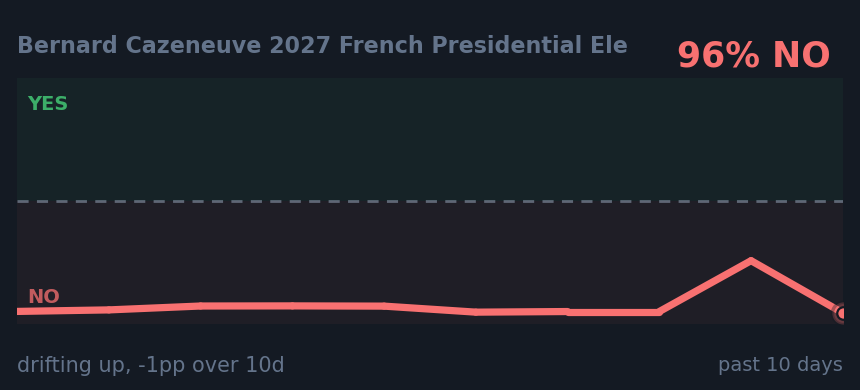
Connects to: Élisabeth Borne 2027 French Presidential Election; Bernard Cazeneuve 2027 French Presidential Election; Gabriel Attal 2027 French Presidential Election
Source: FRED
10-year Treasury rate
Warning
5.15%
up from 5.01% a month ago, near its highest in the past year.
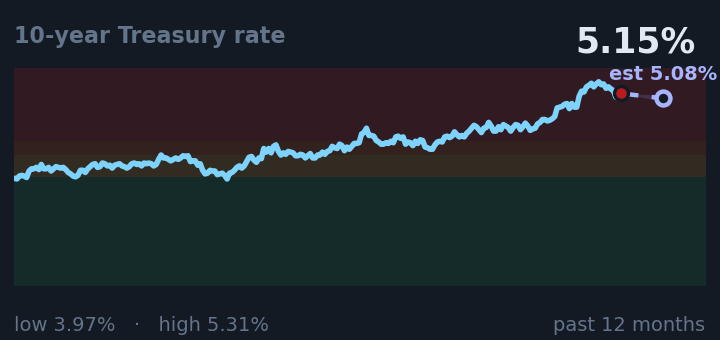
The 10-year Treasury rate is the benchmark many fixed-rate loans, including mortgages, are priced from, so it sets what borrowing costs for a household.
Connects to: OpenAI Lead Bank IPO
Source: FRED
30-year Treasury rate
Warning
5.48%
up from 5.34% a month ago, in the middle of its range for the past year.
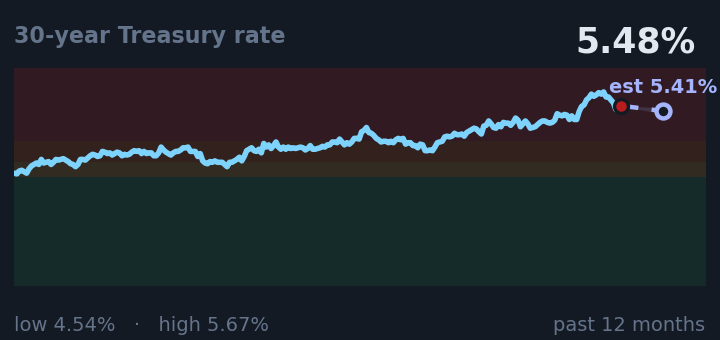
The 30-year Treasury rate sets the long-run cost of government borrowing, and when it rises, the pressure on the rates people pay for loans grows.
Connects to: OpenAI Lead Bank IPO
Source: FRED
Yield curve (10yr minus 2yr)
Caution
+0.33%
up from +0.25% a month ago, in the middle of its range for the past year.
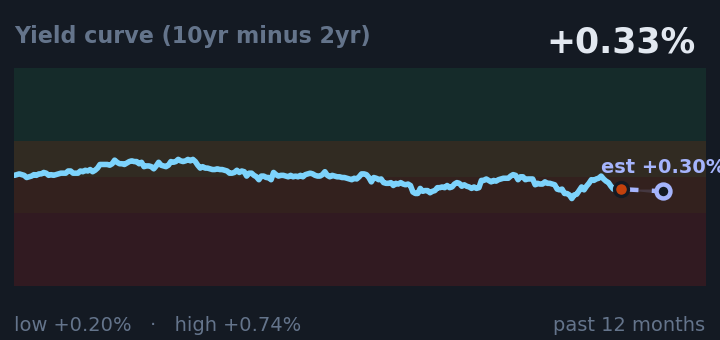
The gap between 10-year and 2-year Treasury rates shows whether lending markets expect trouble ahead, and when that gap narrows, watchers look for a slowdown.
Connects to: OpenAI Lead Bank IPO
Source: FRED
People filing for unemployment
Normal
199k
down from 207k a month ago, in the middle of its range for the past year.
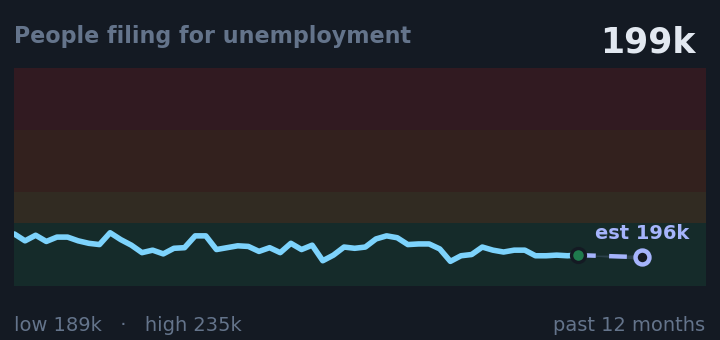
New unemployment claims count how many people filed for jobless benefits each week, which is the earliest sign of whether someone is about to lose a job.
Source: FRED
Gas at the pump
Watch
$4.28/gal
about the same as a month ago, near its highest in the past year.
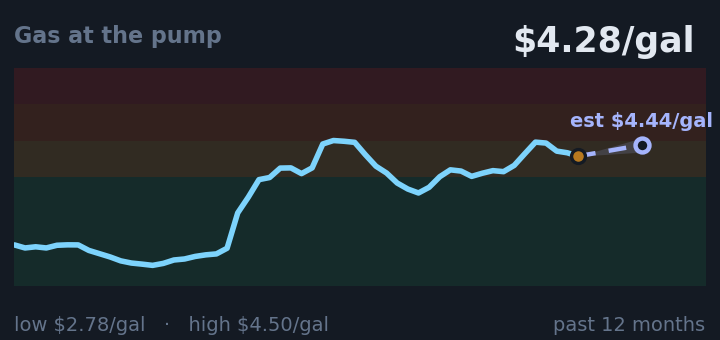
The price of gas at the pump is the most visible cost in a household budget, and it decides how far a paycheck stretches each week.
Connects to: Élisabeth Borne 2027 French Presidential Election; Bernard Cazeneuve 2027 French Presidential Election; Gabriel Attal 2027 French Presidential Election
Source: FRED