30-year mortgage rate
Warning
7.40%
up from 6.71% a month ago, near its highest in the past year.
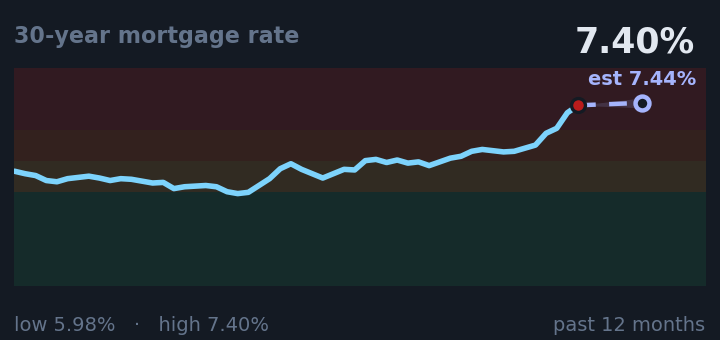
The 30-year mortgage rate sets what a monthly home payment costs, so when it rises, buying a home or refinancing gets more expensive for families.
Source: FRED
10-year Treasury rate
Warning
5.24%
up from 4.83% a month ago, near its highest in the past year.
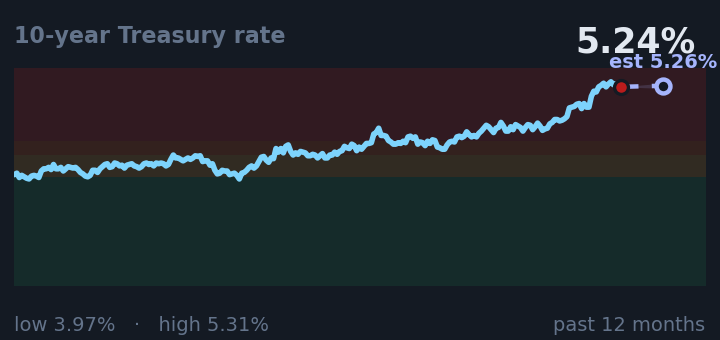
The 10-year Treasury rate feeds into many consumer loans and mortgages, so its movement shows where borrowing costs for households are heading.
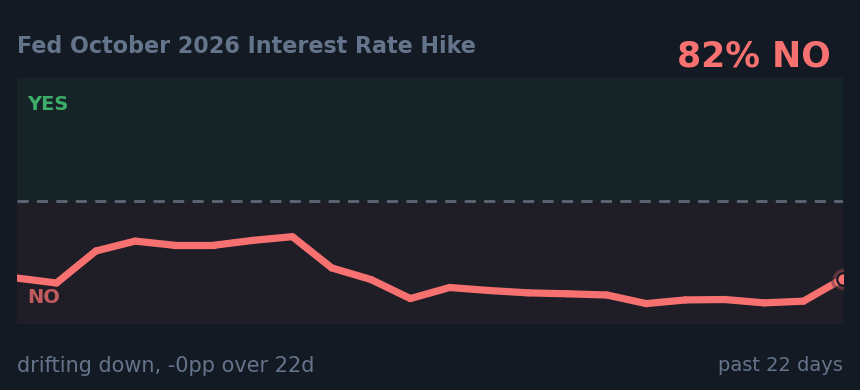
Connects to: Fed October 2026 Interest Rate Hike
Source: FRED
30-year Treasury rate
Warning
5.60%
up from 5.28% a month ago, near its highest in the past year.
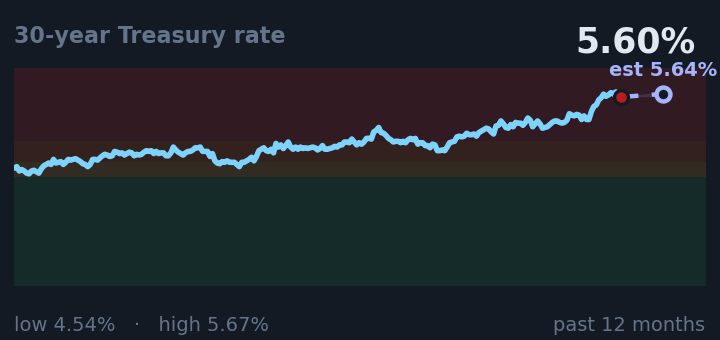
The 30-year Treasury rate reflects how much the government pays to borrow over the long run, and a high reading can push up mortgage rates and housing costs.
Connects to: Fed October 2026 Interest Rate Hike
Source: FRED
Gas at the pump
Watch
$4.33/gal
up from $4.16/gal a month ago, near its highest in the past year.
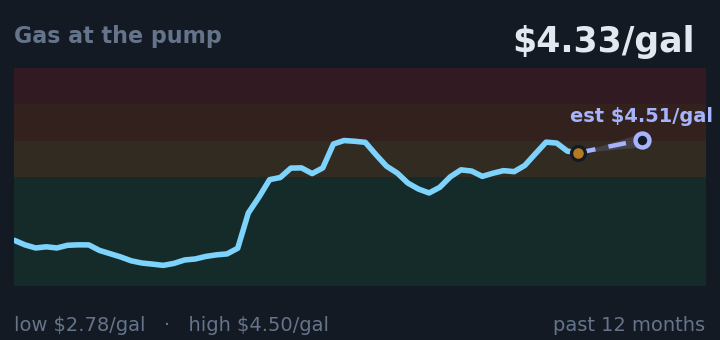
Gas prices at the pump come out of every household's weekly budget, and they tend to shift how people feel about the economy and about who is in charge.
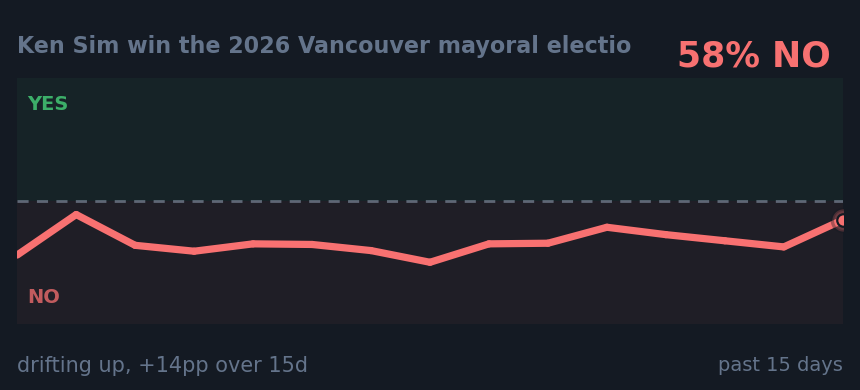
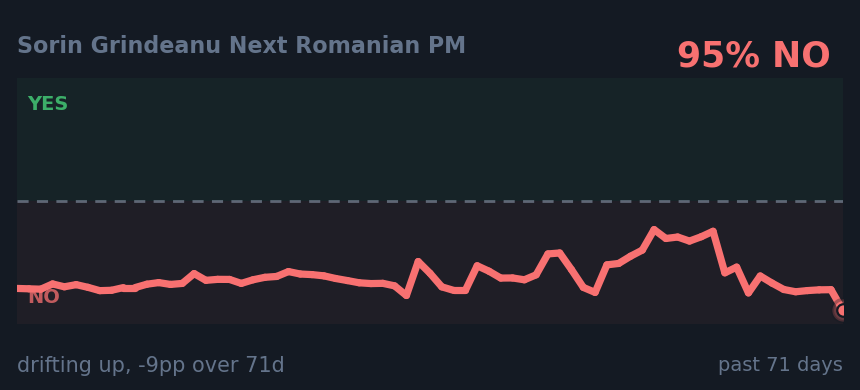
Connects to: Luca Niculescu Romania Prime Minister Odds; Ken Sim Vancouver Mayoral Re-election 2026; Sorin Grindeanu Next Romanian PM
Source: FRED
Consumer sentiment
Caution
52
down from 55 a month ago, in the middle of its range for the past year.
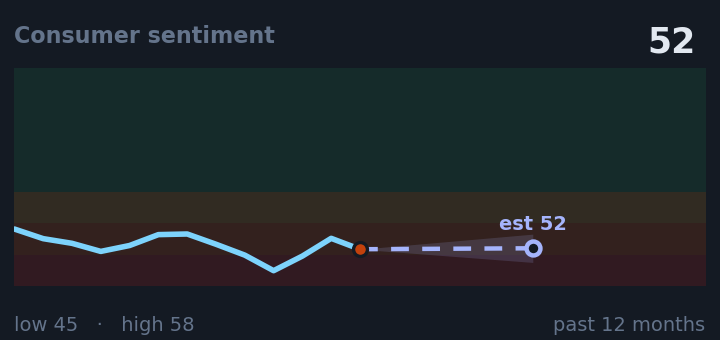
Consumer sentiment measures how confident households feel about their finances, and when it falls, people tend to spend less and delay big purchases.
Connects to: Luca Niculescu Romania Prime Minister Odds; Ken Sim Vancouver Mayoral Re-election 2026; Sorin Grindeanu Next Romanian PM
Source: FRED
Yield curve (10yr minus 2yr)
Caution
+0.42%
up from +0.33% a month ago, in the middle of its range for the past year.
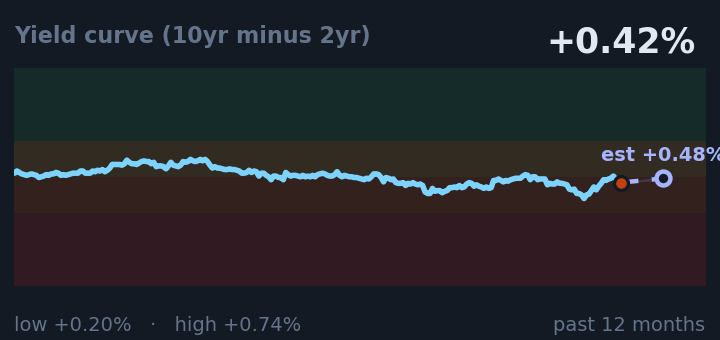
The gap between long-term and short-term Treasury rates is a closely watched signal of where the economy may be heading, and a narrow or inverted gap has often come before slowdowns.
Connects to: Fed October 2026 Interest Rate Hike
Source: FRED
People filing for unemployment
Normal
197k
down from 207k a month ago, in the middle of its range for the past year.
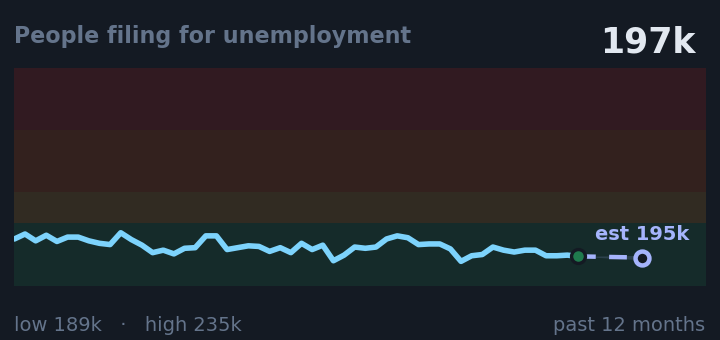
New jobless claims show how many people are newly filing for unemployment benefits each week, which is a direct read on whether people are losing their jobs.
Source: FRED
Market volatility (VIX)
Normal
15.3
down from 15.8 a month ago, near its lowest in the past year.
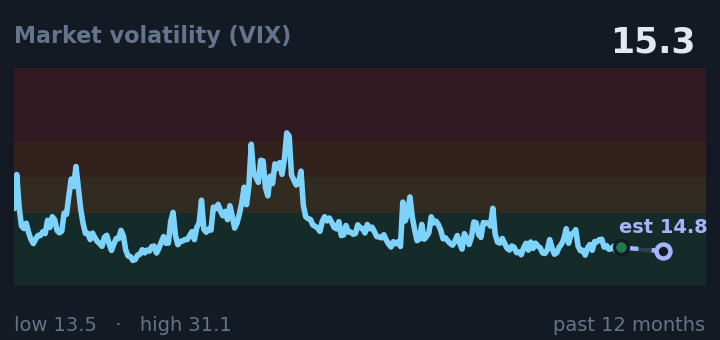
Market volatility measures how much prices are swinging on the stock market, and sharp jumps often reflect nervousness that can spread to retirement accounts and borrowing costs.
Source: FRED