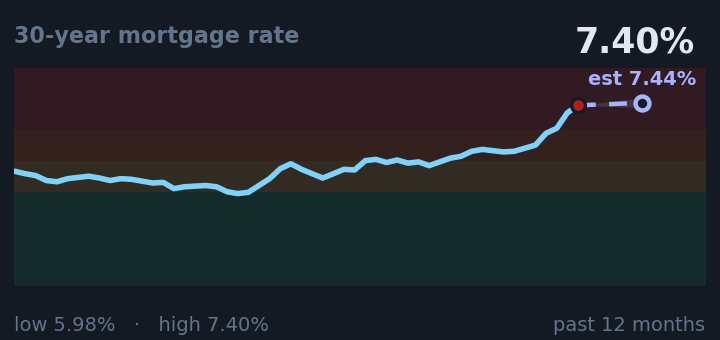
The 30-year mortgage rate sets the monthly payment on a new home loan, so its climb from 6.71% a month ago to 7.40% raises what a buyer pays each month.
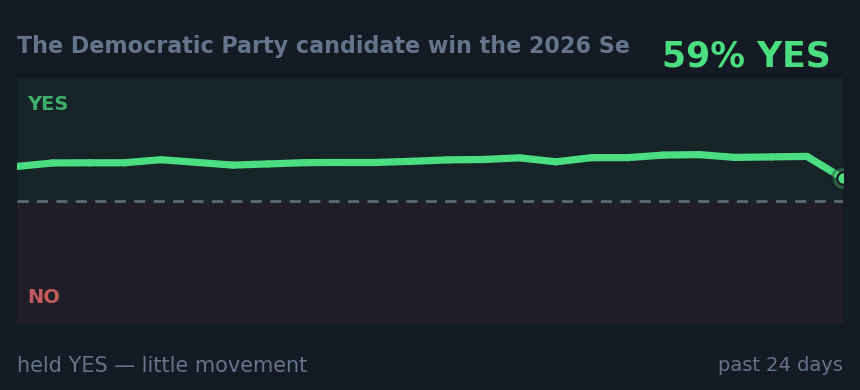
Source: FREDOn October 9th this brief named "Anthropic IPO Lead Bank Disagreement" at 52% YES, and the market's price has fallen to 16% since, a move of 36 points in 3 days. That move is unrelated to the month-long squeeze on household money, where mortgage rates have climbed to 7.40%, because a dispute over which banks lead a stock listing does not reach a family's mortgage or gas tank. On the map, the Maine Senate market gives a Democratic Party win in the 2026 race a 59% chance, and its price fell 9 points in the past day and has also slid 9 points over the month. In Taiwan, the market's price on the Kuomintang winning the most mayoral and magistrate races in the 2026 local elections fell 4 points today, is down 6 over the month, and reads 83% YES. The clearest sustained move is on whether 2026 becomes the hottest year on record, where the market's price has fallen 24 points over the past month and now reads 53% NO, a market with no fixed place on the map. Market volatility is still 15.4, near its lowest in the past year, and the yield curve sits at +0.44%.
→ Open the live interactive board
Get this every morning
Delivered to your inbox at 6:30, with the full archive, alerts, and the live board →
The 30-year mortgage rate sets the monthly payment on a new home loan, so its climb from 6.71% a month ago to 7.40% raises what a buyer pays each month.
Source: FRED
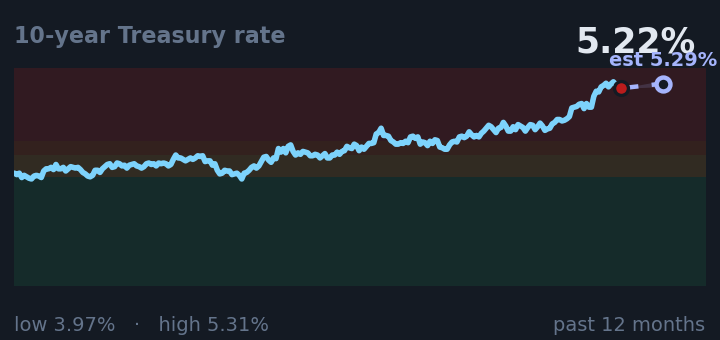
The 10-year Treasury rate is the benchmark many fixed loans are priced from, so its rise from 4.80% to 5.22% shows up in what borrowing costs.
Source: FRED
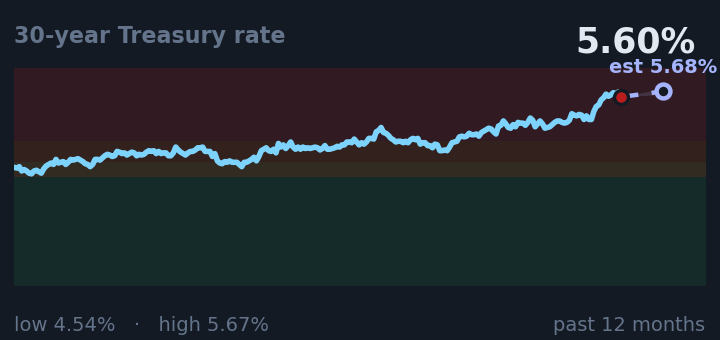
The 30-year Treasury rate, now 5.60%, reflects what the government pays to borrow for the long term, and a rise like this one tends to feed into mortgage and loan costs.
Source: FRED
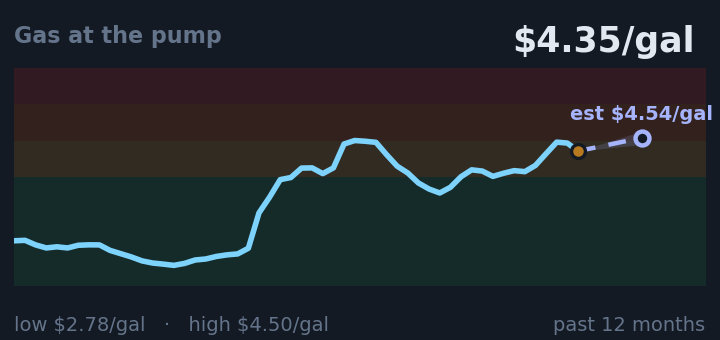
Gas at $4.35 a gallon is the price a household pays at every fill-up, and the climb from $4.07 a month ago is felt on every commute.
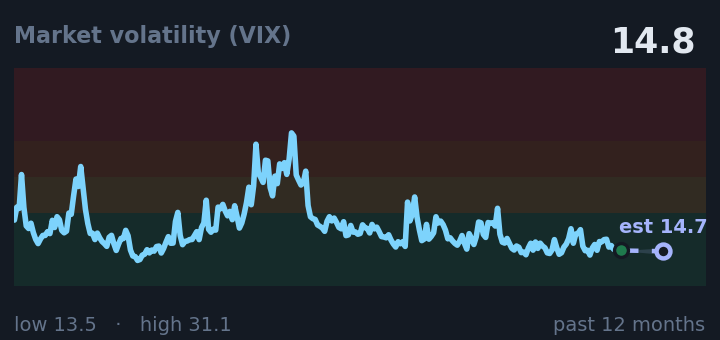
Market volatility at 15.4 measures how much investors expect prices to swing, and a reading this low means markets are calm right now, which keeps retirement and brokerage account swings small.
Source: FRED
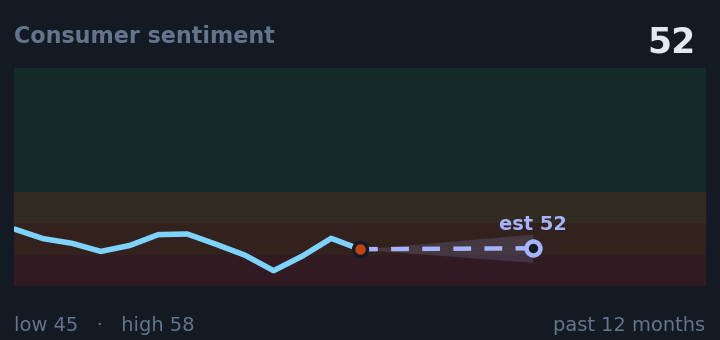
Consumer sentiment at 52 measures how confident households feel about their own finances and how much they plan to spend, and it has fallen from 55 over the month.
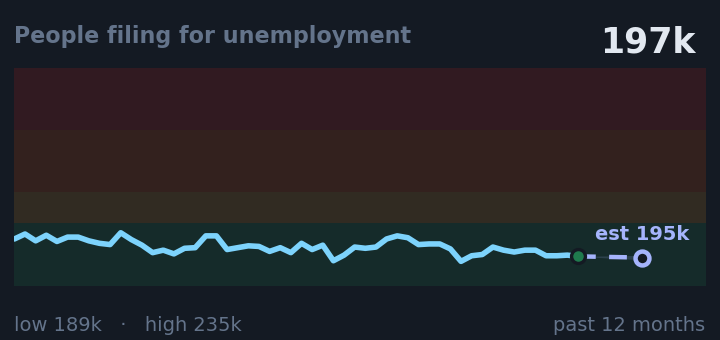
People filing for unemployment is 197k, down from 207k a month ago, and in the middle of its range for the past year.
Source: FRED
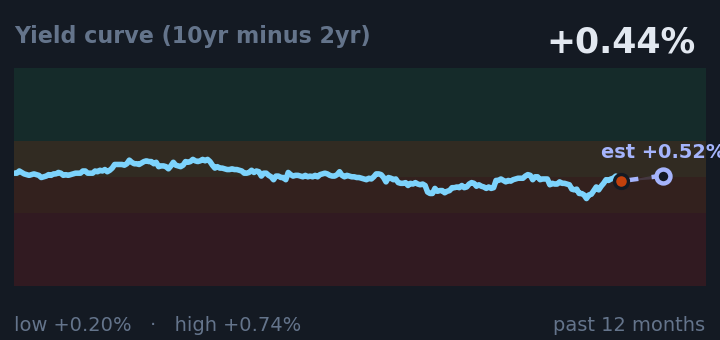
The yield curve compares 10-year and 2-year Treasury rates, and at +0.44% long-term rates still sit above short-term rates, a spread that is watched for a flip into inversion.
Source: FREDIn plain terms: the public’s money is leaning that this will happen, and held steady overnight.
Polymarket prices Renate Reinsve at 16%, indicating the current market consensus on her chances of winning Best Actress, with no price available from Kalshi to provide additional context or insight into the agreement between platforms.
In plain terms: the public’s money is close to a coin flip on whether this will happen, and held steady overnight.
Strong Democratic lean (77% avg) reflects incumbent advantage in a blue state, though 4-point spread suggests meaningful uncertainty. Depressed consumer sentiment and elevated gas prices pose headwinds to party-in-power dynamics that could tighten the race closer to 2026.
In plain terms: the public’s money is very confident this will happen, and held steady overnight.
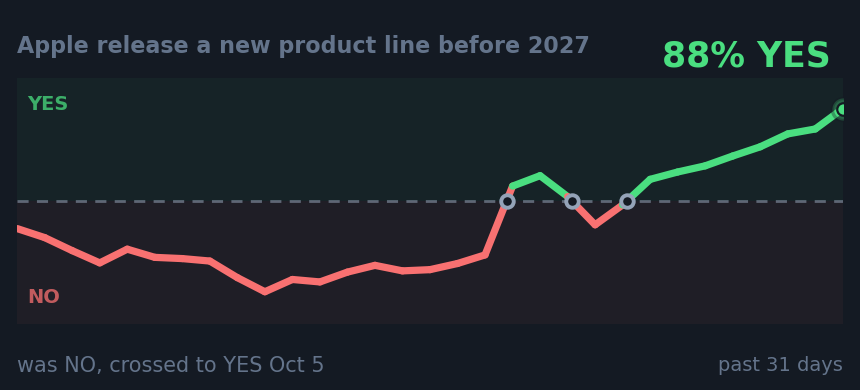
Markets pricing Apple's chances of launching a new product line in the next ~2.5 years at just 28%, suggesting skepticism about category expansion beyond existing iPhone/Mac/Watch/iPad portfolios. The tight 2-point spread indicates consensus that this is a low-probability event.
In plain terms: the public’s money is leaning that this will happen, and held steady overnight.
The platforms agree on a 38% average probability of Toy Story 5 winning, indicating no significant disagreement or price discrepancy between them.
In plain terms: the public’s money is leaning that this will not happen, and held steady overnight.
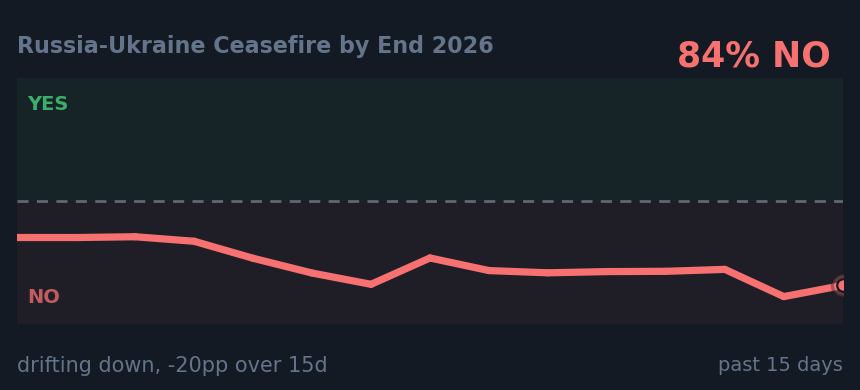
Markets diverge sharply on ceasefire timing (35% vs 2%), reflecting fundamental uncertainty about escalation trajectory. Recent UN condemnation of Russian attacks suggests active conflict continuation, supporting the lower probability assessment.
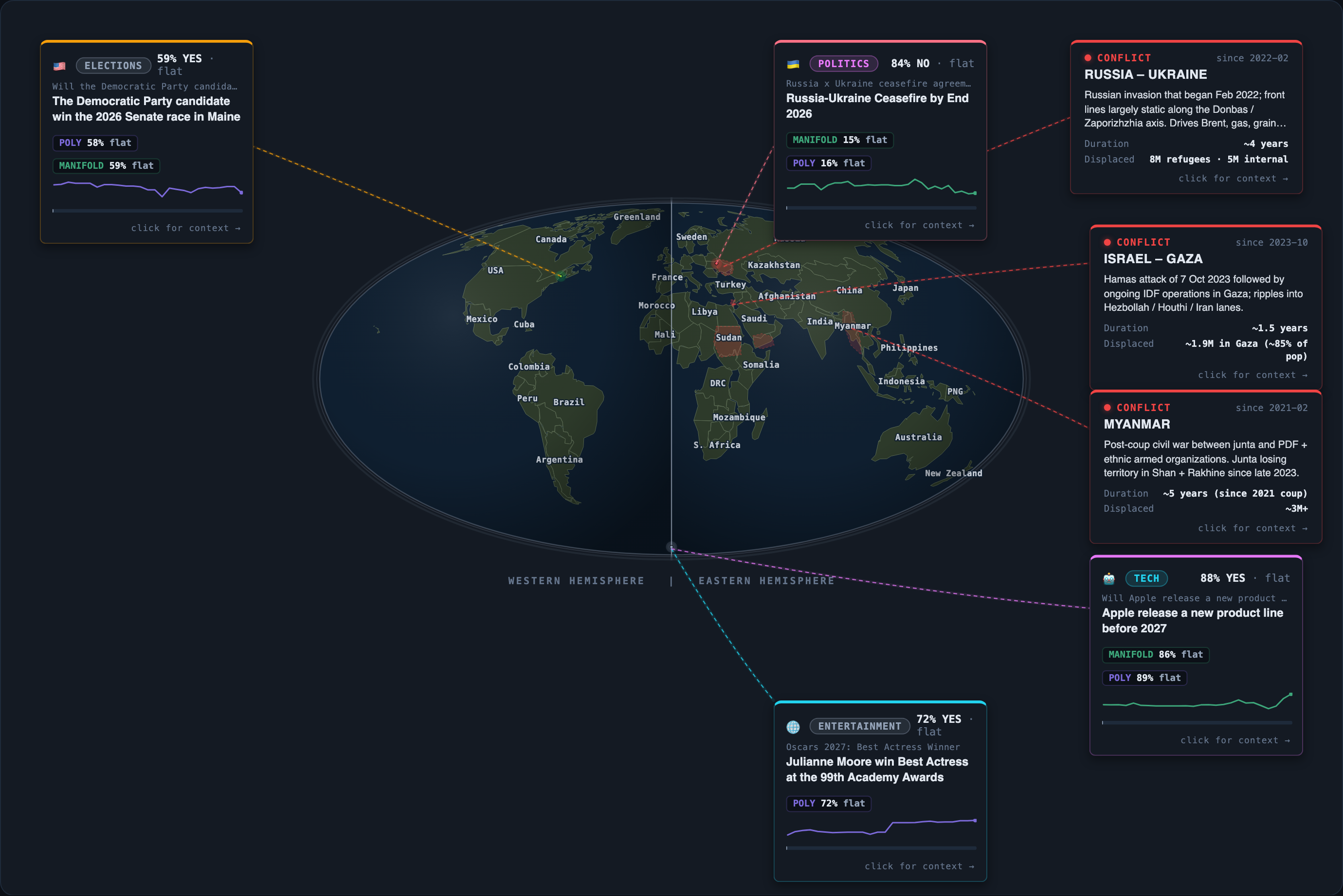
Hamas attack of 7 Oct 2023 followed by ongoing IDF operations in Gaza; ripples into Hezbollah / Houthi / Iran lanes.
Russian invasion that began Feb 2022; front lines largely static along the Donbas / Zaporizhzhia axis. Drives Brent, gas, grain, defense-stock pricing.
SAF vs RSF civil war since April 2023. Khartoum + Darfur worst-hit. Off most newsfeeds β drives African food-aid and gold-flow markets.
Houthi missile/drone attacks on Red Sea shipping diverting traffic around the Cape. Bumps WTI, shipping rates, supply-chain timing markets.
Post-coup civil war between junta and PDF + ethnic armed organizations. Junta losing territory in Shan + Rakhine since late 2023.
| AMERICAS | 0 rose 0 fell 1 flat |
| EUROPE | 0 rose 0 fell 1 flat |
| ASIA | 0 rose 0 fell 0 flat |
| MENA | 0 rose 0 fell 0 flat |
| AFRICA | 0 rose 0 fell 0 flat |
| CRYPTO | 0 rose 0 fell 0 flat |