30-year mortgage rate
Warning
7.40%
up from 6.71% a month ago, near its highest in the past year.
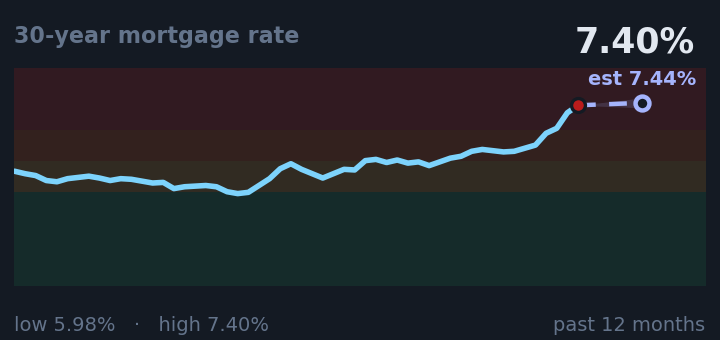
This is the rate quoted on a 30-year home loan, so it decides what a monthly house payment costs and whether buying or refinancing makes sense right now.
Source: FRED
10-year Treasury rate
Warning
5.28%
up from 4.78% a month ago, near its highest in the past year.
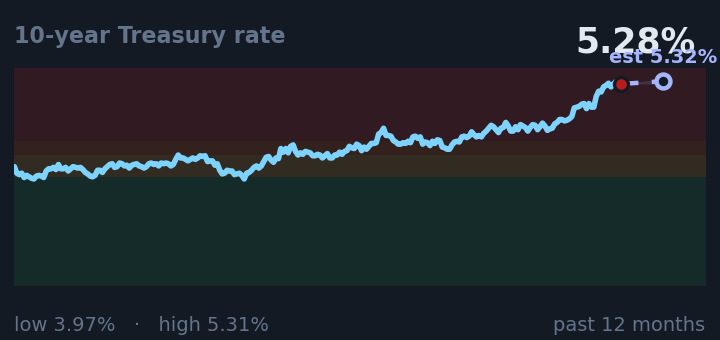
The 10-year Treasury rate is a base that many long-term loan rates are priced from, so a move here reaches the mortgage rates families are offered and bears on markets about what the Federal Reserve does next.
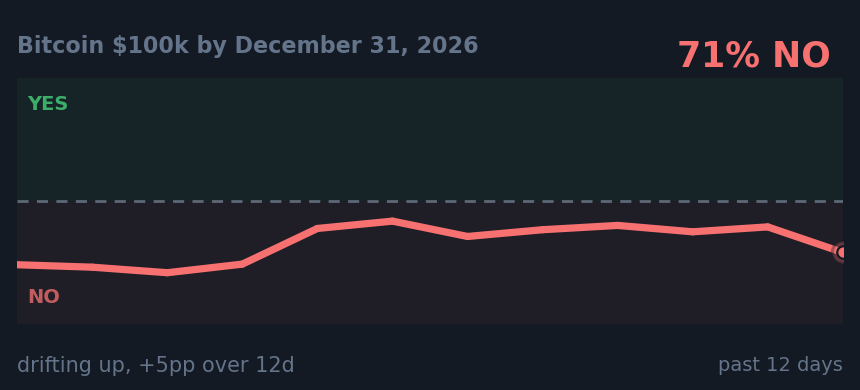
Connects to: Bitcoin $100k by December 31, 2026
Source: FRED
30-year Treasury rate
Warning
5.67%
up from 5.24% a month ago, near its highest in the past year.
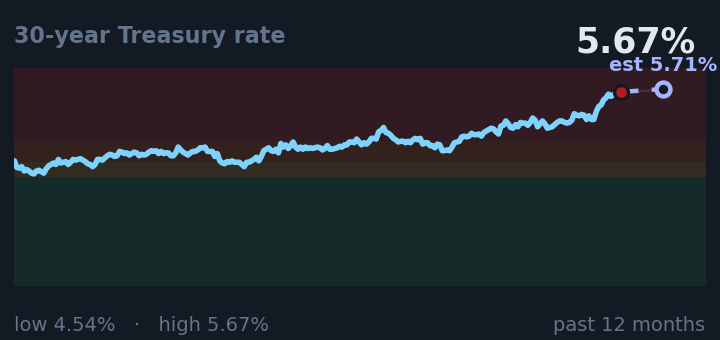
The 30-year Treasury rate is the long-run cost of government borrowing, and when it climbs it tends to push up the rates families pay on long loans and raises the stakes in markets about the federal budget.
Connects to: Bitcoin $100k by December 31, 2026
Source: FRED
Gas at the pump
Watch
$4.35/gal
up from $4.07/gal a month ago, near its highest in the past year.
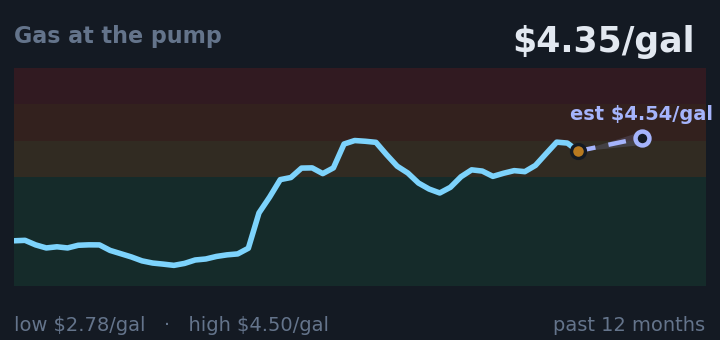
Gas prices come straight out of a household's weekly budget, and they bear on markets about oil and inflation.
Connects to: Next Prime Minister of Spain Election Agreement
Source: FRED
Consumer sentiment
Caution
52
down from 55 a month ago, in the middle of its range for the past year.
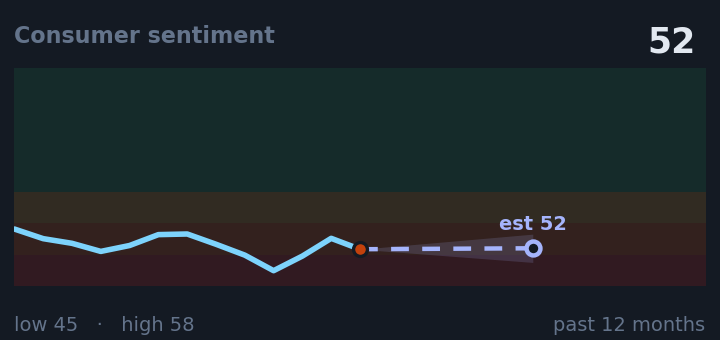
Consumer sentiment measures how confident households feel about their finances, and it shapes whether people spend, make big purchases, or hold off.
Connects to: Next Prime Minister of Spain Election Agreement
Source: FRED
Yield curve (10yr minus 2yr)
Watch
+0.51%
up from +0.41% a month ago, in the middle of its range for the past year.
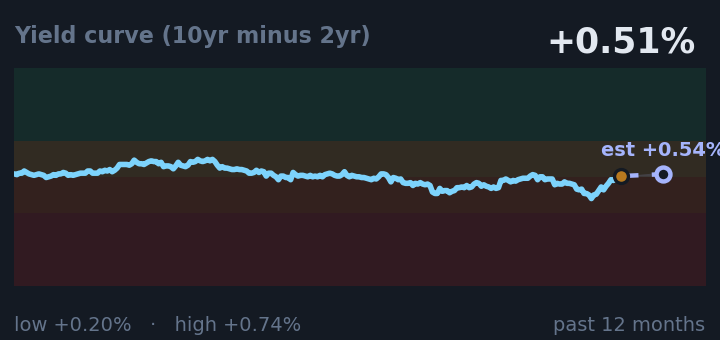
The gap between 10-year and 2-year Treasury rates has long been a warning sign for recessions, and it bears on markets about whether the economy slows.
Source: FRED
People filing for unemployment
Normal
197k
down from 207k a month ago, in the middle of its range for the past year.
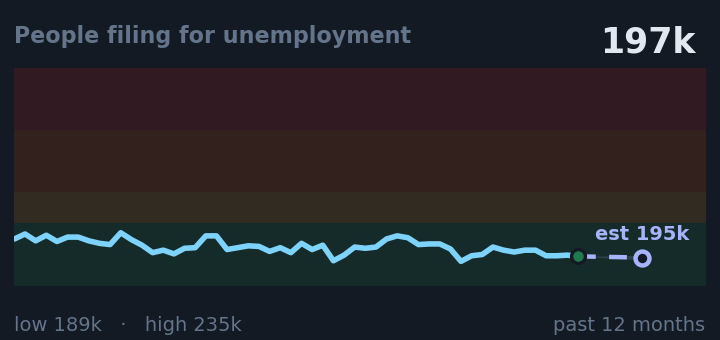
New weekly jobless claims count people who just lost work, so a rise is an early sign that layoffs are spreading and it bears on markets about recessions and jobs.
Source: FRED
Market volatility (VIX)
Normal
15.1
down from 15.3 a month ago, near its lowest in the past year.
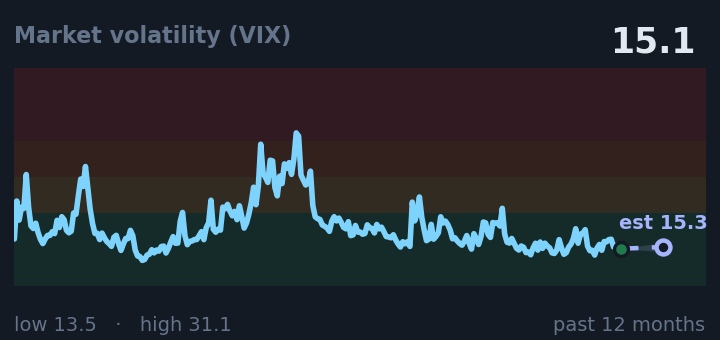
The market volatility index measures how much large investors expect prices to swing, so a jump in it means fear is rising across stocks and it bears on markets about sudden drops.
Connects to: Bitcoin $100k by December 31, 2026
Source: FRED