Gas at the pump
Watch
$4.48/gal
up from $4.05/gal a month ago, near its highest in the past year.
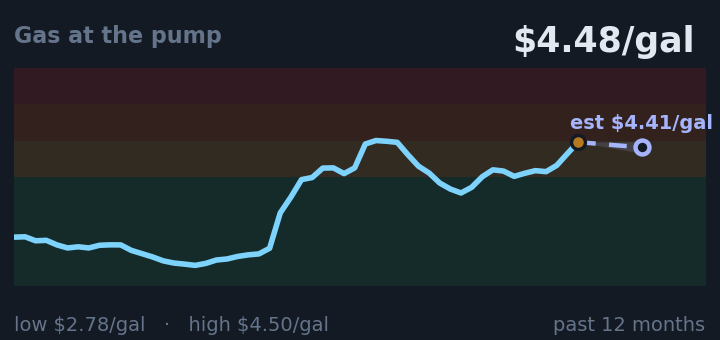
Gas at the pump affects what families spend on transportation and daily living; historically higher prices correlate with reduced consumer spending and voter approval.
Connects to: New Hampshire Governor Election Winner; New Hampshire Senate Margin of Victory; North Carolina Senate Margin of Victory Disagreement
Source: FRED
10-year Treasury rate
Warning
5.11%
up from 4.70% a month ago, near its highest in the past year.
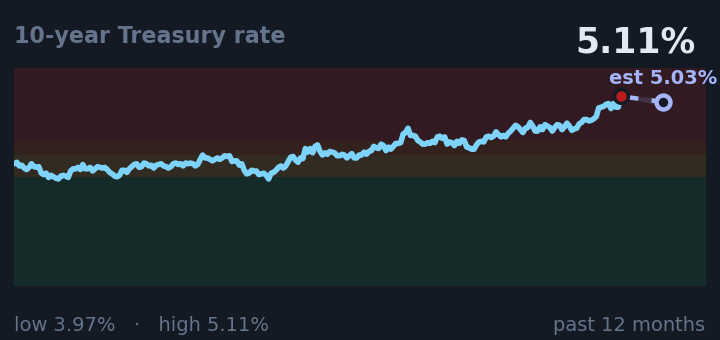
The 10-year Treasury rate is what the U.S. government pays to borrow money for a decade, influencing mortgage rates, business investments, and whether government can afford spending plans.
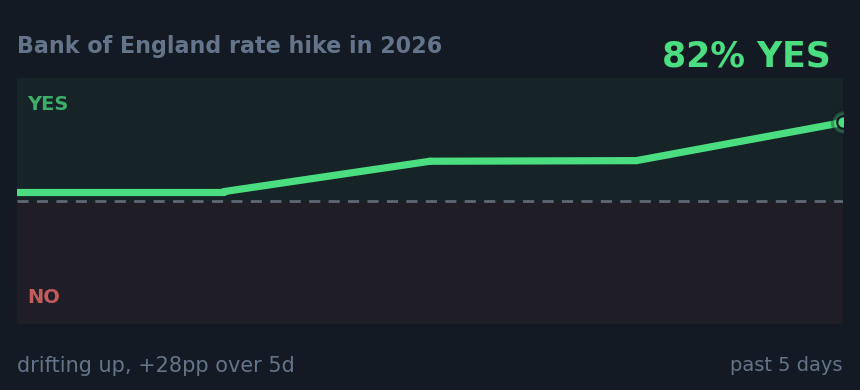
Connects to: Bank of England Rate Hike in 2026
Source: FRED
30-year mortgage rate
Warning
7.03%
up from 6.65% a month ago, near its highest in the past year.
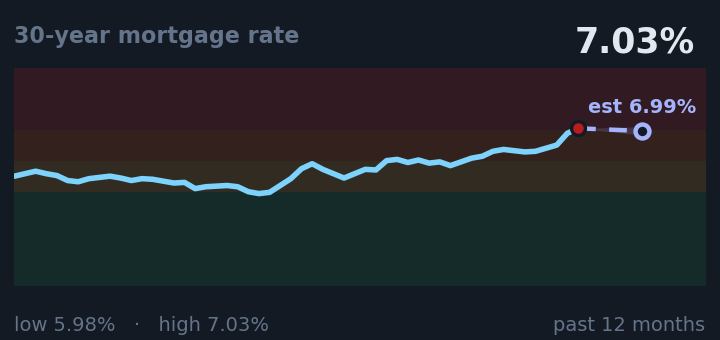
Thirty-year mortgage rates determine the monthly payment on a home loan; when they rise, families can afford less house for the same payment.
Source: FRED
30-year Treasury rate
Warning
5.40%
up from 5.23% a month ago, near its highest in the past year.
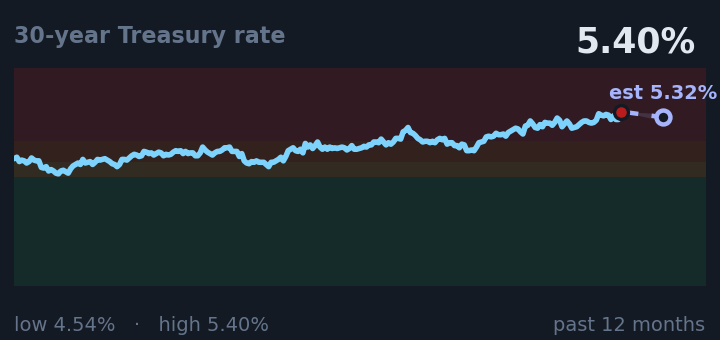
The 30-year Treasury rate is the cost the government pays to borrow for three decades; when it rises sharply, it forces choices between cutting services or raising taxes.
Connects to: Bank of England Rate Hike in 2026
Source: FRED
Yield curve (10yr minus 2yr)
Caution
+0.31%
down from +0.47% a month ago, in the middle of its range for the past year.
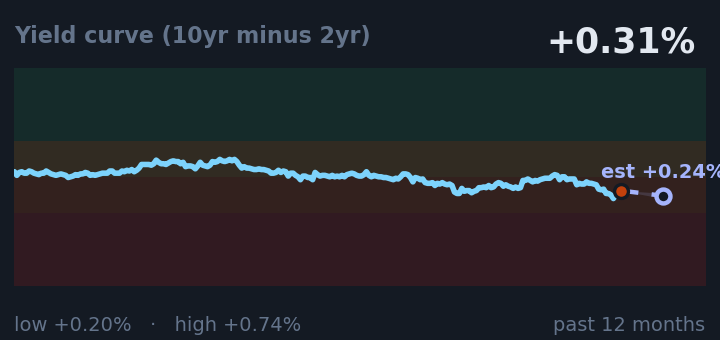
The gap between 10-year and 2-year borrowing rates signals investor confidence in the economy; when it narrows or reverses, it often precedes recession.
Connects to: Bank of England Rate Hike in 2026
Source: FRED
Consumer sentiment
Caution
52
down from 55 a month ago, in the middle of its range for the past year.
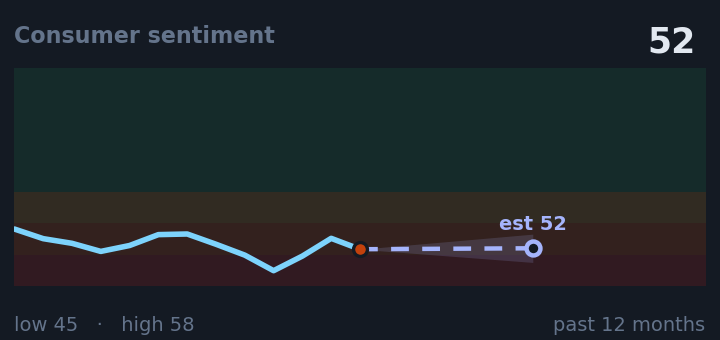
Consumer sentiment reflects whether people feel confident about their jobs and finances; when it falls, households reduce spending and increase savings.
Connects to: New Hampshire Governor Election Winner; New Hampshire Senate Margin of Victory; North Carolina Senate Margin of Victory Disagreement
Source: FRED
Market volatility (VIX)
Normal
14.2
down from 15.1 a month ago, near its lowest in the past year.
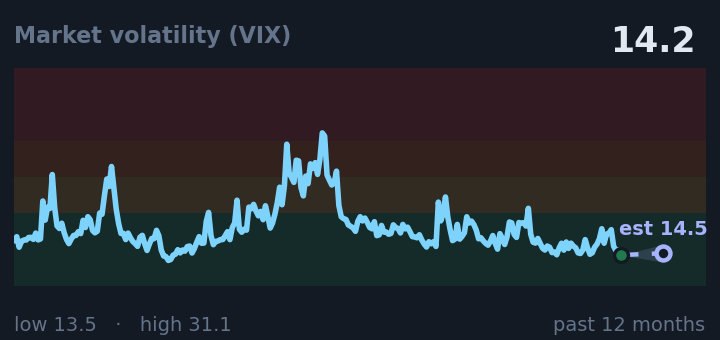
Market volatility measures how nervous investors are; a low reading means investors feel confident enough to take risks.
Source: FRED
People filing for unemployment
Normal
197k
down from 207k a month ago, in the middle of its range for the past year.
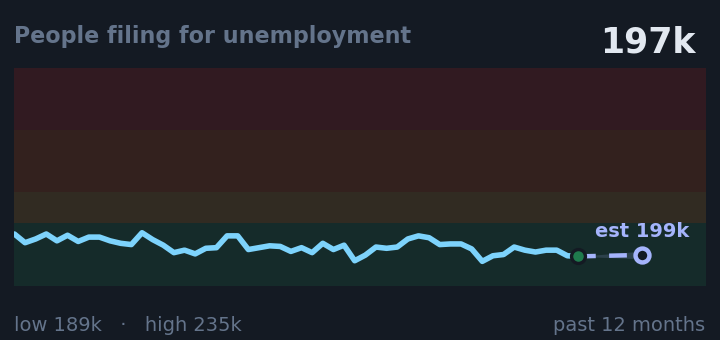
Jobless claims count people filing for unemployment; low numbers mean jobs are secure but can also signal employers struggle to find workers.
Source: FRED