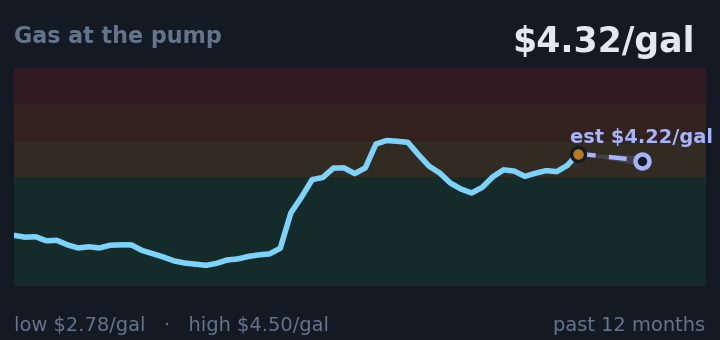
Gas prices affect every household directly through commuting and food costs, since transportation inflation flows through the entire supply chain.
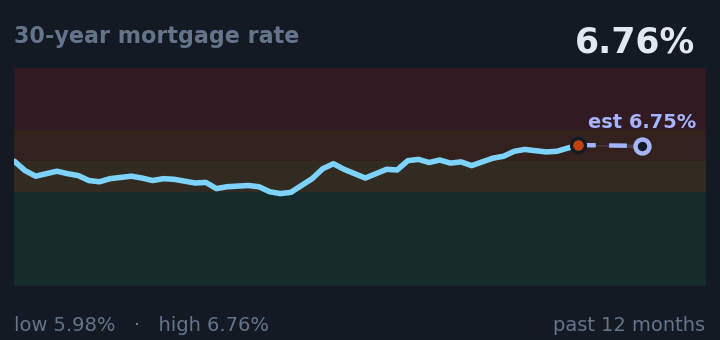
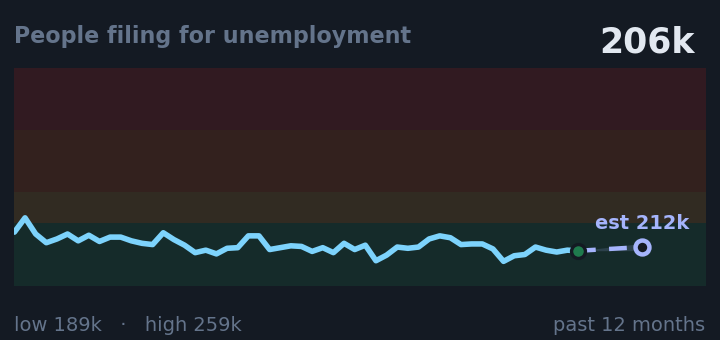
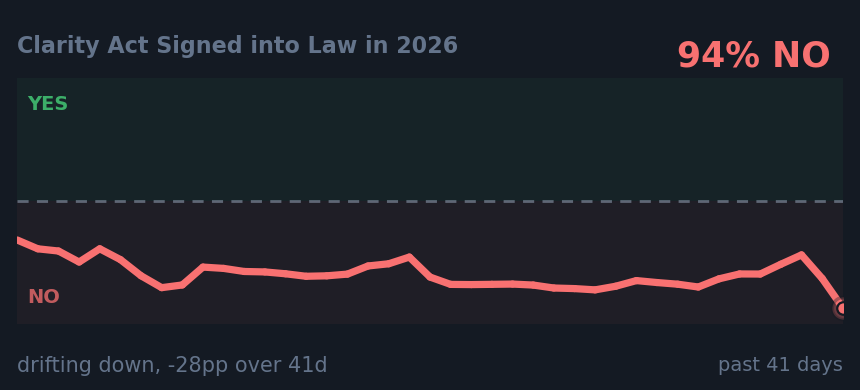
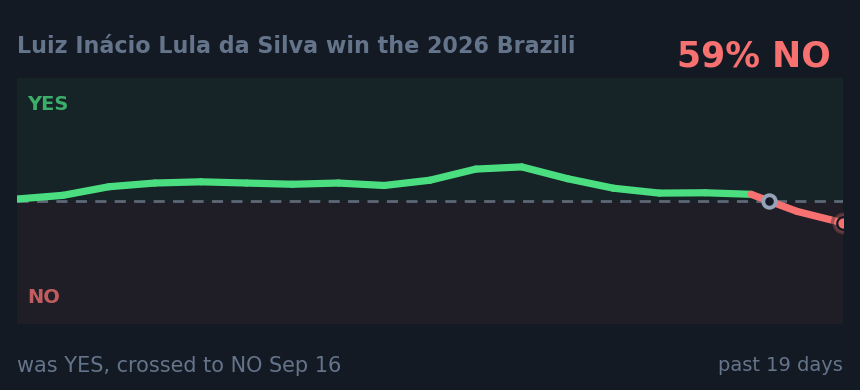
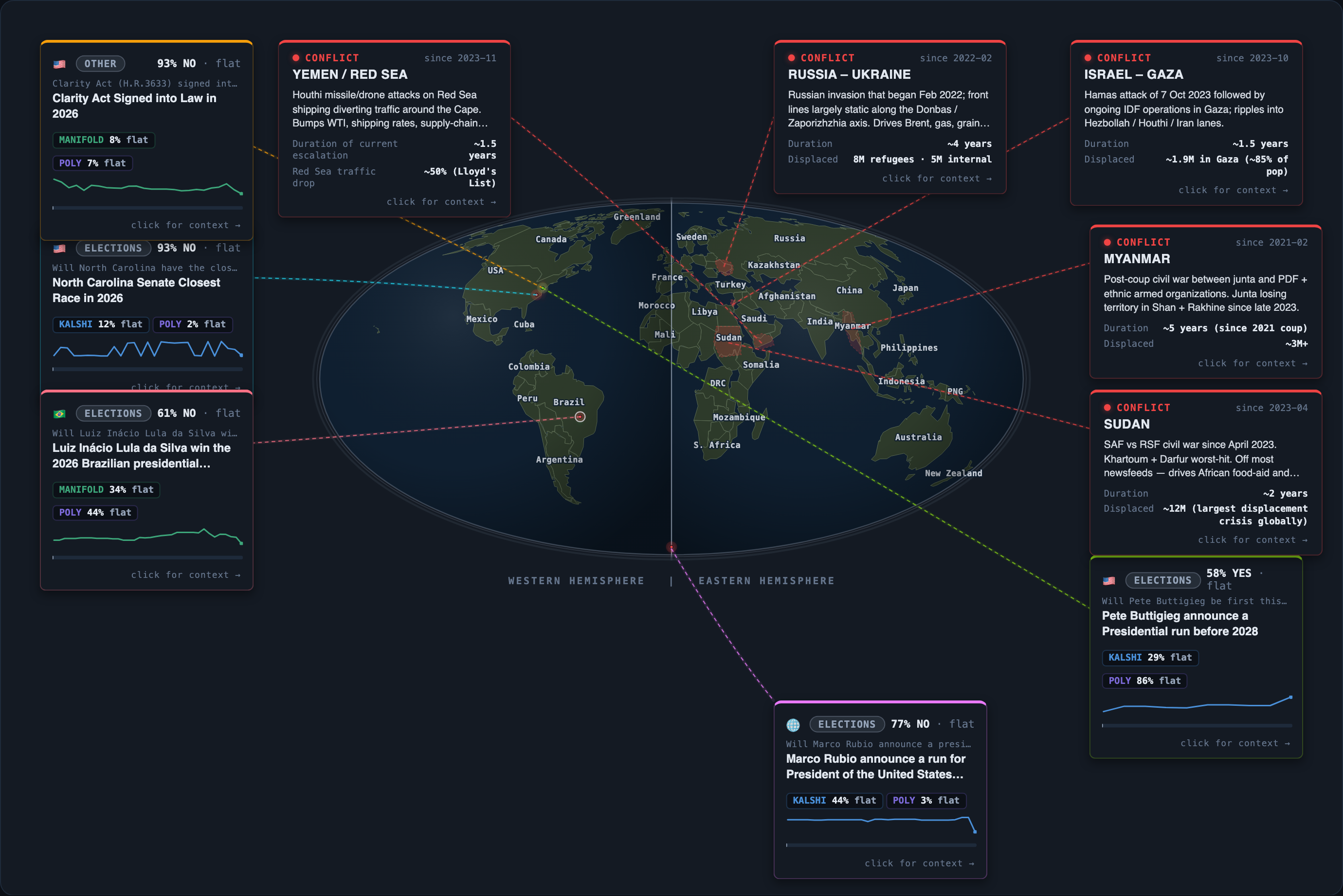
The market's price on "Luiz Inácio Lula da Silva win the 2026 Brazilian presidential election" crossed the 50% line to NO today. It now reads 59% NO, having moved 10 points across the window. On September 8th this brief named "Alexandru Nazare Next Romanian Prime Minister" at 27% YES. The market's price has risen to 53% since, a move of 26 points in 8 days. 4 of the 5 biggest movers sit in the Americas, clustered together on the map: "Clarity Act Signed into Law in 2026" (United States) and "The Federal Reserve hike interest rates in 2026" (United States) and "Brooke Rollins Cabinet Exit Odds" (United States) and "Luiz Inácio Lula da Silva win the 2026 Brazilian presidential election" (Brazil). The month-long backdrop is unchanged: borrowing costs, mortgage rates, gas at the pump and layoffs are still pressing on the wallet. Otherwise the picture held: 30-year mortgage rate is 6.76%; people filing for unemployment is 206k.
→ Open the live interactive board
Get this every morning
Delivered to your inbox at 6:30, with the full archive, alerts, and the live board →
Gas prices affect every household directly through commuting and food costs, since transportation inflation flows through the entire supply chain.
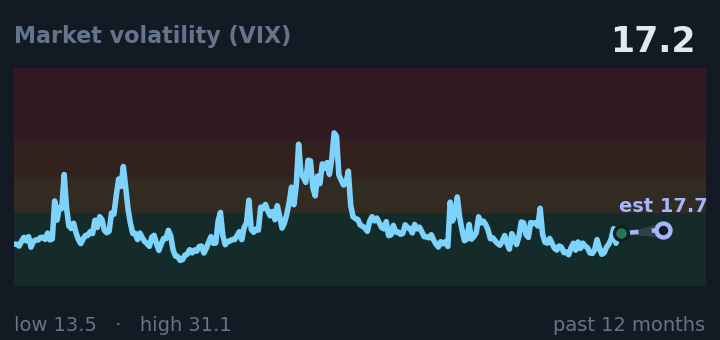
The VIX measures investor fear of sudden market moves, and at 17.1 is within the normal range, so markets are not pricing crisis risk.
Source: FRED
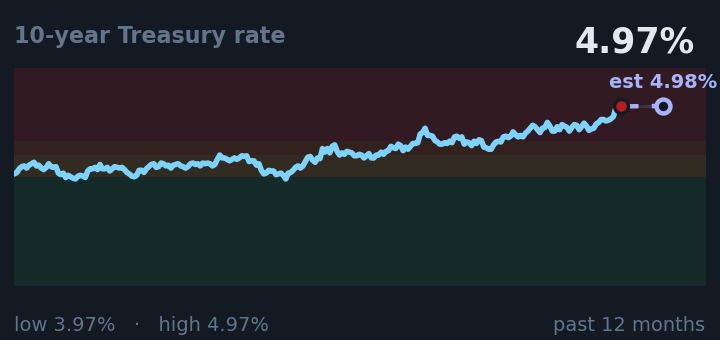
The 10-year Treasury anchors long-term borrowing costs for mortgages and business loans, and at 4.97% we're in the zone where policy has historically shifted.
Source: FRED
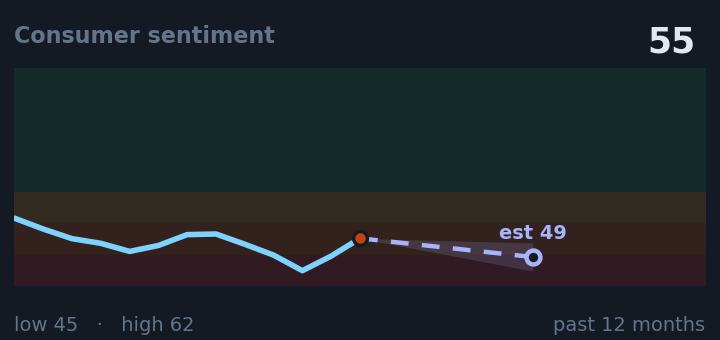
Consumer sentiment at 55 is depressed and below the 60 threshold where household spending typically rebounds, meaning spending is constrained.
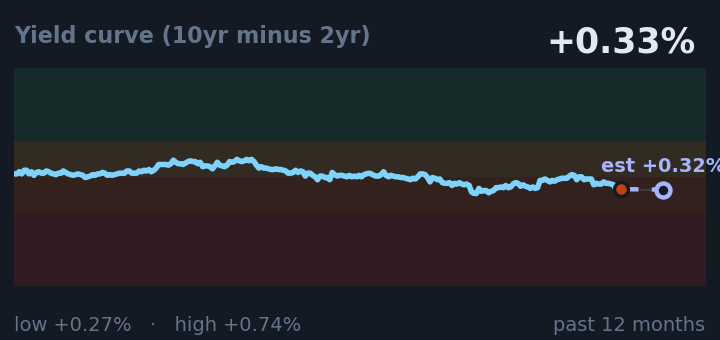
The yield curve measures whether long-term borrowing costs more than short-term, and at +0.33% it's flattening toward the point where inversion could occur.
Source: FRED
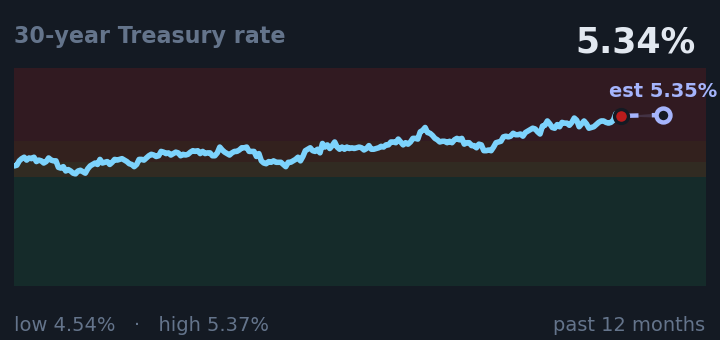
The 30-year Treasury rate prices the government's long-term borrowing costs, and at 5.34% sits in the zone associated with fiscal sustainability concerns.
Source: FRED
The 30-year mortgage rate is what households pay to borrow for a home, and at 6.76% near its highest in a year, home purchases have become substantially more expensive.
Source: FRED
Jobless claims at 206,000 are in the healthy range, meaning the labor market is not deteriorating; rising claims would signal jobs are being cut and household incomes squeezed.
Source: FRED
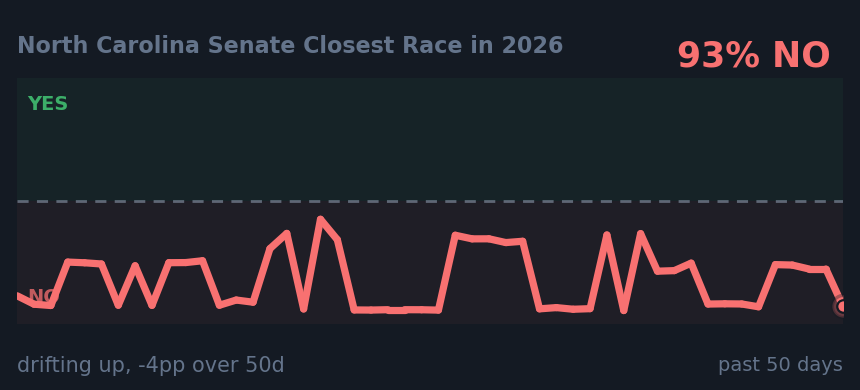
In plain terms: the public’s money is very confident this will not happen, and held steady overnight.
Both platforms agree on an average probability of 11%, indicating a low confidence level among market participants regarding North Carolina's Senate race being the closest in 2026, with no significant price difference between them.
In plain terms: the public’s money is very confident this will not happen, and held steady overnight.
Manifold prices the Clarity Act at 39%, while polymarket is lower at 30%, indicating a disagreement of 9 percentage points, reflecting differing opinions on the likelihood of its passage.
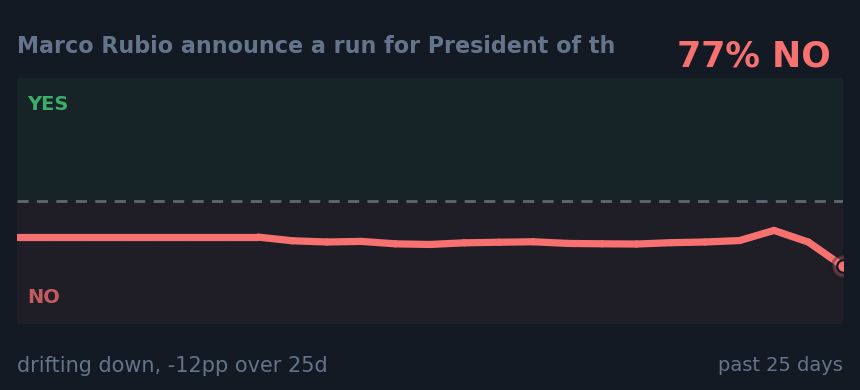
In plain terms: the public’s money is leaning that this will not happen, and held steady overnight.
Kalshi (5%) vs Polymarket (14%) divergence on Rubio candidacy reflects uncertainty about current political positioning. With elevated gas prices and depressed consumer sentiment, market disagreement suggests unclear read on whether economic headwinds trigger another presidential
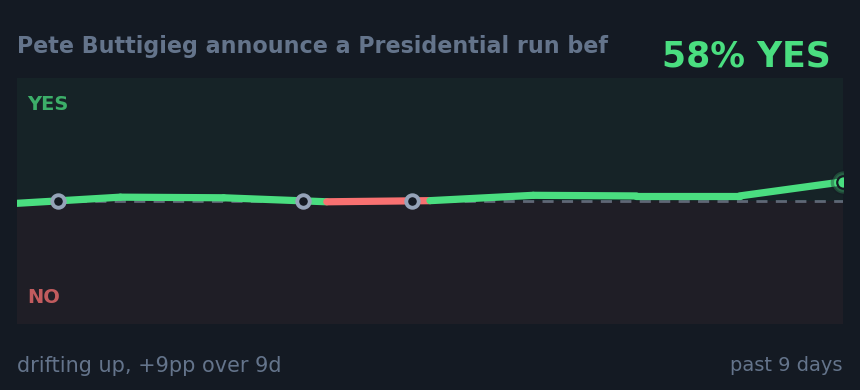
In plain terms: the public’s money is close to a coin flip on whether this will happen, and held steady overnight.
The platforms disagree by an 81 percentage points spread, with Polymarket pricing a near certainty (90%) and Kalshi at 8%, indicating significant disagreement on the likelihood of Buttigieg being first to declare.
In plain terms: the public’s money is close to a coin flip on whether this will not happen, and held steady overnight.
Markets show weak confidence in Lula's 2026 re-election bid at 46% average probability, with narrow 4-point spread indicating genuine uncertainty rather than consensus. Depressed consumer sentiment and elevated gas prices—historical approval headwinds—suggest economic conditions
Hamas attack of 7 Oct 2023 followed by ongoing IDF operations in Gaza; ripples into Hezbollah / Houthi / Iran lanes.
Russian invasion that began Feb 2022; front lines largely static along the Donbas / Zaporizhzhia axis. Drives Brent, gas, grain, defense-stock pricing.
SAF vs RSF civil war since April 2023. Khartoum + Darfur worst-hit. Off most newsfeeds — drives African food-aid and gold-flow markets.
Houthi missile/drone attacks on Red Sea shipping diverting traffic around the Cape. Bumps WTI, shipping rates, supply-chain timing markets.
Post-coup civil war between junta and PDF + ethnic armed organizations. Junta losing territory in Shan + Rakhine since late 2023.
| AMERICAS | 0 rose 0 fell 4 flat |
| EUROPE | 0 rose 0 fell 0 flat |
| ASIA | 0 rose 0 fell 0 flat |
| MENA | 0 rose 0 fell 0 flat |
| AFRICA | 0 rose 0 fell 0 flat |
| CRYPTO | 0 rose 0 fell 0 flat |