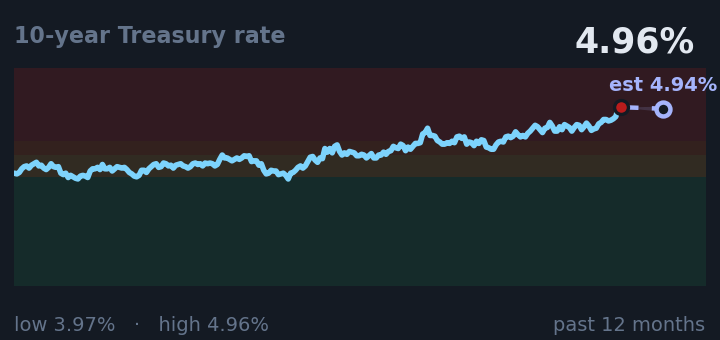
The 10-year Treasury rate influences borrowing costs for mortgages, business loans, and credit across the economy, shaping job availability and wage decisions.
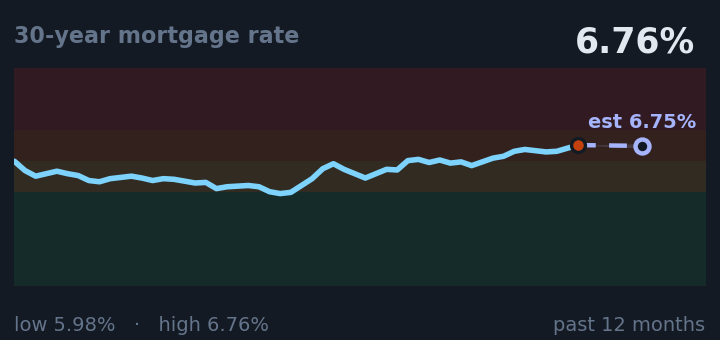
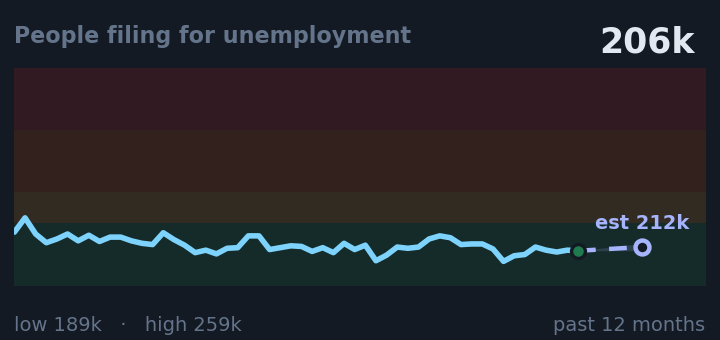
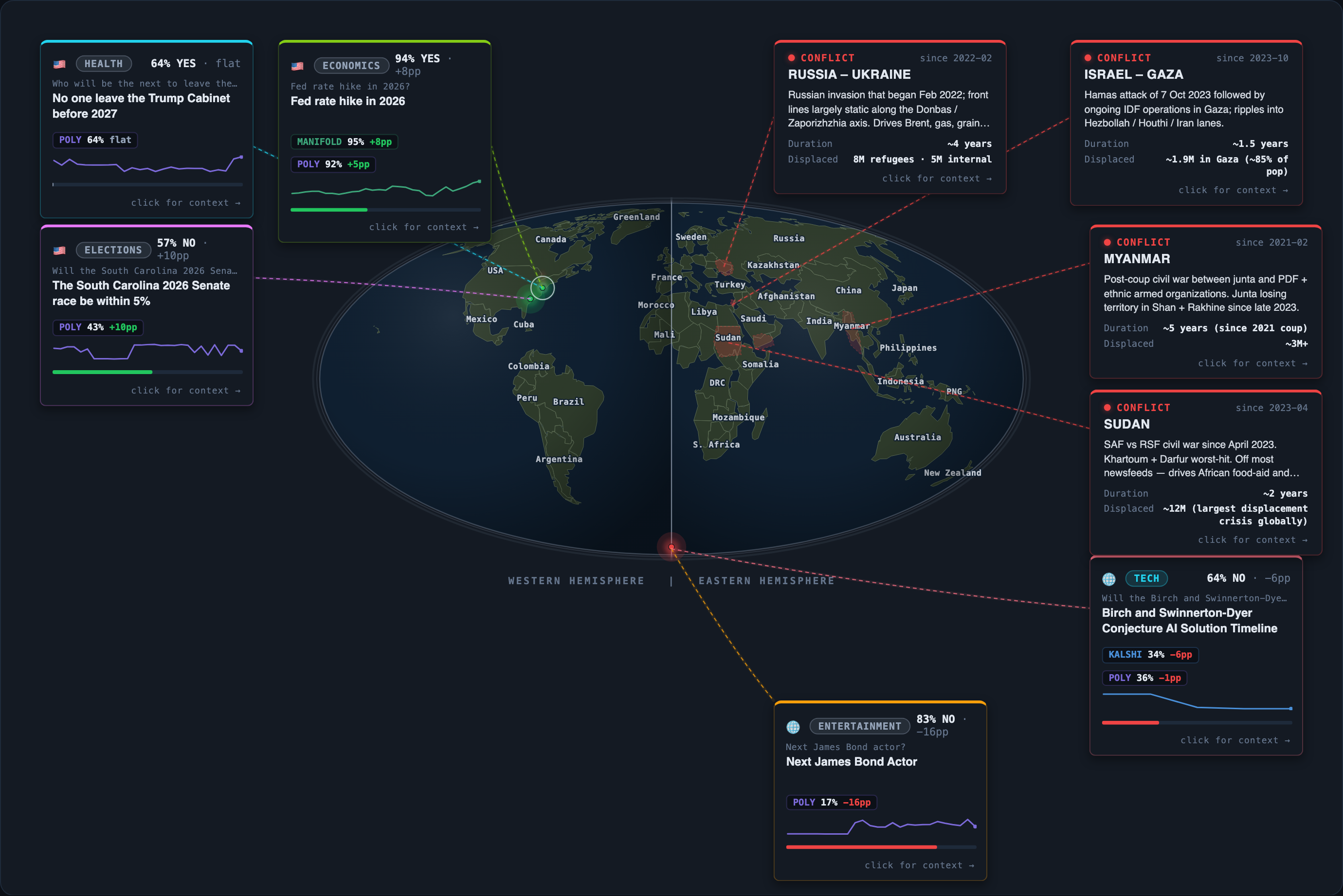
The market's price on "Alexander Zverev win the 2026 Men's US Open" crossed the 50% line to YES 2 days ago. It now reads 99% YES, having moved 60 points across the window. On September 8th this brief named "Alexander Zverev 2026 US Open Win Odds" at 27% YES. The market's price has risen to 99% since, a move of 72 points in 6 days. 5 of the 5 biggest movers sit in the Americas, clustered together on the map: "Ben Shelton 2026 US Open Men's Singles Title" (United States) and "Alexander Zverev OR Carlos Alcaraz win the 2026 US Open men's singles title" (United States) and "Alexander Zverev OR Novak Djokovic win the 2026 US Open men's singles title" (United States) and "Alexander Zverev win the 2026 Men's US Open" (United States) and "No one leave the Trump Cabinet before 2027" (United States). The month-long backdrop is unchanged: borrowing costs, mortgage rates, gas at the pump and layoffs are still pressing on the wallet. Otherwise the picture held: 30-year mortgage rate is 6.76%; people filing for unemployment is 206k.
→ Open the live interactive board
Get this every morning
Delivered to your inbox at 6:30, with the full archive, alerts, and the live board →
The 10-year Treasury rate influences borrowing costs for mortgages, business loans, and credit across the economy, shaping job availability and wage decisions.
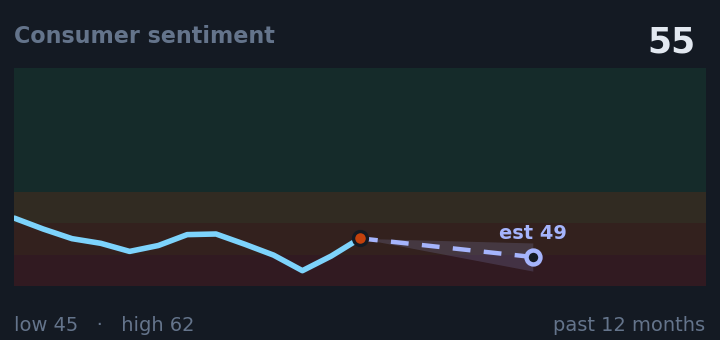
Consumer sentiment measures whether households expect to spend money or save it; when confidence falls, spending drops and businesses hire less.
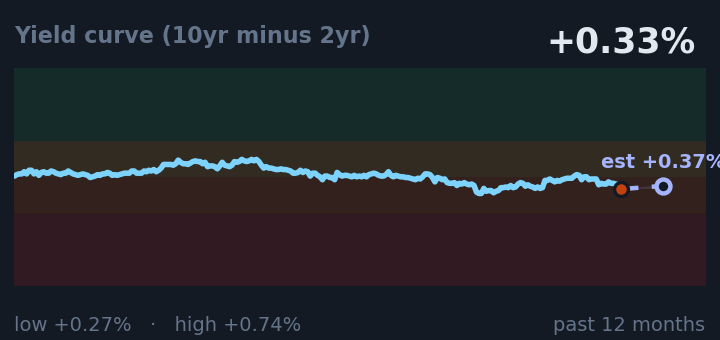
The yield curve—the difference between long-term and short-term interest rates—signals what bond traders expect about economic growth or recession ahead.
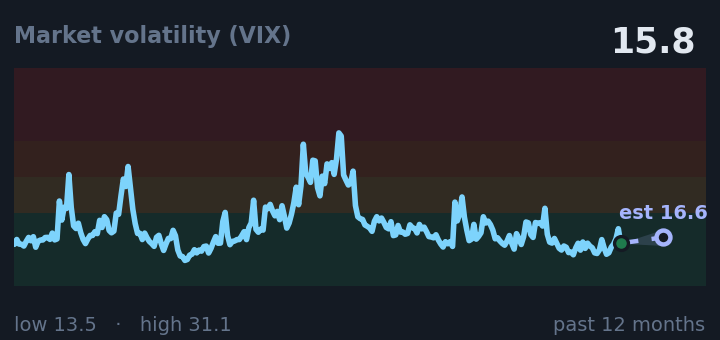
Market volatility reflects fear in financial markets; when traders become uncertain, borrowing gets tighter and the value of retirement savings can swing more sharply.
Source: FRED
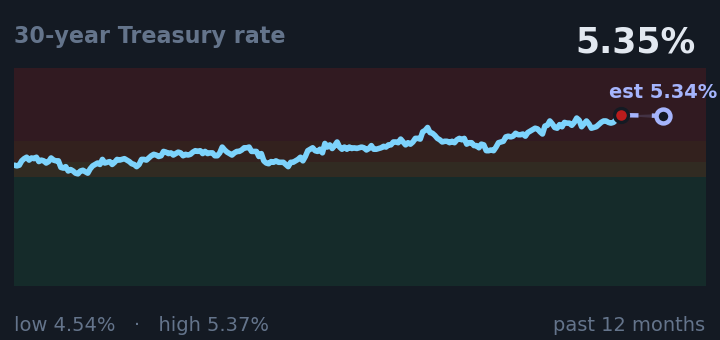
The 30-year Treasury rate shapes borrowing costs for long-term loans; higher rates make it more expensive to finance homes, businesses, and long-term projects.
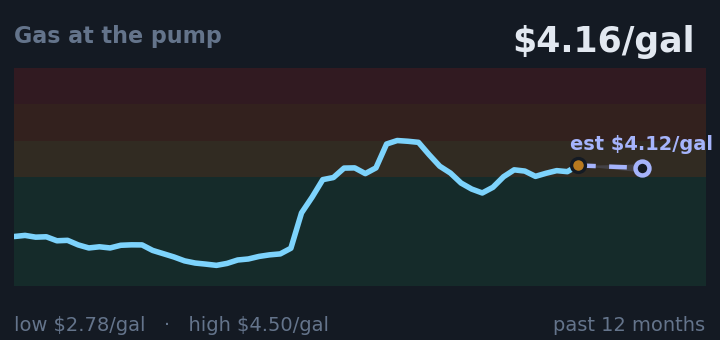
Gas prices at the pump are a visible cost that households feel each week and track closely when making spending and commuting decisions.
The 30-year mortgage rate is what homebuyers actually pay to borrow money for a home, the number that determines how many households can afford to buy.
Source: FRED
Jobless claims track people filing for unemployment each week, showing whether the job market is tight or loosening and layoffs are spreading.
Source: FREDIn plain terms: the public’s money is close to a coin flip on whether this will happen, and held steady overnight.
Polymarket prices Gabbard's exit before 2027 at 100%, suggesting near-certainty she'll leave first among Cabinet members. The perfect agreement across platforms indicates strong consensus, though 100% pricing may reflect low liquidity rather than genuine inevitability.
In plain terms: the public’s money is leaning that this will not happen, and grew more sure overnight.
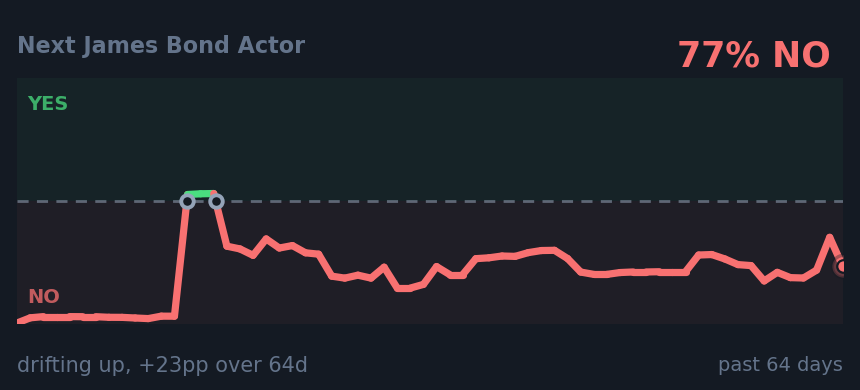
Polymarket and Kalshi disagree on Henry Cavill's chances, with Polymarket at 0% and Kalshi at 6%, indicating a 5-point spread that highlights a significant disagreement between the platforms on his likelihood of being cast.
In plain terms: the public’s money is close to a coin flip on whether this will not happen, and grew less sure overnight.
The average probability is 49%, indicating equal odds on both sides of the agreement, with Polymarket pricing it at 49% and Kalshi not providing a price due to its different format.
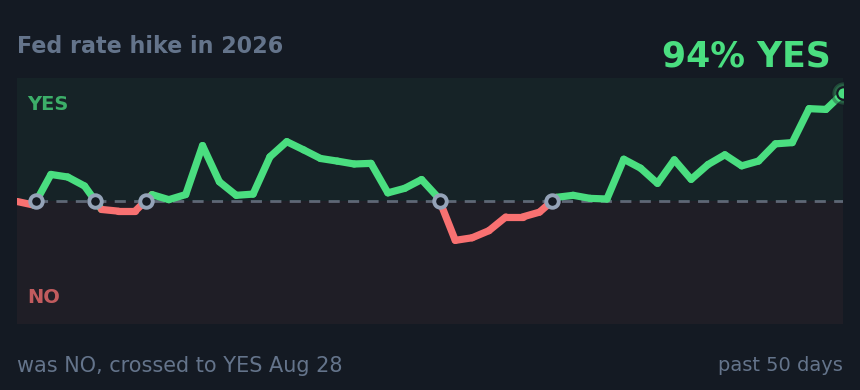
In plain terms: the public’s money is very confident this will happen, and grew more sure overnight.
Polymarket and Manifold agree on a 2-point spread around 49% average probability, indicating moderate consensus on the likelihood of a rate hike, with prices slightly favoring a hike.
In plain terms: the public’s money is close to a coin flip on whether this will not happen, and grew a little more sure overnight.
The platforms agree on a 3-point spread, with Kalshi slightly higher at 40%, indicating a slight bias towards an earlier solution by AI, but still a relatively low average probability of 39%.
Hamas attack of 7 Oct 2023 followed by ongoing IDF operations in Gaza; ripples into Hezbollah / Houthi / Iran lanes.
Russian invasion that began Feb 2022; front lines largely static along the Donbas / Zaporizhzhia axis. Drives Brent, gas, grain, defense-stock pricing.
SAF vs RSF civil war since April 2023. Khartoum + Darfur worst-hit. Off most newsfeeds — drives African food-aid and gold-flow markets.
Houthi missile/drone attacks on Red Sea shipping diverting traffic around the Cape. Bumps WTI, shipping rates, supply-chain timing markets.
Post-coup civil war between junta and PDF + ethnic armed organizations. Junta losing territory in Shan + Rakhine since late 2023.
| AMERICAS | 2 rose 0 fell 1 flat |
| EUROPE | 0 rose 0 fell 0 flat |
| ASIA | 0 rose 0 fell 0 flat |
| MENA | 0 rose 0 fell 0 flat |
| AFRICA | 0 rose 0 fell 0 flat |
| CRYPTO | 0 rose 0 fell 0 flat |