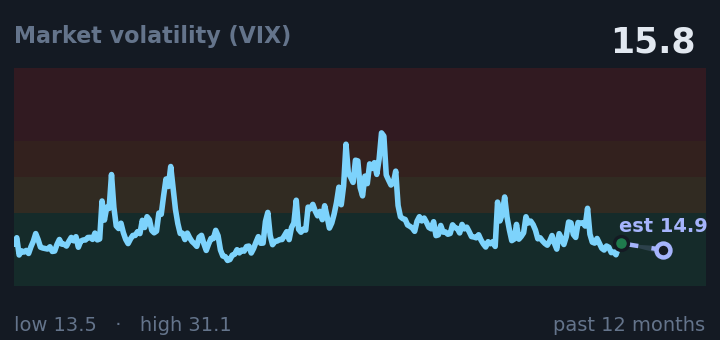
Market volatility at 15.2 means investment account swings are smaller than they were a month ago, reducing the daily pulse of your portfolio.
Jay Collins's odds of finishing second in the Florida Republican primary have crossed 50%, a threshold marked for the first time two days ago, as traders now see the race as a genuine coin flip.
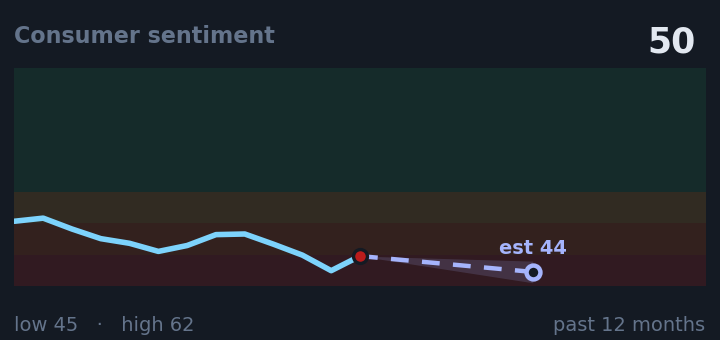
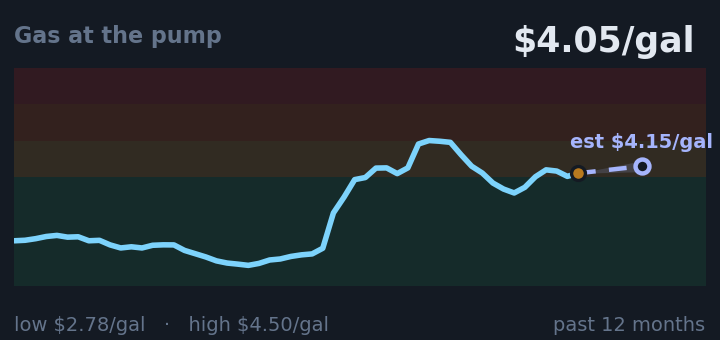
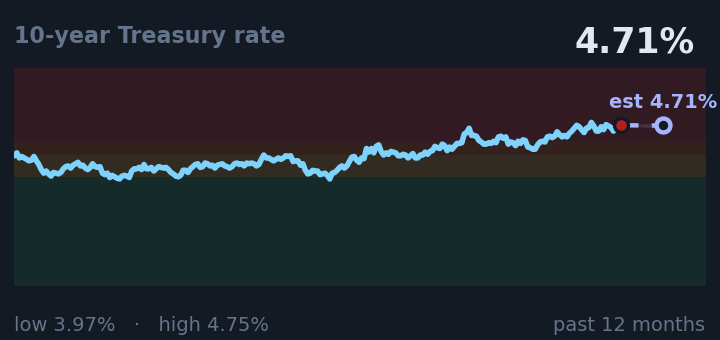
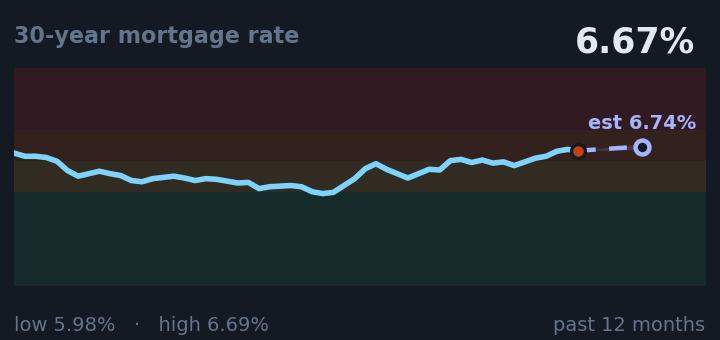
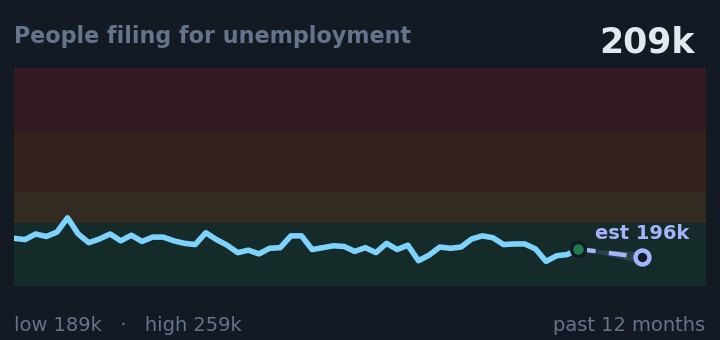
On August 13th, this brief named that market at 24%; it has risen 26 points in six days, extending a month-long shift toward uncertainty in Florida. Three of the board's five biggest movers sit clustered in the Americas: that Florida second-place race, odds on the next Trump press secretary (now 92% NO, fallen 10 points today), and odds on a U.S. military strike against Cuba by year-end (now 75% NO, down 17 points over the month, one of the clearest sustained moves on the board). The month-long wallet compression continues: 30-year mortgages have climbed to 6.67%, 10-year yields to 4.72%, both near year-highs, and gas sits at $4.05 per gallon, all pressing household finances; consumer sentiment at 50 remains depressed despite recent gains, though jobless claims have fallen to 209,000 over the same stretch.
→ Open the live interactive board
Get this every morning
Delivered to your inbox at 6:30, with the full archive, alerts, and the live board →
Market volatility at 15.2 means investment account swings are smaller than they were a month ago, reducing the daily pulse of your portfolio.
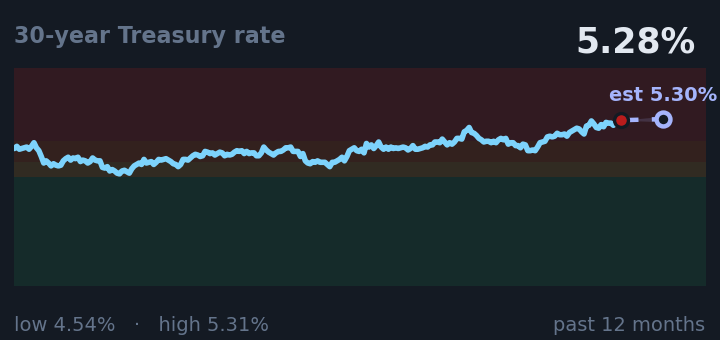
The 30-year Treasury yield at 5.31% sets the floor for mortgage rates, refinancing costs, and the interest rates available on long-term savings.
Consumer sentiment at 50 signals households remain cautious about spending and the future, which typically leads to slower hiring and investment.
Gas at $4.05 per gallon compresses household budgets on an unavoidable expense and historically correlates with shifts in voter sentiment.
The 10-year Treasury yield at 4.72% has entered the zone historically associated with bond-market pressure on government fiscal policy.
The 30-year mortgage rate at 6.67% suppresses housing demand and affects whether a household can build wealth through home equity.
Source: FRED
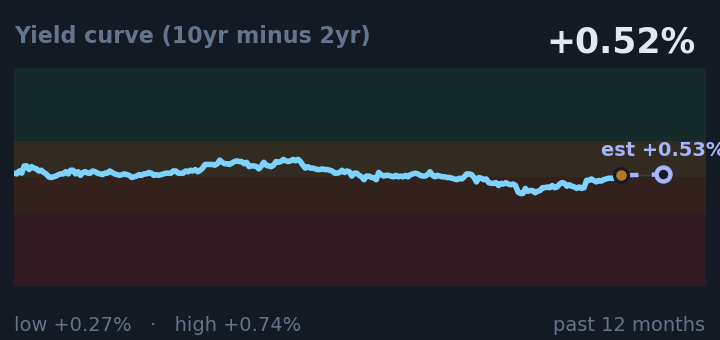
The yield curve spread at 0.52% has widened into normal range, signaling bond markets expect stable growth rather than recession.
Jobless claims at 209,000 are the fastest real-time signal of labor-market health; stable low claims mean employers are hiring or retaining workers.
Source: FREDIn plain terms: the public’s money is very confident this will not happen, and held steady overnight.
Kalshi and Polymarket agree on Roberto Gualtieri's low chances at 9-11%, with a 2-point spread indicating moderate disagreement, but both platforms price him as the most likely candidate among those mentioned.
In plain terms: the public’s money is leaning that this will not happen, and grew less sure overnight.
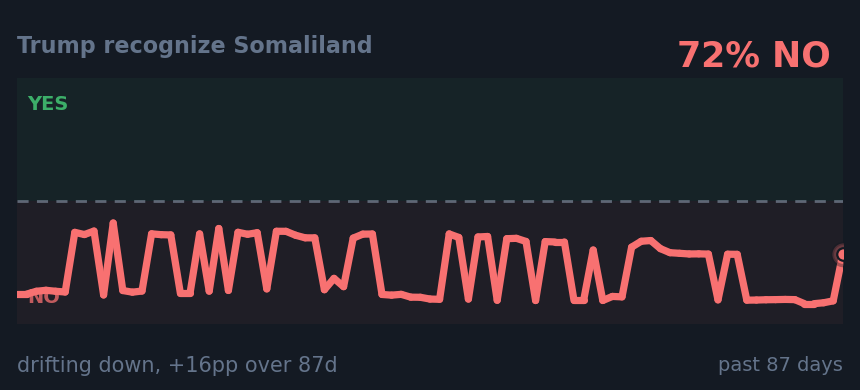
Massive 48-point spread between Kalshi (63%) and Polymarket (15%) on U.S. recognition of breakaway Somaliland. Disagreement likely reflects different interpretations of Trump's foreign policy priorities, geopolitical constraints with Somalia, and whether recognition occurs via ex
In plain terms: the public’s money is leaning that this will not happen, and grew more sure overnight.
Manifold prices the event at 36%, indicating a neutral market view on whether there will be a new press secretary by the end of August, with no clear bias or disagreement between platforms due to the 0 percentage points spread.
In plain terms: the public’s money is leaning that this will not happen, and grew a little more sure overnight.
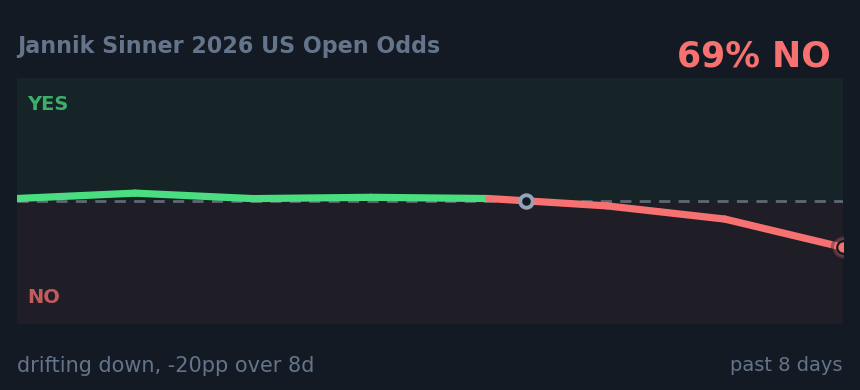
Manifold and Polymarket agree on a 50-52% range for Sinner's win probability, indicating a narrow consensus within the 1 percentage points spread that reflects moderate confidence in his chances.
In plain terms: the public’s money is close to a coin flip on whether this will not happen, and held steady overnight.
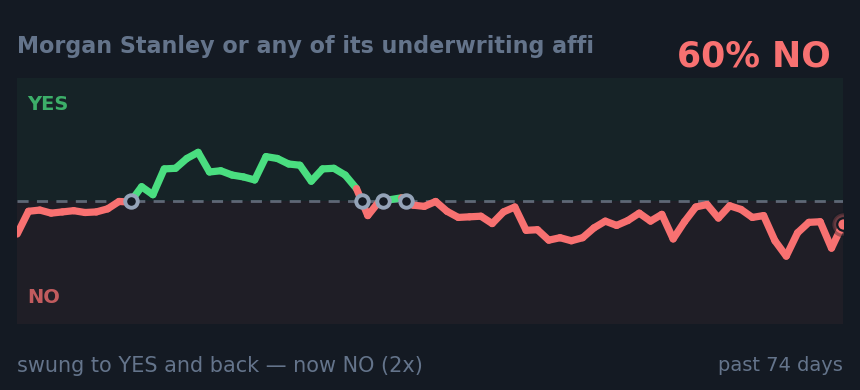
Kalshi and Polymarket disagree on Morgan Stanley's lead underwriter role, with a 7-point spread between 66% and 73%, indicating a nuanced market view on the bank's involvement.
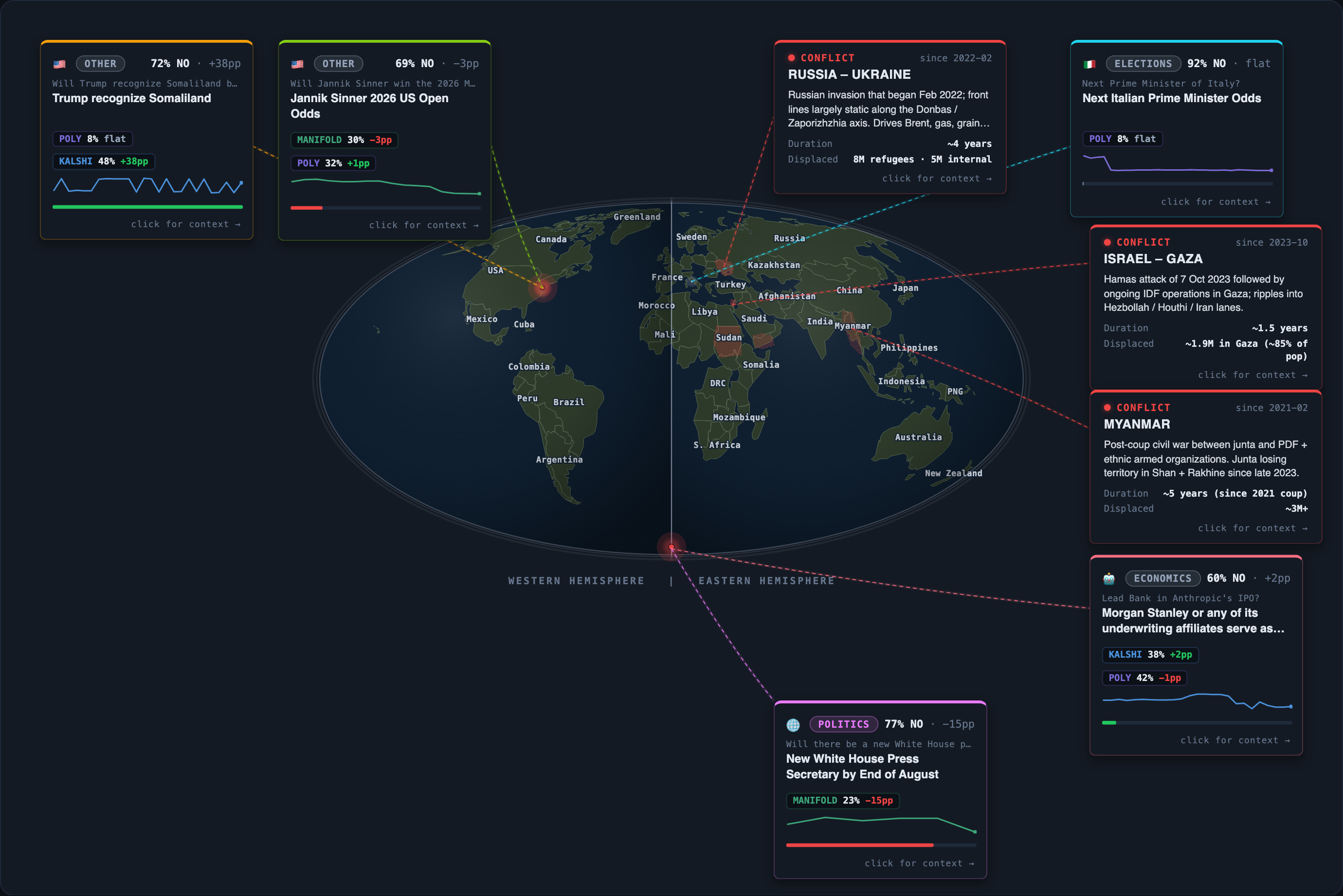
Hamas attack of 7 Oct 2023 followed by ongoing IDF operations in Gaza; ripples into Hezbollah / Houthi / Iran lanes.
Russian invasion that began Feb 2022; front lines largely static along the Donbas / Zaporizhzhia axis. Drives Brent, gas, grain, defense-stock pricing.
SAF vs RSF civil war since April 2023. Khartoum + Darfur worst-hit. Off most newsfeeds โ drives African food-aid and gold-flow markets.
Houthi missile/drone attacks on Red Sea shipping diverting traffic around the Cape. Bumps WTI, shipping rates, supply-chain timing markets.
Post-coup civil war between junta and PDF + ethnic armed organizations. Junta losing territory in Shan + Rakhine since late 2023.
| AMERICAS | 2 rose 0 fell 0 flat |
| EUROPE | 0 rose 0 fell 1 flat |
| ASIA | 0 rose 0 fell 0 flat |
| MENA | 0 rose 0 fell 0 flat |
| AFRICA | 0 rose 0 fell 0 flat |
| CRYPTO | 0 rose 0 fell 0 flat |