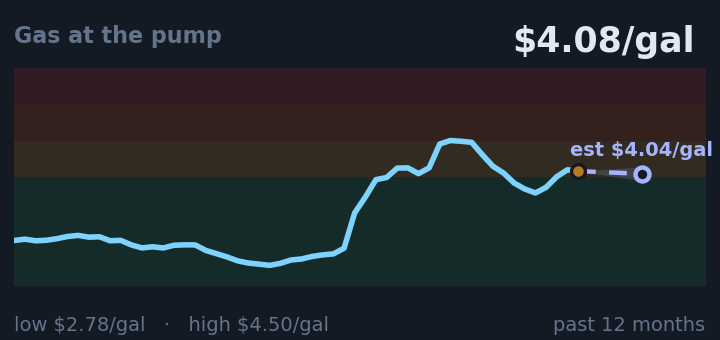
Gas at $4.08 a gallon affects both your household budget and political outcomes; elevated pump prices historically precede shifts in voter behavior.
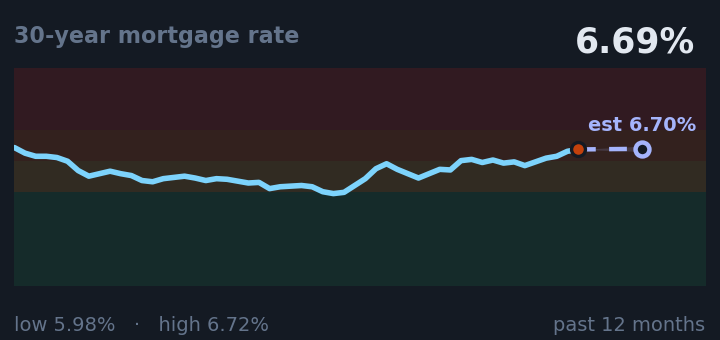
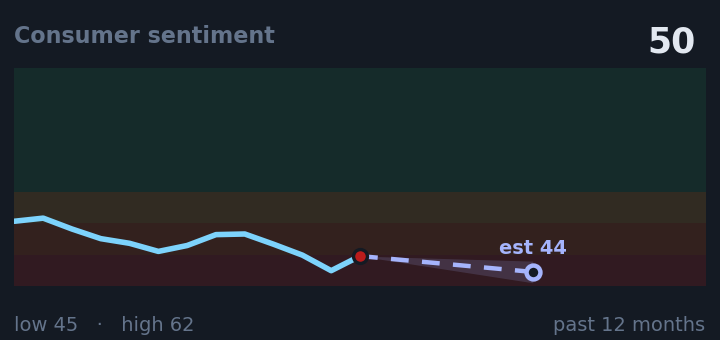
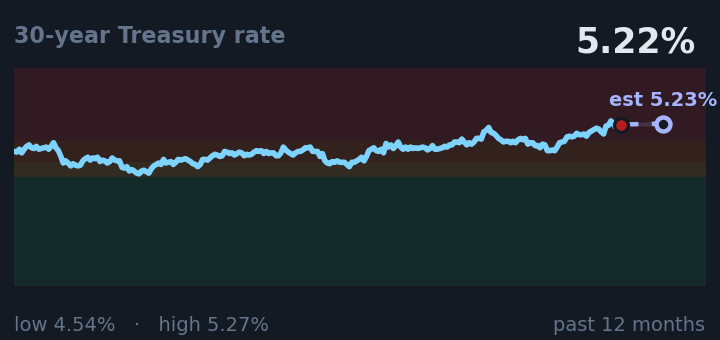
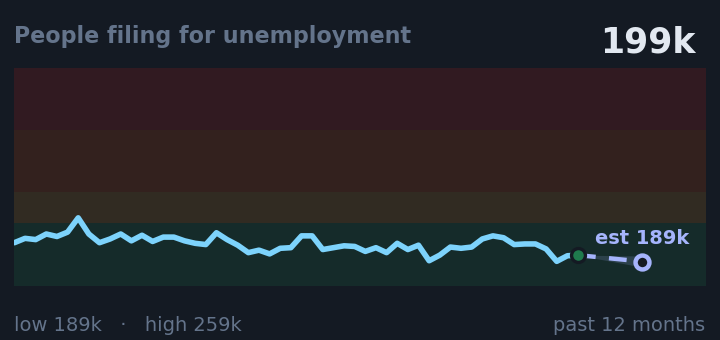
On 2026-08-02 this brief named Jay Collins finishing second in the Florida Republican Governor primary at 62% YES; traders moved that to 34%, a shift of 28 points in seven days. Two of the five biggest movers sit in the Americas: the Collins race in Florida and a question about whether the Clarity Act becomes law. The household wallet tightened all month without reversal: gas at $4.08 is up from $3.83, 30-year mortgage rates at 6.69% are up from 6.43%, and 30-year Treasury yields at 5.22% have risen from 5.05% into the fiscal-crisis zone. Jobless claims at 199k, down from 217k a month ago, suggest a tight labor market, yet household sentiment at 50, up only from 45, remains severely depressed and signals spending restraint.
→ Open the live interactive board
Get this every morning
Delivered to your inbox at 6:30, with the full archive, alerts, and the live board →
Gas at $4.08 a gallon affects both your household budget and political outcomes; elevated pump prices historically precede shifts in voter behavior.
If you're buying a home or refinancing, the 30-year mortgage rate at 6.69% determines your monthly payment and is high enough to suppress housing demand.
Source: FRED
Consumer sentiment at 50 measures whether households feel confident to spend; depressed sentiment signals economic contraction and consumer caution on big purchases.
The 30-year Treasury yield at 5.22% signals investor confidence in government debt and typically precedes policy reversals in spending or tariffs when yields spike into the crisis zone.
Source: FRED
Initial jobless claims at 199,000 measure job market health; historically very low, indicating a tight labor market where worker income remains secure.
Source: FRED
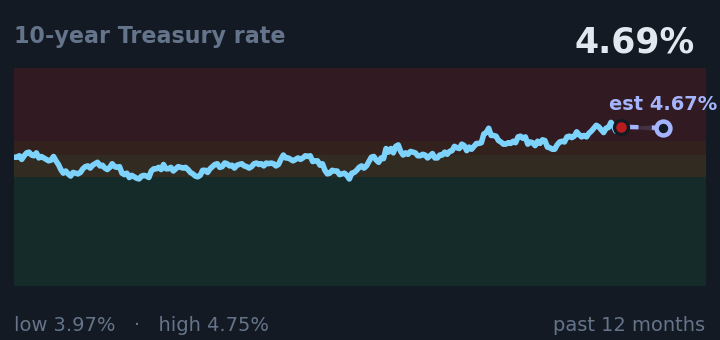
The 10-year Treasury yield at 4.69% signals bond-market pressure on government policy; yields in this zone have historically preceded policy reversals in tariffs and deficit spending.
Source: FRED
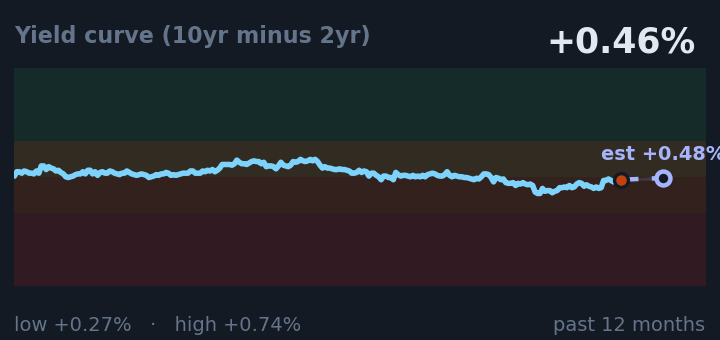
The yield curve spread at +0.46% measures inflation expectations and economic confidence; flattening spreads signal markets are pricing in slower long-term growth.
Source: FRED
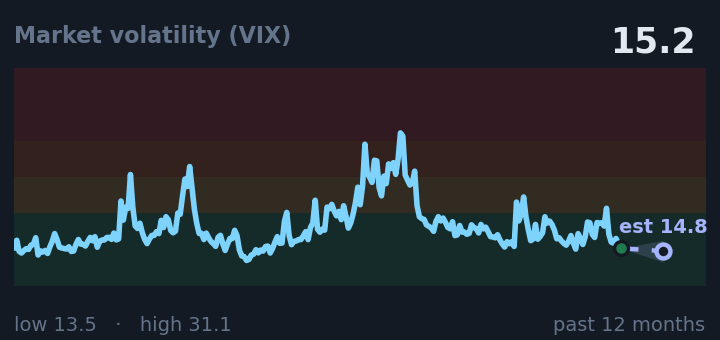
Market volatility at 15.2 measures investor fear or complacency; at the normal range, it indicates calm financial conditions without acute stress.
Source: FRED
In plain terms: the public’s money is leaning that this will happen, and grew much more sure overnight.
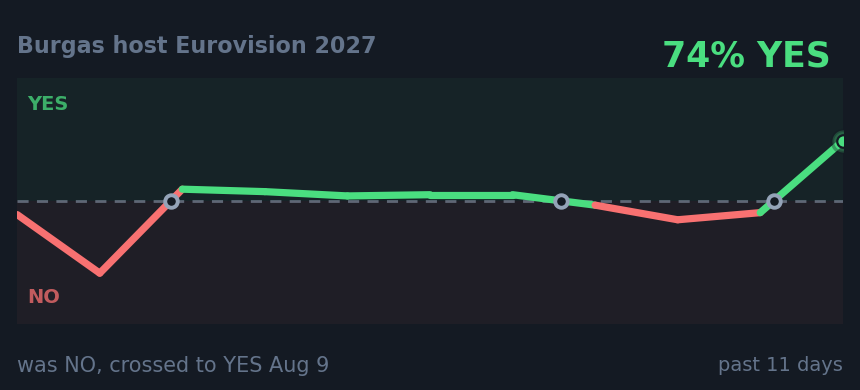
The platforms show a significant disagreement on the host city, with Kalshi pricing at 84% and Polymarket at 5%, indicating a large spread of 79 percentage points that highlights differing opinions among market participants.
In plain terms: the public’s money is very confident this will not happen, and grew more sure overnight.
Polymarket and Manifold agree on an average probability of 24.5%, with a 1 percentage points spread indicating a narrow consensus around the event's likelihood, but no clear indication of market sentiment or bias.
In plain terms: the public’s money is very confident this will not happen, and grew more sure overnight.
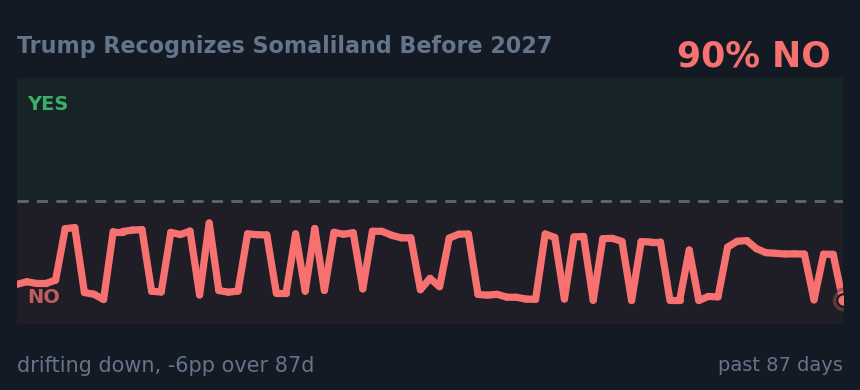
Massive 48-point spread between Kalshi (63%) and Polymarket (15%) on U.S. recognition of breakaway Somaliland. Disagreement likely reflects different interpretations of Trump's foreign policy priorities, geopolitical constraints with Somalia, and whether recognition occurs via ex
In plain terms: the public’s money is close to a coin flip on whether this will not happen, and held steady overnight.
The platforms show a significant disagreement on the next Romanian Prime Minister, with Polymarket pricing at 98% for appointment by December 31 and Kalshi at 33% for Sorin Grindeanu, indicating differing views on the likelihood of his appointment.
In plain terms: the public’s money is leaning that this will not happen, and grew a little more sure overnight.
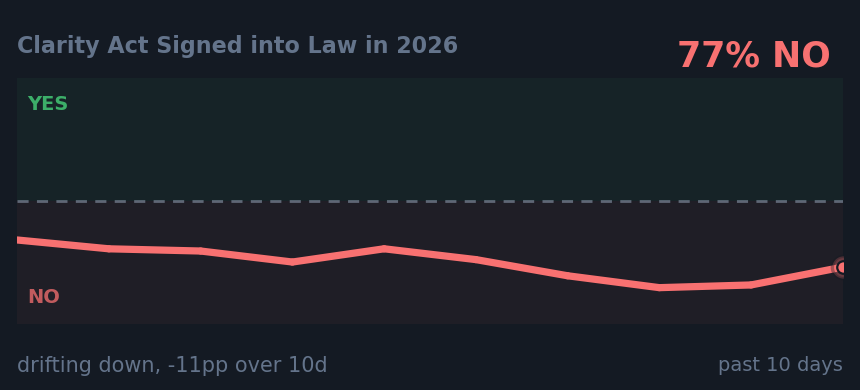
Manifold prices the Clarity Act at 39%, while polymarket is lower at 30%, indicating a disagreement of 9 percentage points, reflecting differing opinions on the likelihood of its passage.
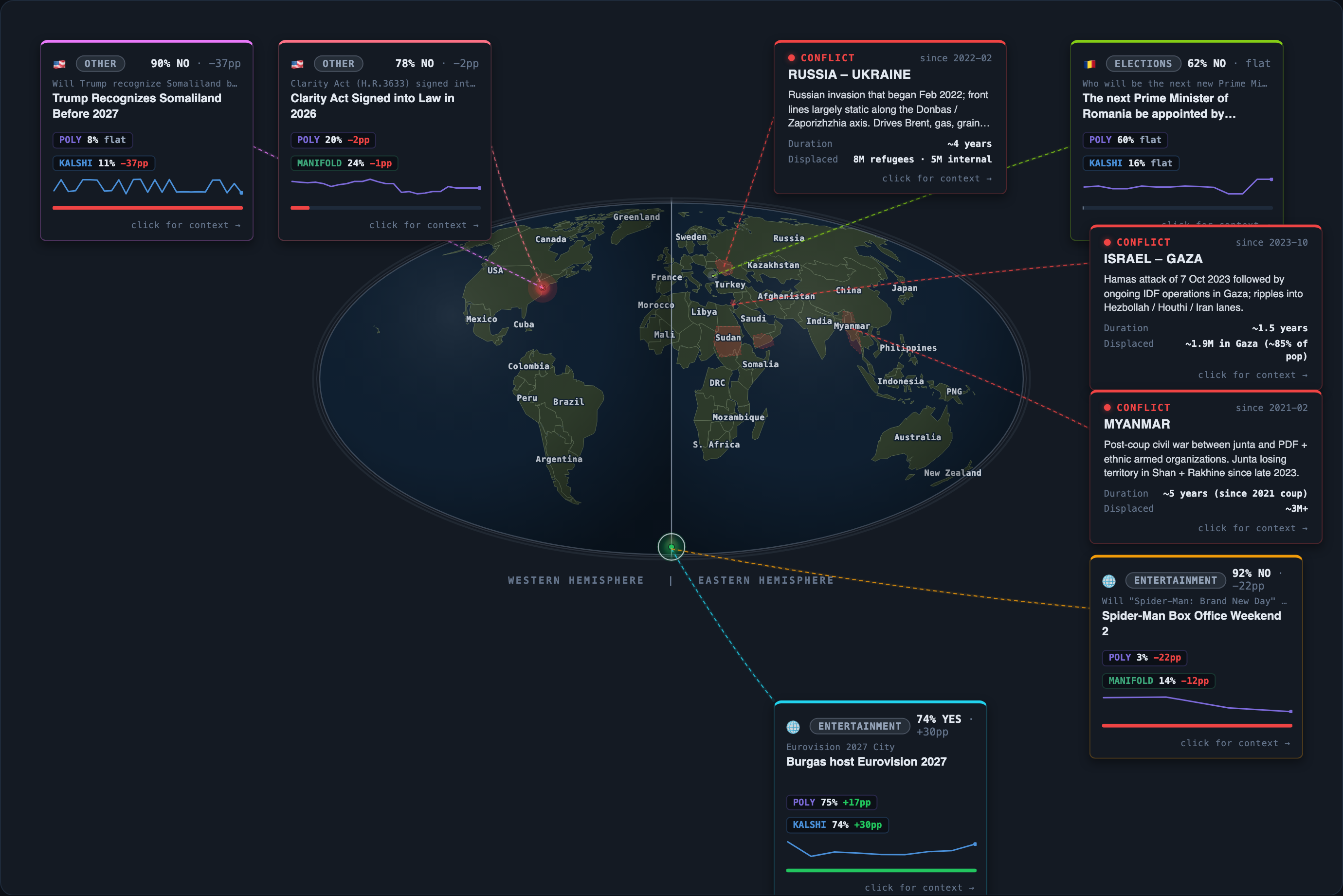
Hamas attack of 7 Oct 2023 followed by ongoing IDF operations in Gaza; ripples into Hezbollah / Houthi / Iran lanes.
Russian invasion that began Feb 2022; front lines largely static along the Donbas / Zaporizhzhia axis. Drives Brent, gas, grain, defense-stock pricing.
SAF vs RSF civil war since April 2023. Khartoum + Darfur worst-hit. Off most newsfeeds β drives African food-aid and gold-flow markets.
Houthi missile/drone attacks on Red Sea shipping diverting traffic around the Cape. Bumps WTI, shipping rates, supply-chain timing markets.
Post-coup civil war between junta and PDF + ethnic armed organizations. Junta losing territory in Shan + Rakhine since late 2023.
| AMERICAS | 1 rose 1 fell 0 flat |
| EUROPE | 0 rose 0 fell 1 flat |
| ASIA | 0 rose 0 fell 0 flat |
| MENA | 0 rose 0 fell 0 flat |
| AFRICA | 0 rose 0 fell 0 flat |
| CRYPTO | 0 rose 0 fell 0 flat |