Gas at the pump
Watch
$4.08/gal
up from $3.83/gal a month ago, in the middle of its range for the past year.
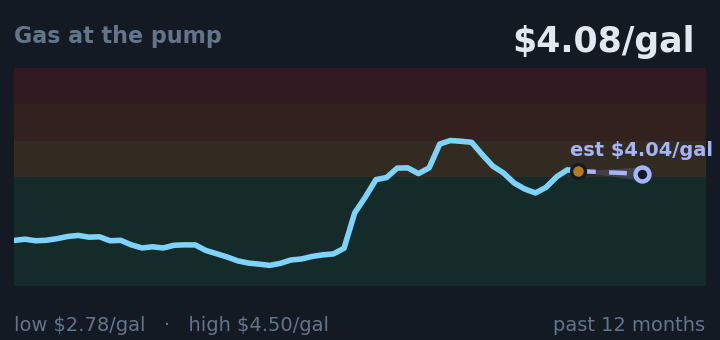
Gas prices hit household budgets immediately and shape how people vote; at $4.08, elevated prices historically correlate with approval declines.
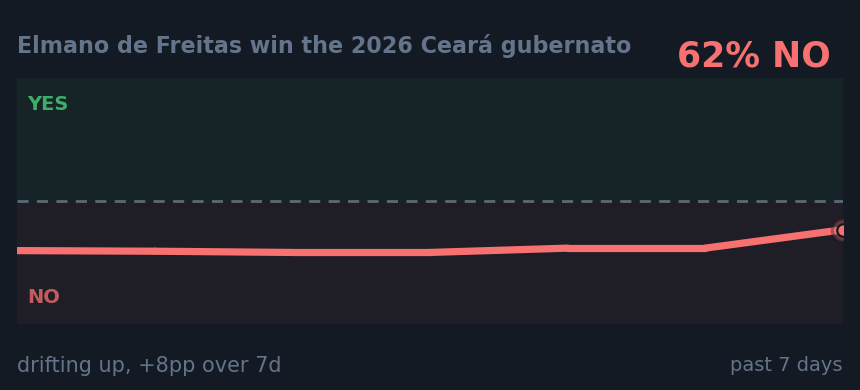
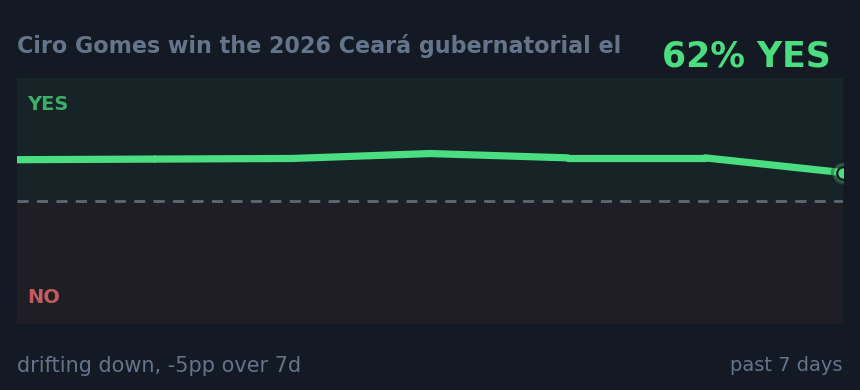
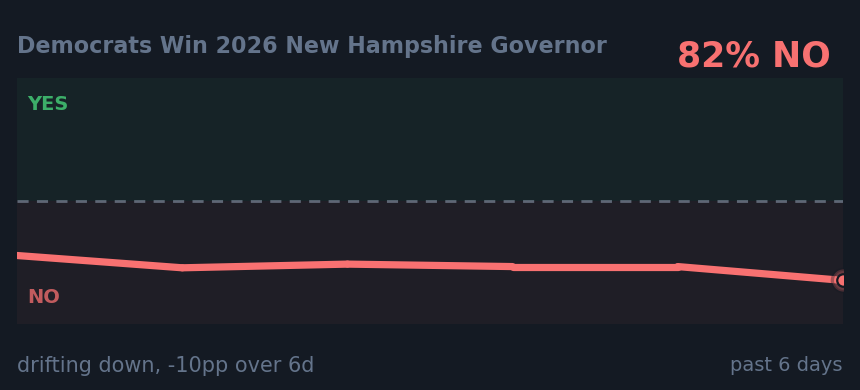
Connects to: Elmano de Freitas Ceará Gubernatorial Election; Ceará Gubernatorial Election 2026; Democrats Win 2026 New Hampshire Governor
Source: FRED
30-year mortgage rate
Caution
6.69%
up from 6.43% a month ago, near its highest in the past year.
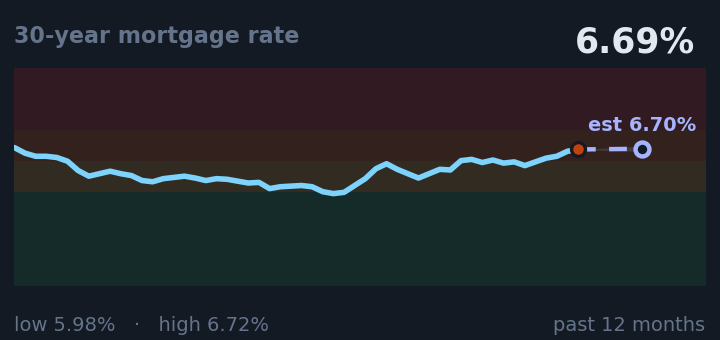
Monthly mortgage payments rise with rates; at 6.69%, fewer households can afford to buy or refinance, cooling the housing market.
Source: FRED
Consumer sentiment
Warning
50
up from 45 a month ago, in the middle of its range for the past year.
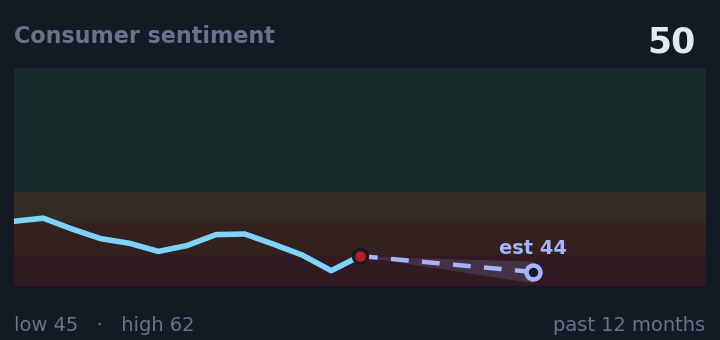
Sentiment at 50 is severely depressed: households expect bad times ahead despite current employment, which historically predicts sharp spending cuts coming.
Connects to: Elmano de Freitas Ceará Gubernatorial Election; Ceará Gubernatorial Election 2026; Democrats Win 2026 New Hampshire Governor
Source: FRED
30-year Treasury rate
Warning
5.22%
up from 5.05% a month ago, near its highest in the past year.
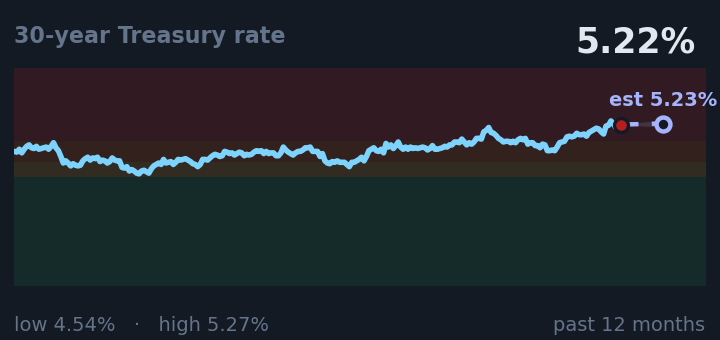
30-year borrowing rates at 5.22% enter the fiscal-crisis zone where policy reversals historically occur as governments face unsustainable deficit costs.
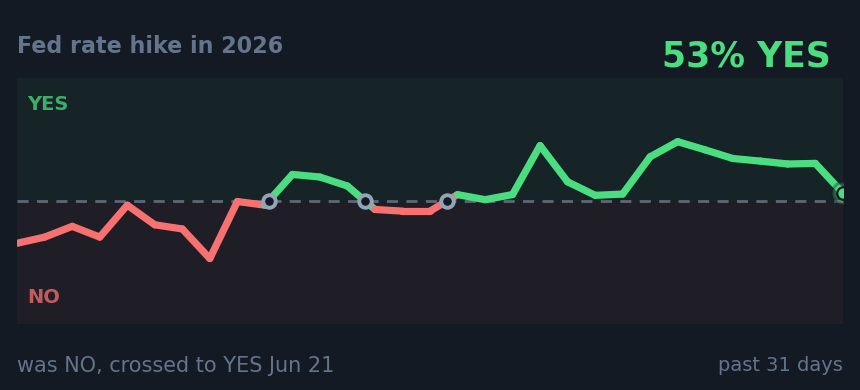
Connects to: Fed Rate Hike in 2026 Agreement; Anthropic IPO Lead Bank Disagreement
Source: FRED
People filing for unemployment
Normal
199k
down from 217k a month ago, near its lowest in the past year.
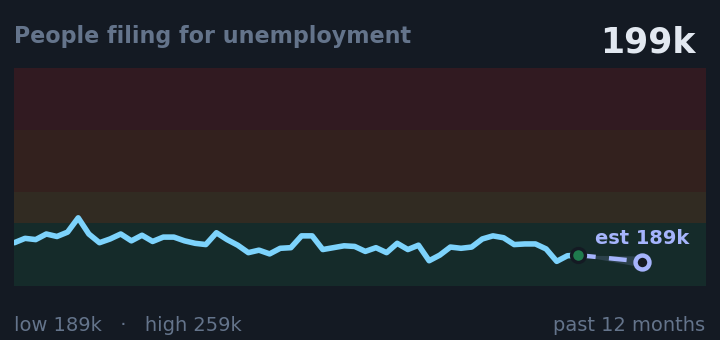
Jobless claims at 199,000 show strong employment, though this job security isn't translating into household confidence or willingness to spend.
Source: FRED
10-year Treasury rate
Warning
4.69%
up from 4.55% a month ago, near its highest in the past year.
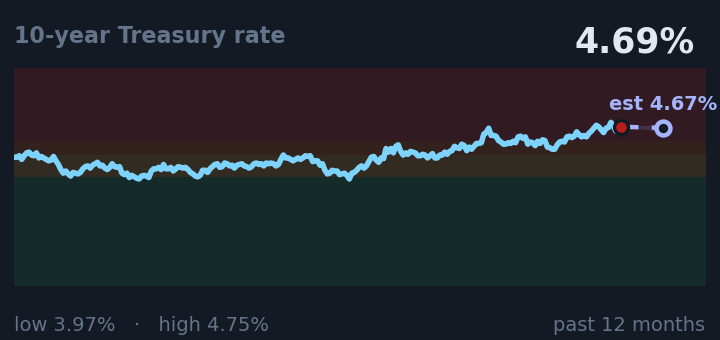
10-year rates at 4.69% reflect bond-market pressure that historically forces policy reversals, such as April 2025 when tariff concerns pushed rates up and prompted a pause.
Connects to: Fed Rate Hike in 2026 Agreement; Anthropic IPO Lead Bank Disagreement
Source: FRED
Yield curve (10yr minus 2yr)
Caution
+0.46%
up from +0.35% a month ago, in the middle of its range for the past year.
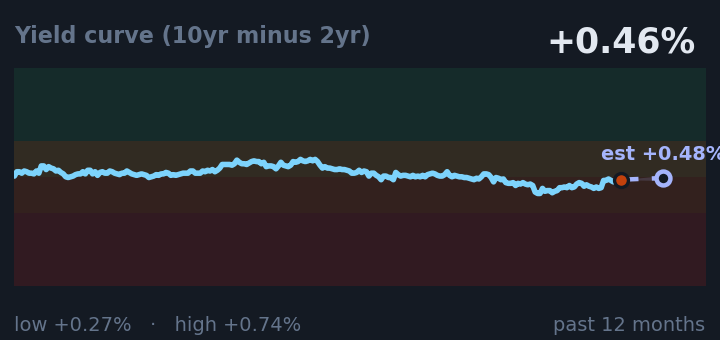
The yield curve at 0.46% is moderately positive, meaning the long-term borrowing rate exceeds the short-term rate, a sign recession isn't imminent.
Connects to: Fed Rate Hike in 2026 Agreement; Anthropic IPO Lead Bank Disagreement
Source: FRED
Market volatility (VIX)
Normal
15.2
down from 16.1 a month ago, near its lowest in the past year.
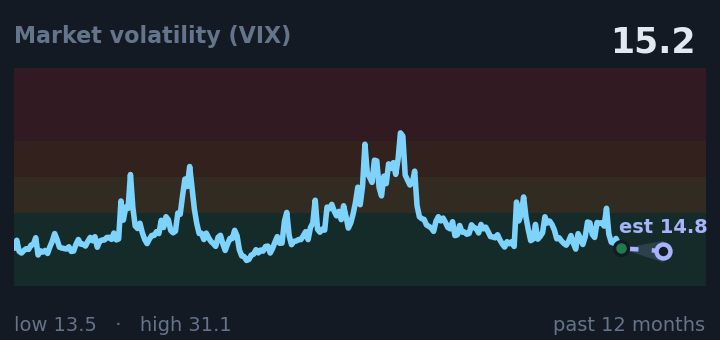
Volatility at 15.2 is in the normal range, showing financial markets aren't pricing in fear of major market moves in the near term.
Connects to: Anthropic IPO Lead Bank Disagreement
Source: FRED