Gas at the pump
Watch
$4.08/gal
up from $3.83/gal a month ago, in the middle of its range for the past year.
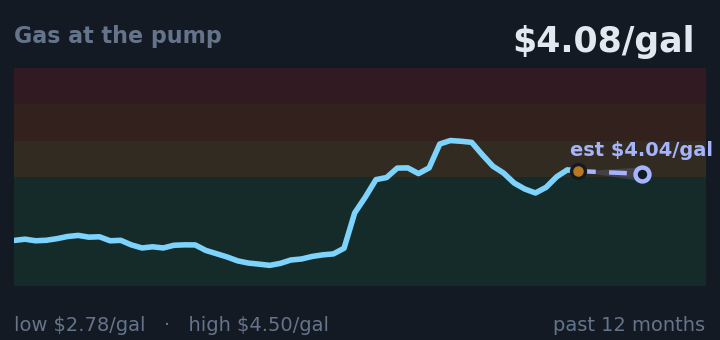
Gas at $4.08 a gallon is rising and enters household budgets directly on every fill-up, historically correlating with voter approval swings.
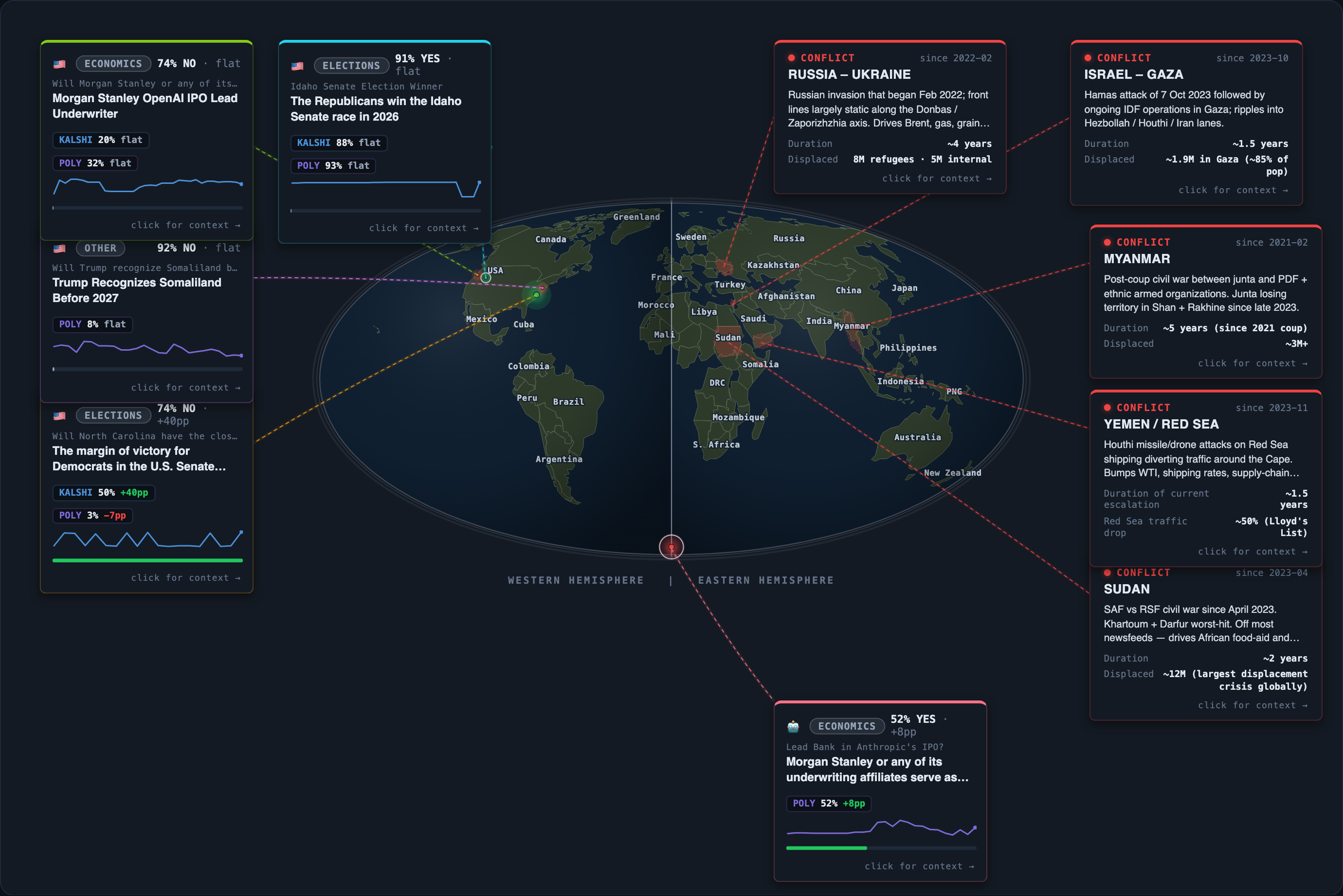
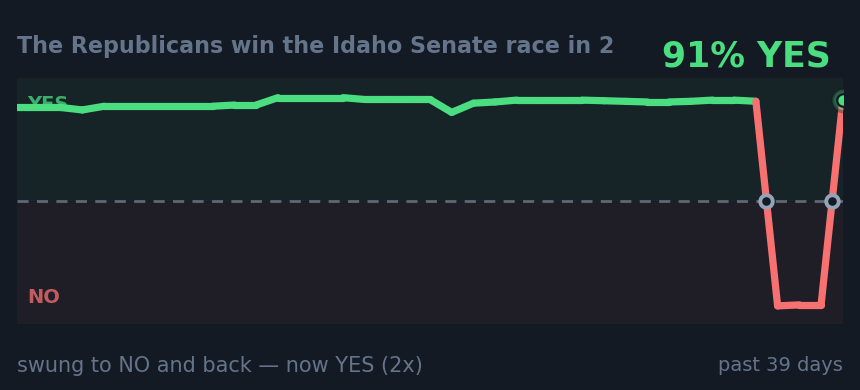
Connects to: Republicans Win Idaho Senate 2026; North Carolina Senate Closest Race in 2026
Source: FRED
Consumer sentiment
Warning
50
up from 45 a month ago, in the middle of its range for the past year.
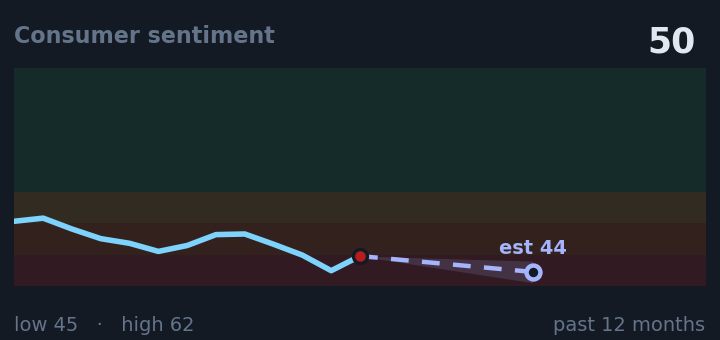
Consumer sentiment at 50 (severely depressed) reveals household anxiety about spending despite strong employment—a decision point for retail and housing.
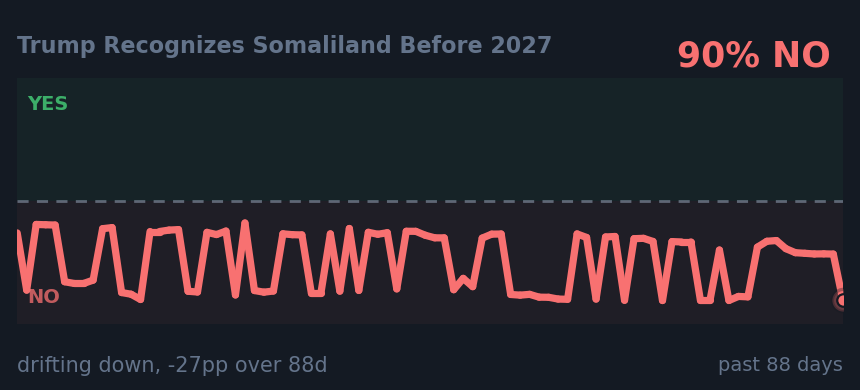
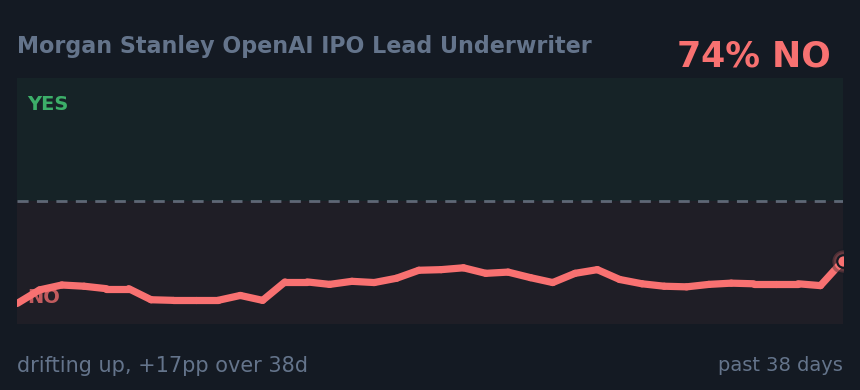
Connects to: Republicans Win Idaho Senate 2026; North Carolina Senate Closest Race in 2026; Morgan Stanley OpenAI IPO Lead Underwriter
Source: FRED
30-year Treasury rate
Warning
5.18%
up from 4.98% a month ago, near its highest in the past year.
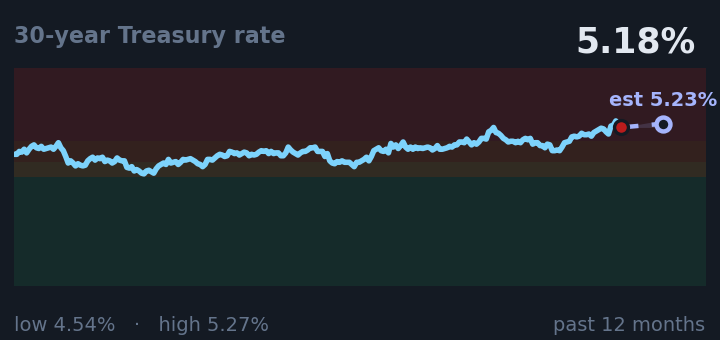
Long-term Treasury yields at 5.23% are now in the fiscal-crisis zone historically linked to policy reversals, and they drive the mortgage rates homebuyers face.
Connects to: Morgan Stanley OpenAI IPO Lead Underwriter; Anthropic IPO Lead Bank Disagreement
Source: FRED
People filing for unemployment
Normal
197k
down from 216k a month ago, near its lowest in the past year.
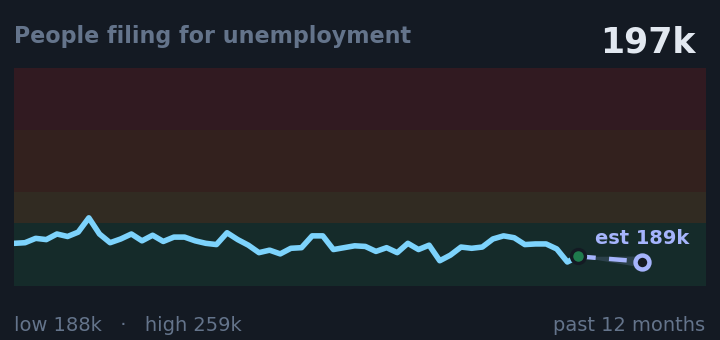
Jobless claims at 197,000 (the lowest in a year) show labor remains tight even as household sentiment stays depressed—contradicting the usual link between employment and confidence.
Connects to: Morgan Stanley OpenAI IPO Lead Underwriter
Source: FRED
30-year mortgage rate
Caution
6.66%
up from 6.49% a month ago, near its highest in the past year.
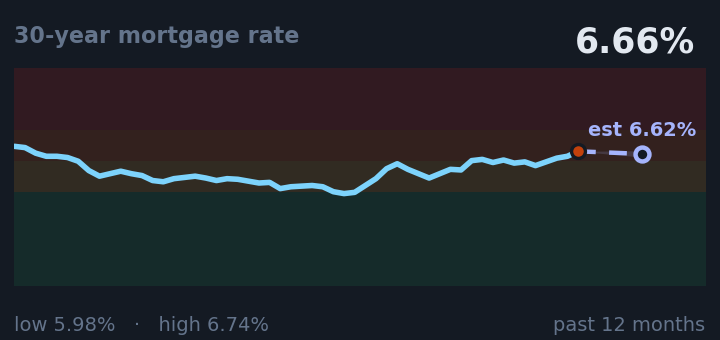
Mortgage rates at 6.66% (up from 6.49% a month ago) directly raise monthly payments and suppress housing demand.
Source: FRED
10-year Treasury rate
Warning
4.63%
up from 4.49% a month ago, in the middle of its range for the past year.
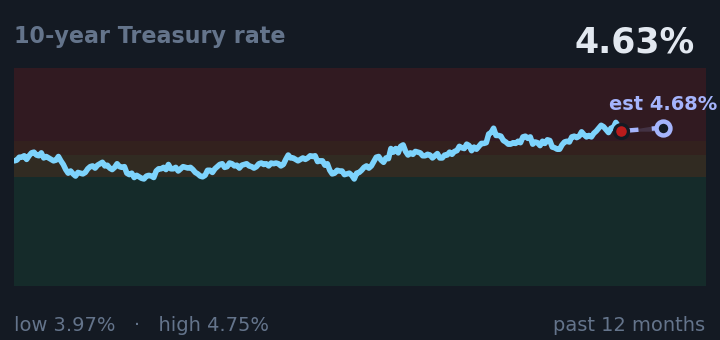
The 10-year rate at 4.70% sits in the bond vigilante pressure zone, historically triggering policy reversals on tariffs and trade.
Connects to: Morgan Stanley OpenAI IPO Lead Underwriter; Anthropic IPO Lead Bank Disagreement
Source: FRED
Yield curve (10yr minus 2yr)
Caution
+0.43%
up from +0.35% a month ago, in the middle of its range for the past year.
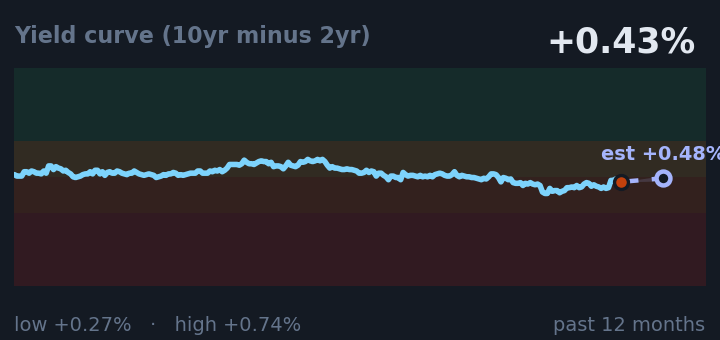
The yield curve spread at 0.43% (flattening from 0.35% a month ago) has historically preceded recessions and deserves monitoring.
Connects to: Morgan Stanley OpenAI IPO Lead Underwriter; Anthropic IPO Lead Bank Disagreement
Source: FRED
Market volatility (VIX)
Normal
16.5
up from 15.8 a month ago, in the middle of its range for the past year.
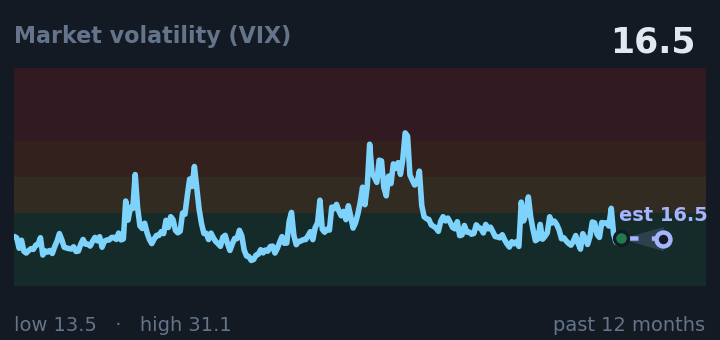
Market volatility at 15.9 sits in the normal range, suggesting equity traders expect relative calm in the near term.
Connects to: Anthropic IPO Lead Bank Disagreement
Source: FRED