30-year Treasury rate
Warning
5.27%
up from 4.97% a month ago, near its highest in the past year.
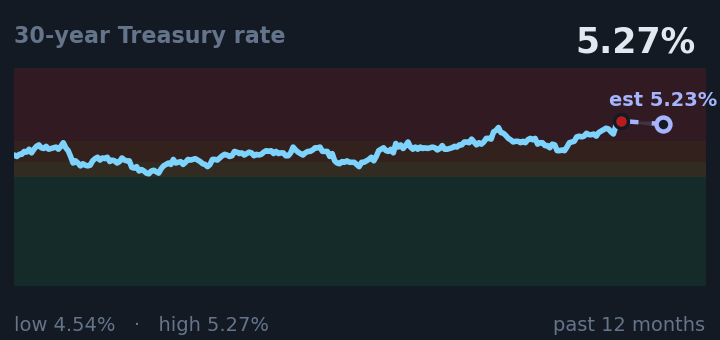
The 30-year Treasury rate is what the government pays to borrow for 30 years; when it rises like this, mortgage rates spike and housing becomes unaffordable for many families.
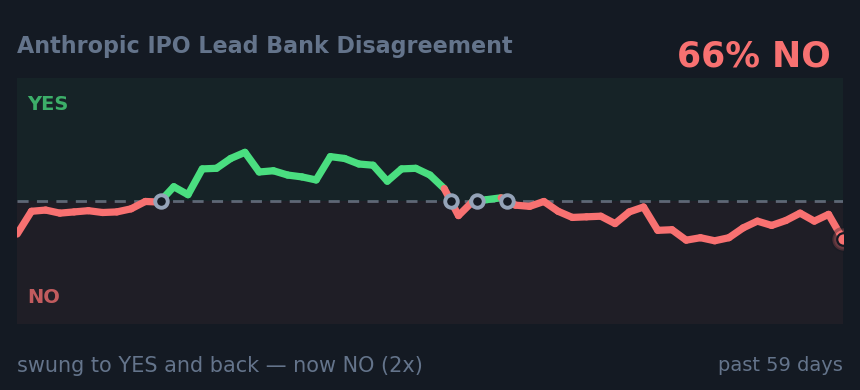
Connects to: Anthropic IPO Lead Bank Disagreement
Source: FRED
10-year Treasury rate
Warning
4.75%
up from 4.48% a month ago, near its highest in the past year.
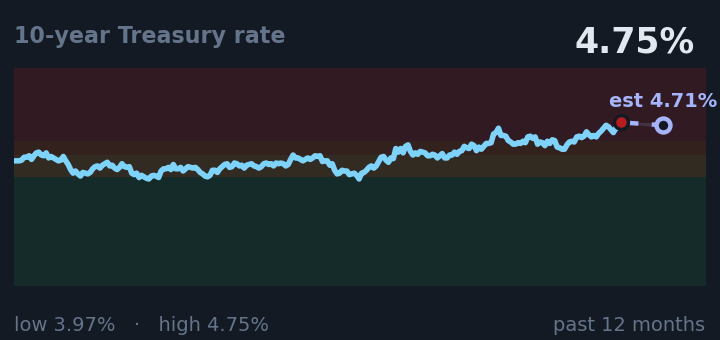
The 10-year Treasury rate is a key benchmark for long-term borrowing costs across the economy; this level of pressure has historically forced governments to reverse course on spending and policy.
Connects to: Anthropic IPO Lead Bank Disagreement
Source: FRED
Consumer sentiment
Warning
50
up from 45 a month ago, in the middle of its range for the past year.
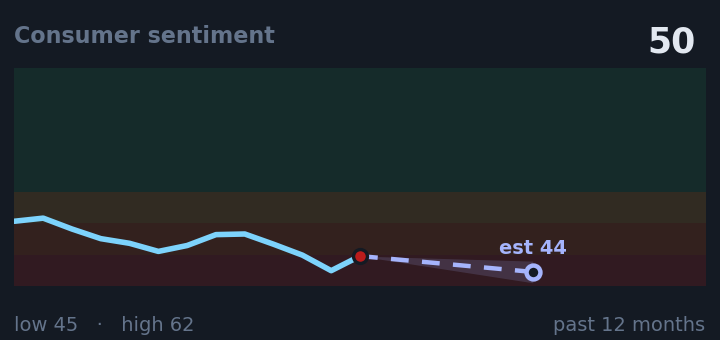
Consumer sentiment measures how confident families feel about their jobs and finances; at this level, people typically cut spending and delay major purchases like homes and cars.
Connects to: Alexandru Nazare Next Romanian Prime Minister; Clacton By-election 2nd Place Disagreement; South Carolina Senate Special Republican Primary Second Place
Source: FRED
Gas at the pump
Watch
$4.10/gal
up from $3.91/gal a month ago, in the middle of its range for the past year.
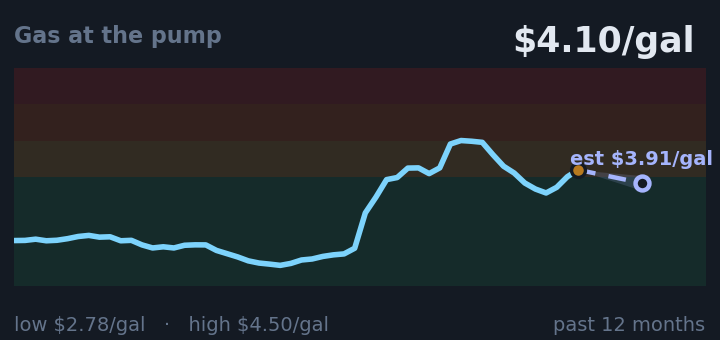
Gas prices affect what you pay at the pump and ripple through costs for groceries, shipping, and heating; elevated prices historically erode political approval.
Connects to: Alexandru Nazare Next Romanian Prime Minister; Clacton By-election 2nd Place Disagreement; South Carolina Senate Special Republican Primary Second Place
Source: FRED
People filing for unemployment
Normal
197k
down from 216k a month ago, near its lowest in the past year.
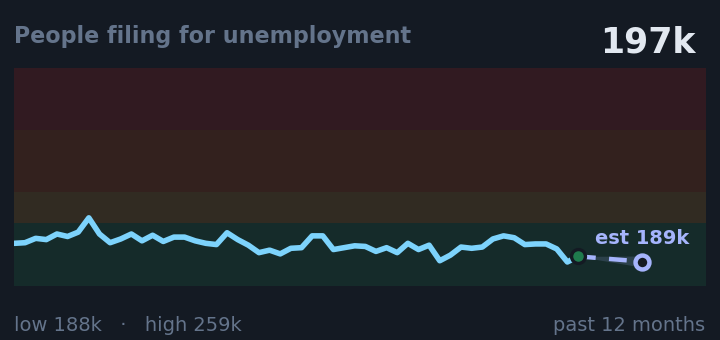
Jobless claims measure how many people file for unemployment each week; at 197,000, this is very low, indicating the job market is tight and employers are still actively hiring.
Source: FRED
Yield curve (10yr minus 2yr)
Caution
+0.47%
up from +0.31% a month ago, in the middle of its range for the past year.
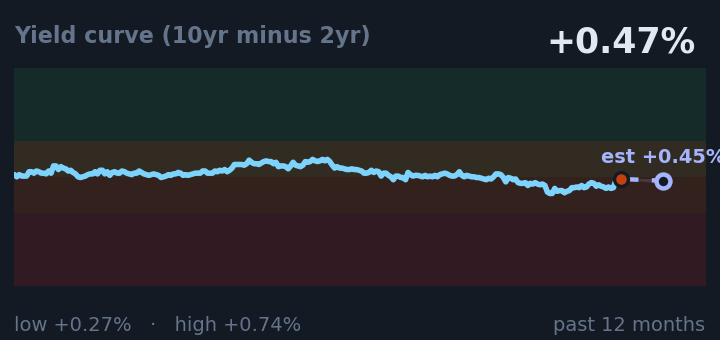
The yield curve measures the difference between what the government pays to borrow for 10 years versus 2 years; when it flattens or inverts, it historically signals economic slowdown coming.
Connects to: Anthropic IPO Lead Bank Disagreement
Source: FRED
30-year mortgage rate
Caution
6.66%
up from 6.49% a month ago, near its highest in the past year.
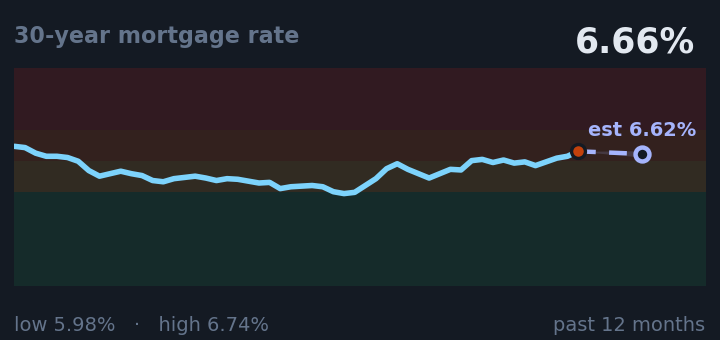
Mortgage rates determine what you pay monthly on a home; at 6.66%, this level makes monthly payments significantly higher, suppressing demand from homebuyers.
Source: FRED
Market volatility (VIX)
Normal
16.0
down from 16.6 a month ago, near its lowest in the past year.
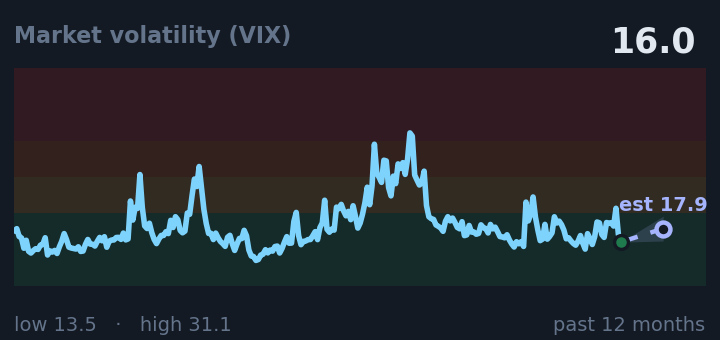
Market volatility (VIX) is 16.0, down from 16.6 a month ago, and near its lowest in the past year.
Connects to: Anthropic IPO Lead Bank Disagreement
Source: FRED