30-year Treasury rate
Warning
5.13%
up from 4.90% a month ago, near its highest in the past year.
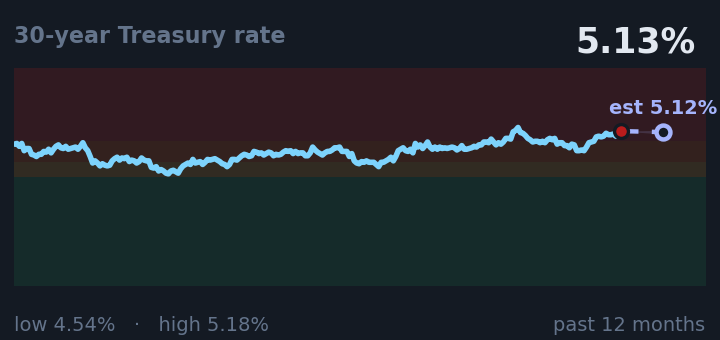
The 30-year Treasury rate at 5.11% pulls mortgage rates higher, pricing more families out of home buying and raising costs for anyone who can afford to borrow.
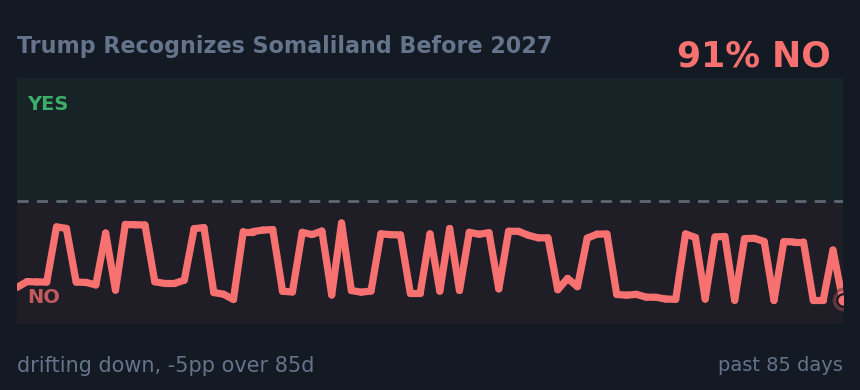
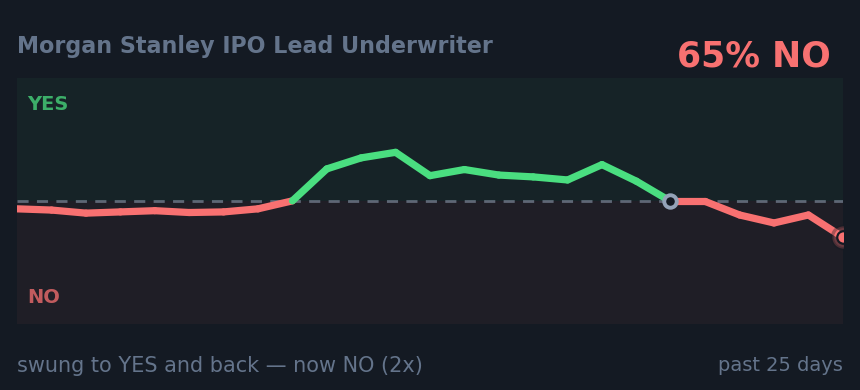
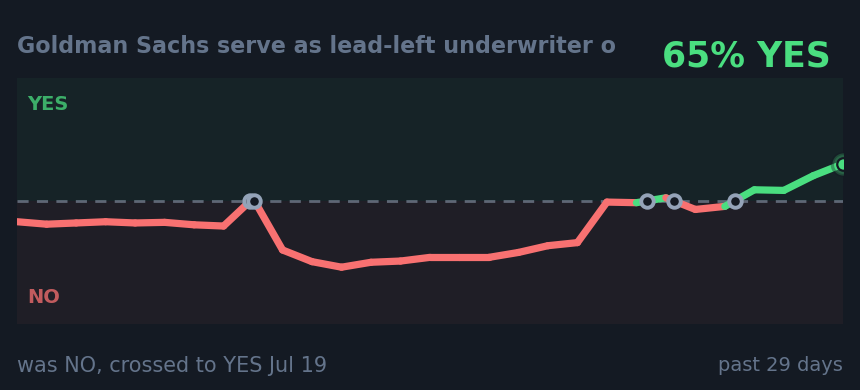
Connects to: Morgan Stanley IPO Lead Underwriter; Goldman Sachs Anthropic IPO Underwriter
Source: FRED
Consumer sentiment
Warning
45
down from 50 a month ago, near its lowest in the past year.
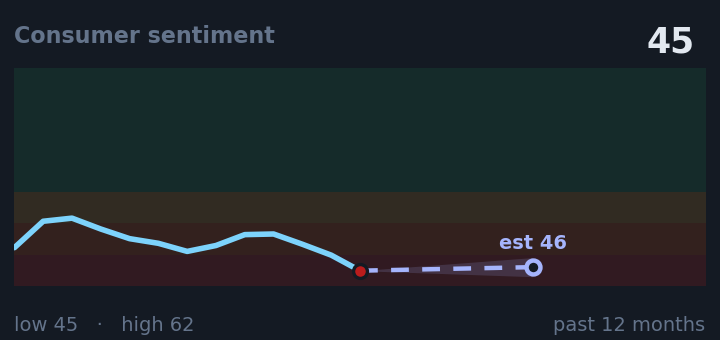
Consumer confidence at 45 means households are cutting spending on big purchases like homes and cars, which influences electoral outcomes because voters reward or punish parties based on how secure their own finances feel.
Connects to: Next UN Secretary-General Disagreement; Morgan Stanley IPO Lead Underwriter
Source: FRED
People filing for unemployment
Normal
208k
down from 230k a month ago, in the middle of its range for the past year.
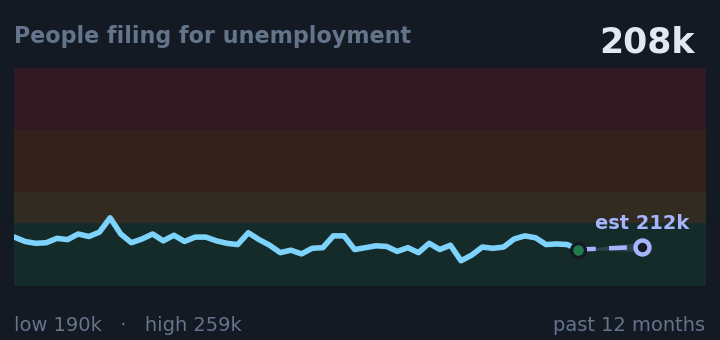
Jobless claims at 208,000 show how many people are losing their jobs each week; lower numbers mean the labor market remains stable enough to support household spending.
Connects to: Morgan Stanley IPO Lead Underwriter
Source: FRED
10-year Treasury rate
Warning
4.63%
up from 4.46% a month ago, near its highest in the past year.
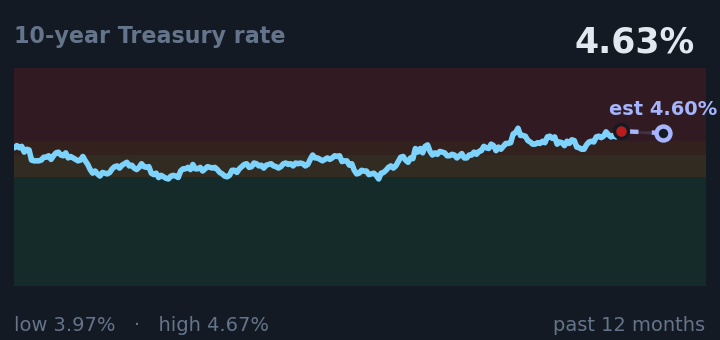
The 10-year Treasury at 4.60% signals how investors view the government's ability to pay its debts; rising rates above 4.5% have historically forced governments to reverse expensive policies.
Connects to: Morgan Stanley IPO Lead Underwriter; Goldman Sachs Anthropic IPO Underwriter
Source: FRED
Yield curve (10yr minus 2yr)
Caution
+0.37%
up from +0.27% a month ago, in the middle of its range for the past year.
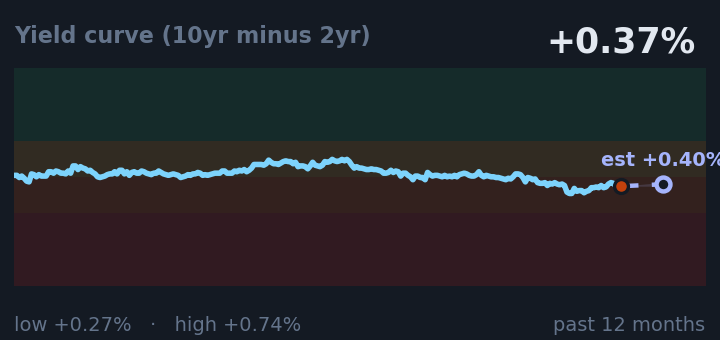
The yield curve at 0.37% indicates investor expectations for growth versus recession; a narrowing yield curve has historically preceded recessions.
Connects to: Morgan Stanley IPO Lead Underwriter; Goldman Sachs Anthropic IPO Underwriter
Source: FRED
Gas at the pump
Watch
$4.00/gal
down from $4.05/gal a month ago, in the middle of its range for the past year.
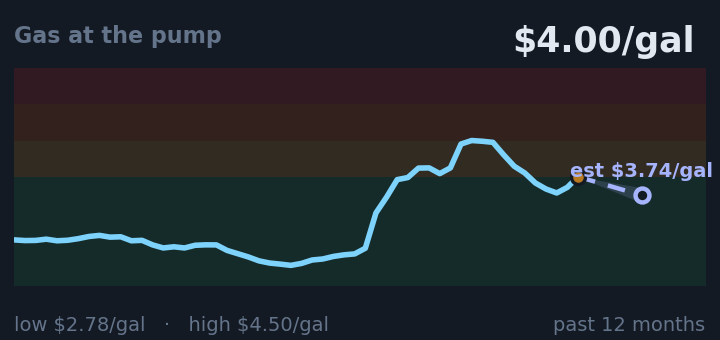
Gas at $4.00 per gallon reduces household spending power for necessities and historically correlates with electoral backlash.
Connects to: Next UN Secretary-General Disagreement
Source: FRED
Market volatility (VIX)
Normal
17.1
up from 16.8 a month ago, in the middle of its range for the past year.
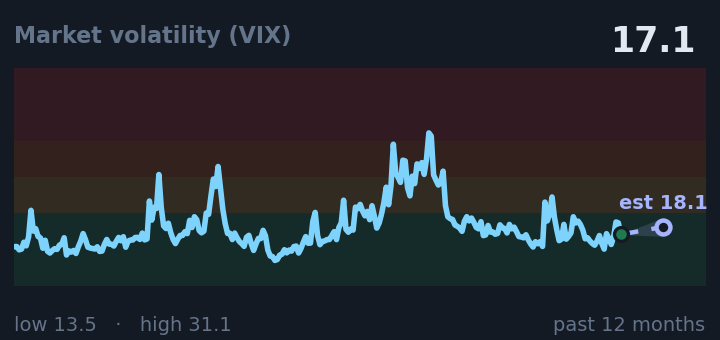
Market volatility at 18.6 reflects investor worry about what political or economic events could happen next.
Connects to: Goldman Sachs Anthropic IPO Underwriter
Source: FRED
30-year mortgage rate
Caution
6.55%
about the same as a month ago, in the middle of its range for the past year.
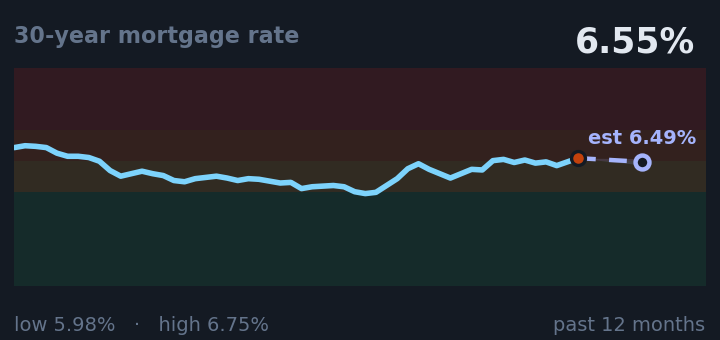
A 30-year mortgage rate of 6.55% limits how many families can afford to buy homes, raising monthly payments on the same loan amount.
Source: FRED