Gas at the pump
Normal
$3.85/gal
down from $4.15/gal a month ago, in the middle of its range for the past year.
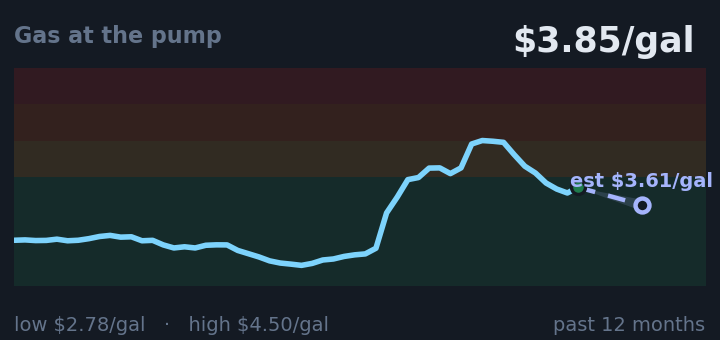
Gas prices affect what families pay for transportation; the decline from $4.15 to $3.85 per gallon provides relief, though current sentiment shows this has not yet restored broader spending confidence.
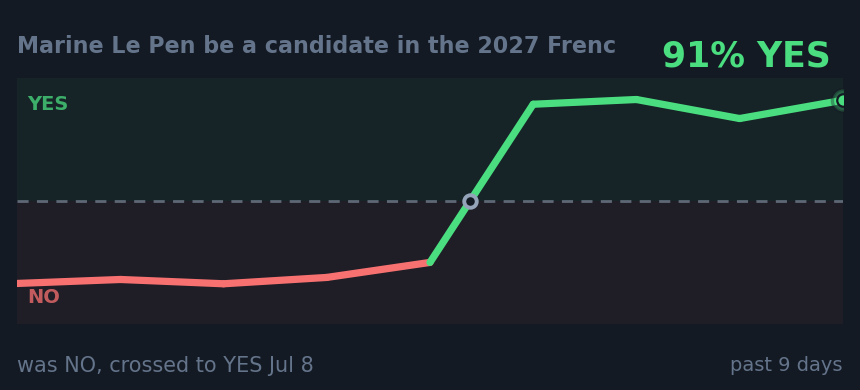
Connects to: Marine Le Pen 2027 French Presidential Ballot
Source: FRED
Consumer sentiment
Warning
45
down from 50 a month ago, near its lowest in the past year.
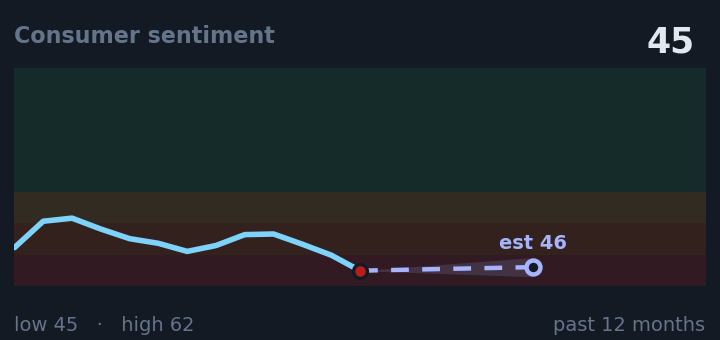
Consumer sentiment at 45, near its lowest in the past year, reflects household confidence about the future; when sentiment is this depressed, families typically reduce spending and delay major purchases like homes and cars.
Connects to: Marine Le Pen 2027 French Presidential Ballot
Source: FRED
People filing for unemployment
Normal
208k
down from 230k a month ago, in the middle of its range for the past year.
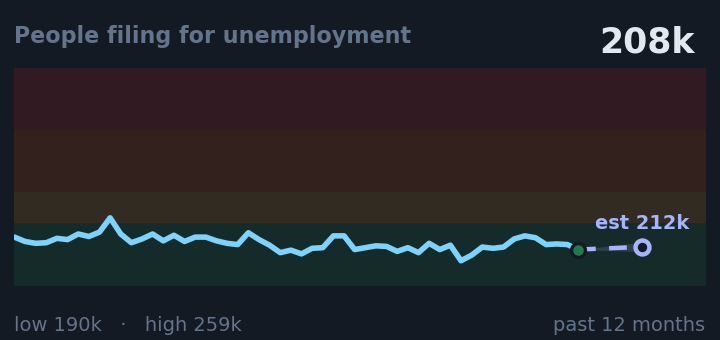
Weekly jobless claims at 215,000 measure how many people are newly filing for unemployment; when this stays low and stable, it signals employers are still hiring despite economic uncertainty.
Source: FRED
30-year Treasury rate
Warning
5.08%
up from 4.97% a month ago, in the middle of its range for the past year.
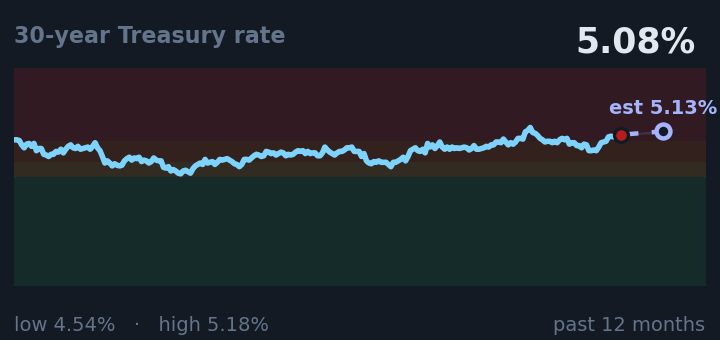
The 30-year Treasury rate at 5.08 percent is the benchmark for 30-year mortgage rates; when this rises, as it has from 4.97 percent a month ago, mortgage payments for homebuyers increase.
Source: FRED
10-year Treasury rate
Warning
4.58%
up from 4.48% a month ago, near its highest in the past year.
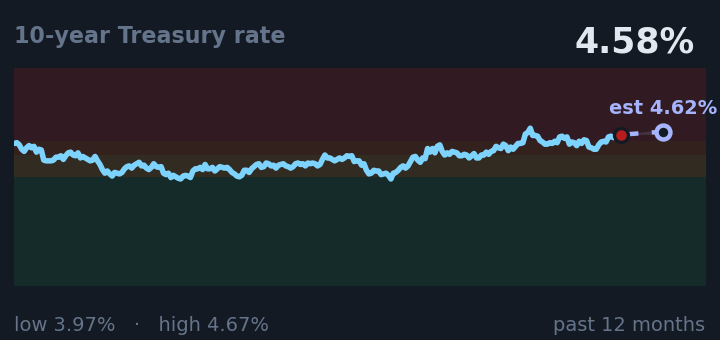
The 10-year Treasury rate at 4.58 percent serves as a benchmark for auto loans and adjustable mortgages; when this rate rises, borrowing costs increase across consumer loans.
Source: FRED
Market volatility (VIX)
Normal
15.7
down from 16.2 a month ago, near its lowest in the past year.
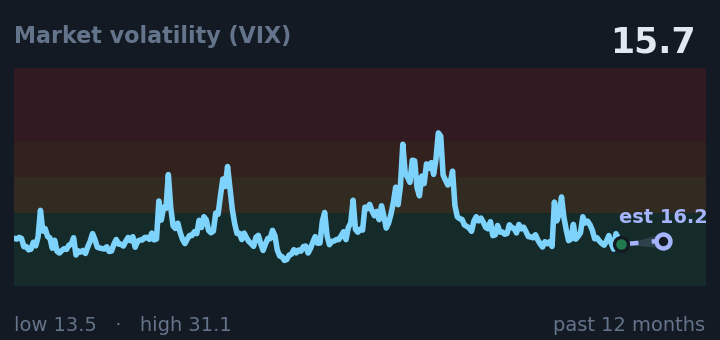
The VIX at 16.5 measures how much stock market anxiety traders are pricing in; at normal levels, it suggests investors expect stable equity markets without rapid losses.
Source: FRED
30-year mortgage rate
Caution
6.55%
about the same as a month ago, in the middle of its range for the past year.
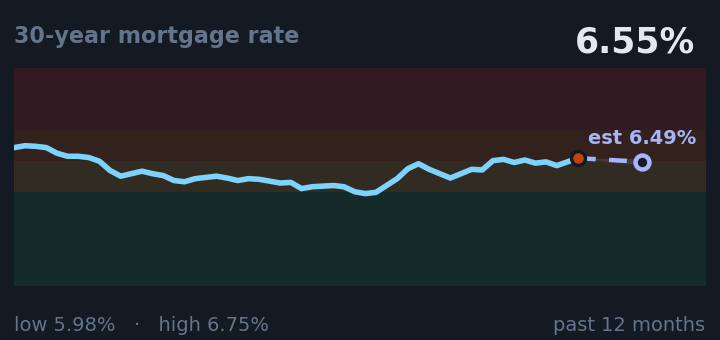
The 30-year mortgage rate at 6.49 percent is what families actually pay to borrow for homes; at this steady level, housing payments remain elevated and affect whether households can afford to buy.
Source: FRED
Yield curve (10yr minus 2yr)
Caution
+0.42%
up from +0.40% a month ago, in the middle of its range for the past year.
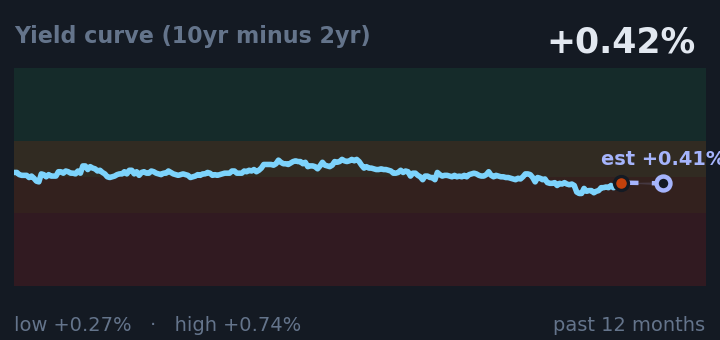
The yield curve at 0.42 percent, the difference between 10-year and 2-year Treasury rates, is a recession warning; historically, when this spread inverts and goes negative, economic contraction has often followed.
Source: FRED