Gas at the pump
Normal
$3.78/gal
down from $4.30/gal a month ago, in the middle of its range for the past year.
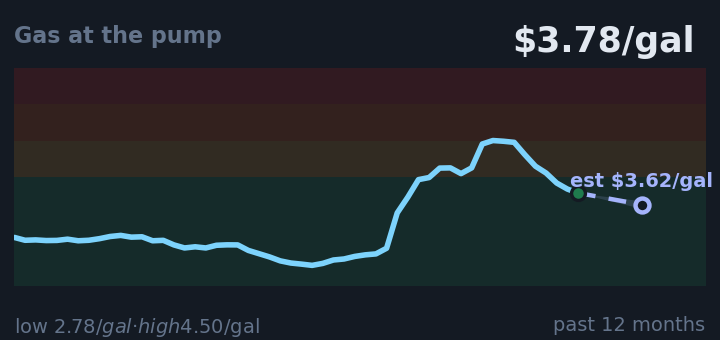
Gas at $3.78 eases the squeeze on household budgets and matters because families watch it daily and react quickly to changes, making it a barometer of whether people feel they have breathing room.
Connects to: J.D. Vance Presidential Run Before 2027; Naftali Bennett Next Israeli Prime Minister
Source: FRED
Market volatility (VIX)
Normal
15.8
down from 19.9 a month ago, near its lowest in the past year.
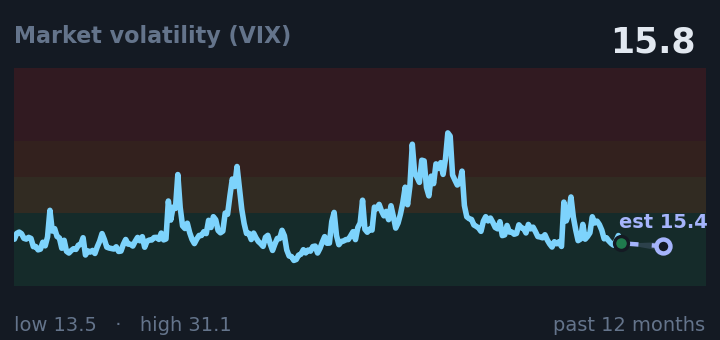
The VIX at 15.8 shows traders are calm and don't expect sudden shocks in the coming weeks, though markets can turn sharply on bad news.
Source: FRED
Consumer sentiment
Warning
45
down from 50 a month ago, near its lowest in the past year.
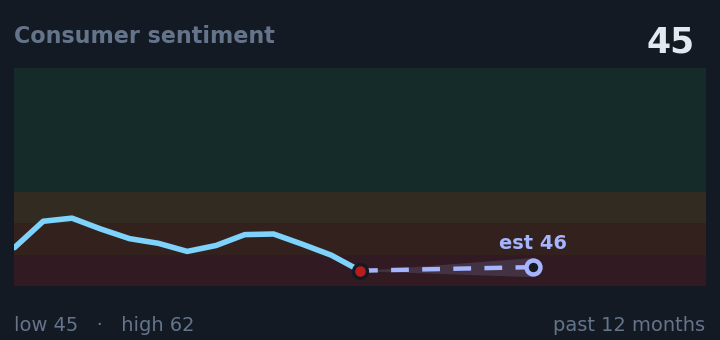
Consumer sentiment at 45, the lowest in a year, means households are retrenching and spending less, which slows the entire economy because consumers account for nearly all economic activity.
Connects to: J.D. Vance Presidential Run Before 2027; Naftali Bennett Next Israeli Prime Minister
Source: FRED
Yield curve (10yr minus 2yr)
Caution
+0.35%
down from +0.42% a month ago, in the middle of its range for the past year.
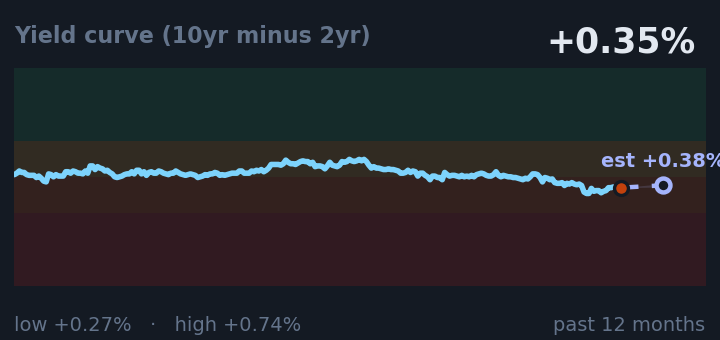
The yield curve at 0.35% is historically a recession warning: when short and long-term borrowing rates are this close together, it usually means a slowdown is coming, because lenders are signaling they don't believe in a strong future.
Connects to: Federal Reserve Interest Rate Hike in 2026
Source: FRED
30-year Treasury rate
Warning
5.05%
about the same as a month ago, in the middle of its range for the past year.
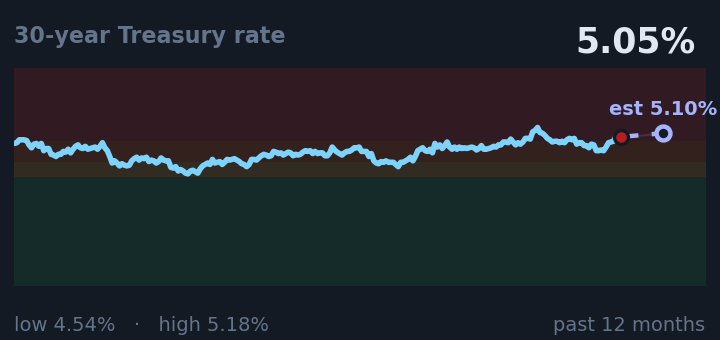
The 30-year Treasury rate at 5.05% is at the level where government's borrowing costs become so high that Washington can no longer afford its current spending, forcing cuts and pushing mortgage rates up, which freezes home buying.
Connects to: Federal Reserve Interest Rate Hike in 2026
Source: FRED
10-year Treasury rate
Warning
4.54%
about the same as a month ago, in the middle of its range for the past year.
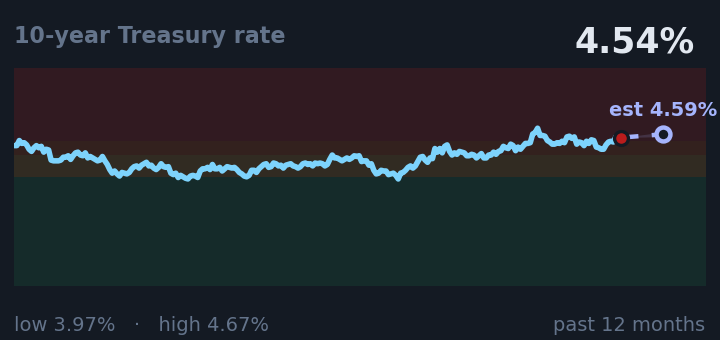
The 10-year rate at 4.54% is near the level that historically forces policy reversals: when bond markets see rates this high, they're signaling that government policy like tariffs or spending is unsustainable and needs to reverse course.
Connects to: Federal Reserve Interest Rate Hike in 2026
Source: FRED
30-year mortgage rate
Watch
6.49%
about the same as a month ago, in the middle of its range for the past year.
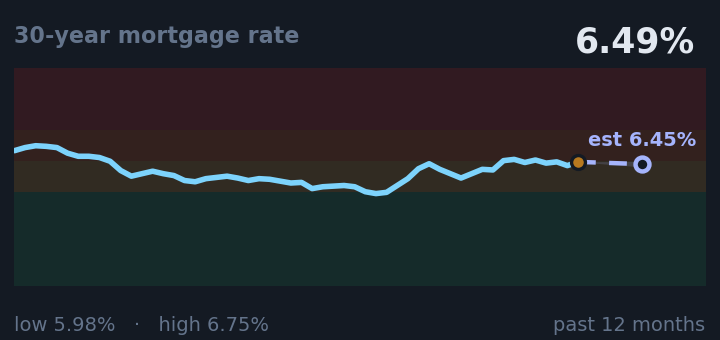
Mortgage rates at 6.49% keep home buying out of reach for most families, which is why home sales have fallen and construction has slowed.
Source: FRED