Gas at the pump
Normal
$3.83/gal
down from $4.47/gal a month ago, in the middle of its range for the past year.
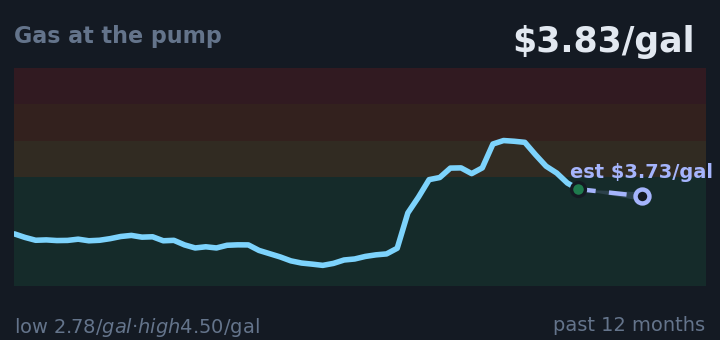
A $3.83 gallon of gas touches every trip to work, the grocery store, and doctor visits; when prices spike, voters hold the party in power accountable.
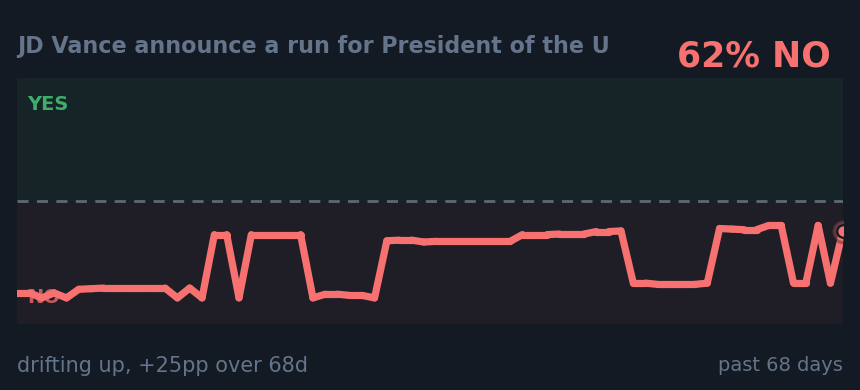
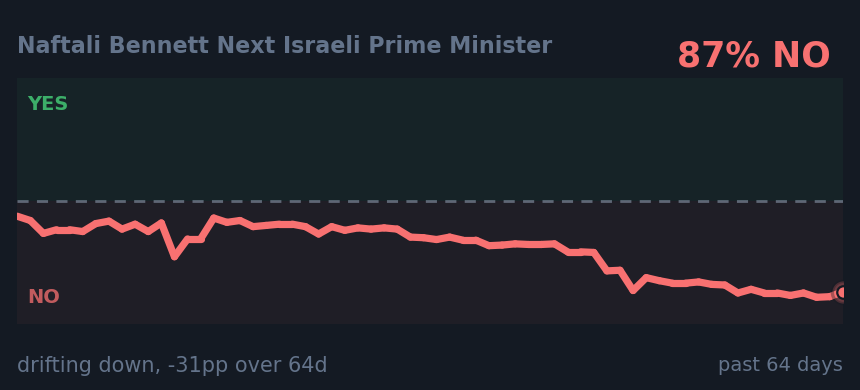
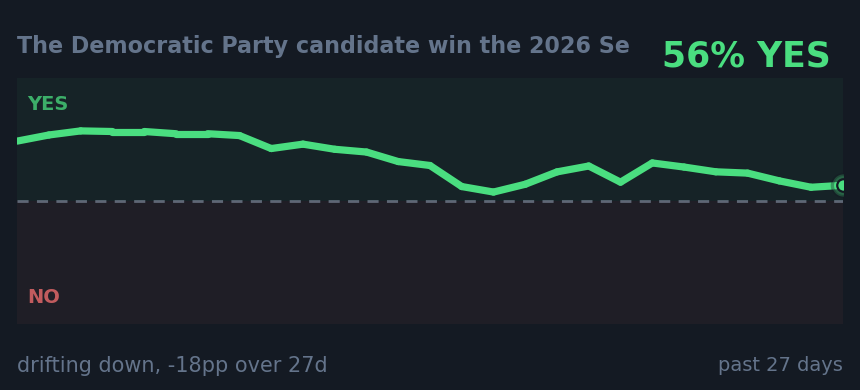
Connects to: J.D. Vance Presidential Run Before 2027; Naftali Bennett Next Israeli Prime Minister; Democrats Win Maine Senate 2026
Source: FRED
10-year Treasury rate
Caution
4.48%
about the same as a month ago, in the middle of its range for the past year.
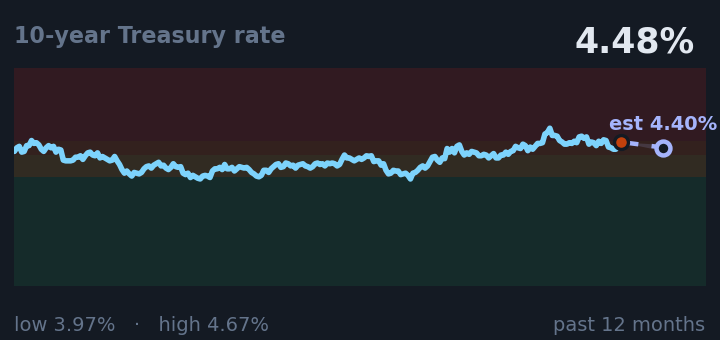
Banks use the 10-year Treasury rate of 4.48% to set mortgage and business loan prices, so when it climbs, borrowing gets more expensive across the economy.
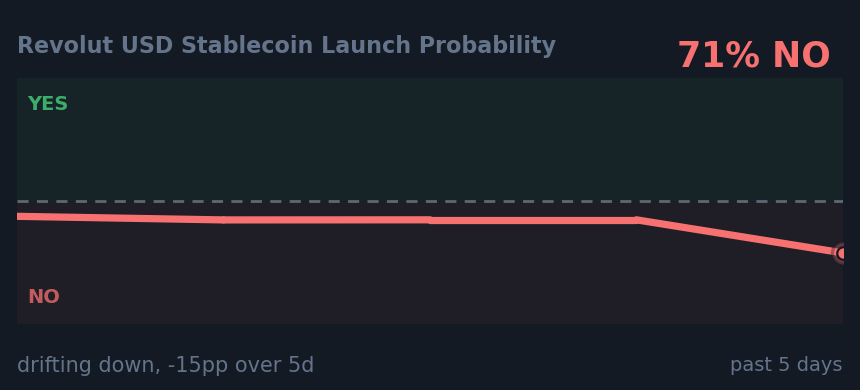
Connects to: Revolut USD Stablecoin Launch Probability
Source: FRED
30-year Treasury rate
Caution
4.97%
about the same as a month ago, in the middle of its range for the past year.
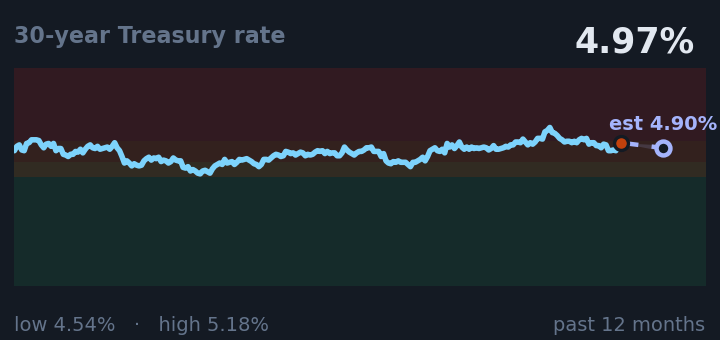
The 30-year Treasury rate at 4.97% is what investors use to price long-term loans and bonds; when it rises, all long-term borrowing gets more expensive, from mortgages to infrastructure funding.
Source: FRED
Yield curve (10yr minus 2yr)
Caution
+0.35%
down from +0.41% a month ago, in the middle of its range for the past year.
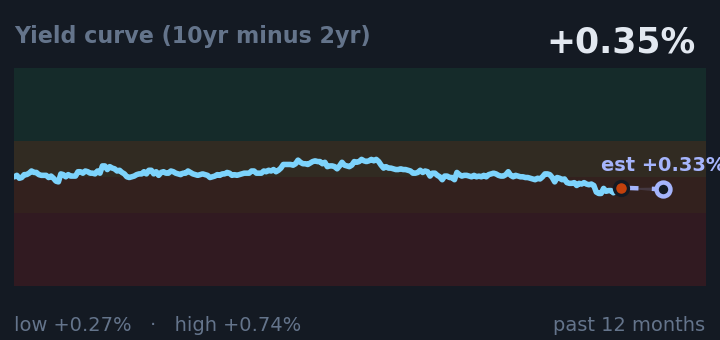
A flattening yield curve spread of 0.35% has historically preceded recessions; further compression warns of economic slowdown within one to two years.
Source: FRED
Consumer sentiment
Warning
45
down from 50 a month ago, near its lowest in the past year.
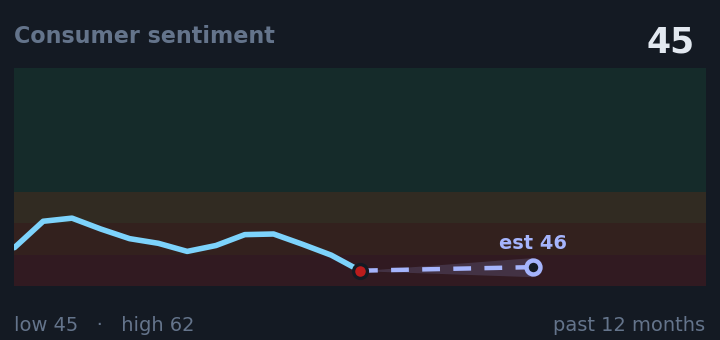
Consumer sentiment at 45 (severely depressed) means people expect their financial lives to get worse and are cutting spending, which triggers layoffs and damages the incumbent party's re-election odds.
Connects to: J.D. Vance Presidential Run Before 2027; Naftali Bennett Next Israeli Prime Minister; Democrats Win Maine Senate 2026
Source: FRED
Market volatility (VIX)
Normal
16.6
up from 16.1 a month ago, in the middle of its range for the past year.
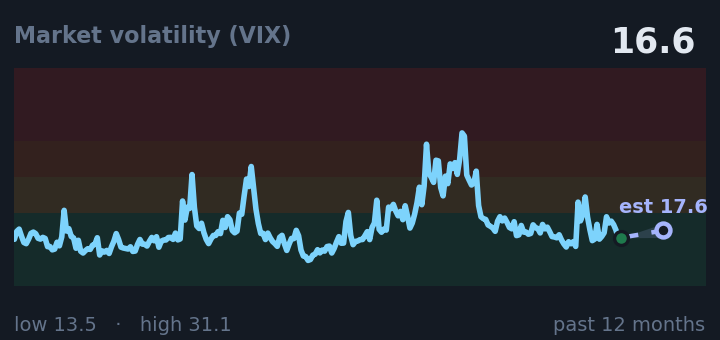
The VIX at 16.6 reflects calm investor sentiment about stocks; when it spikes above 20, fear takes over and market sell-offs accelerate.
Connects to: Revolut USD Stablecoin Launch Probability
Source: FRED
30-year mortgage rate
Watch
6.43%
down from 6.53% a month ago, in the middle of its range for the past year.
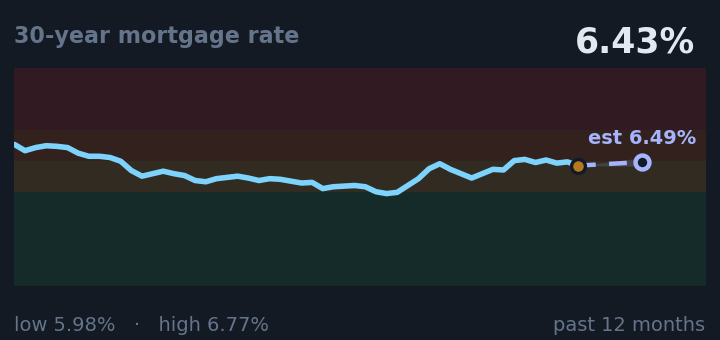
A 30-year mortgage rate of 6.43% puts homeownership out of reach for millions of families; sustained high rates slow construction and real estate employment.
Source: FRED