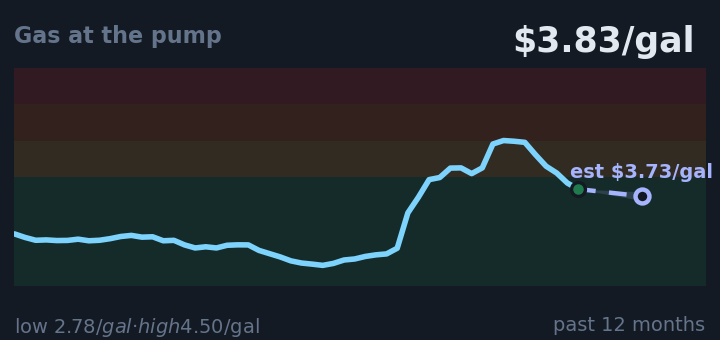
Gas at the pump cuts directly into what families spend on driving and heating, and when it rises, people tighten their belts, which slows the whole economy and matters a lot in elections.
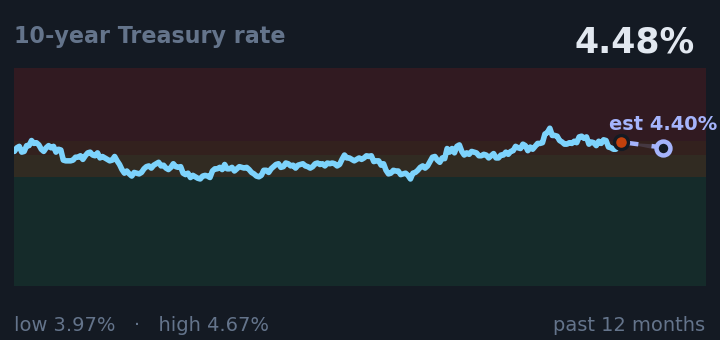
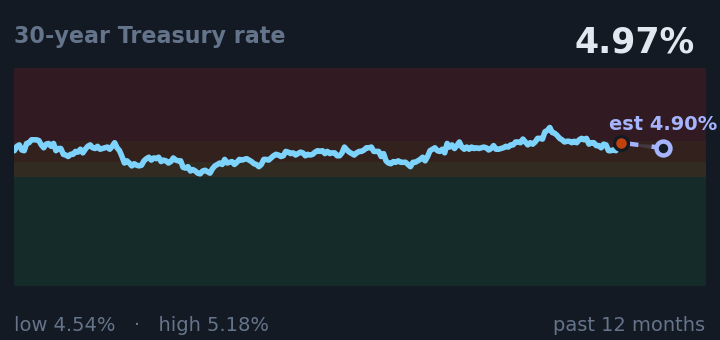
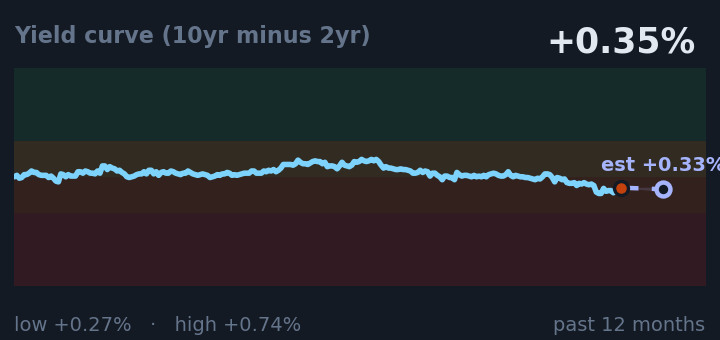
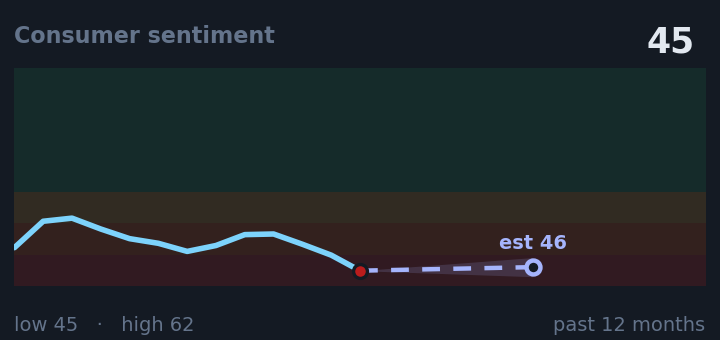
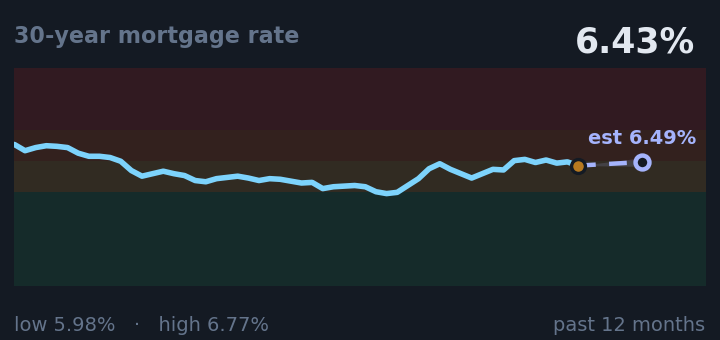
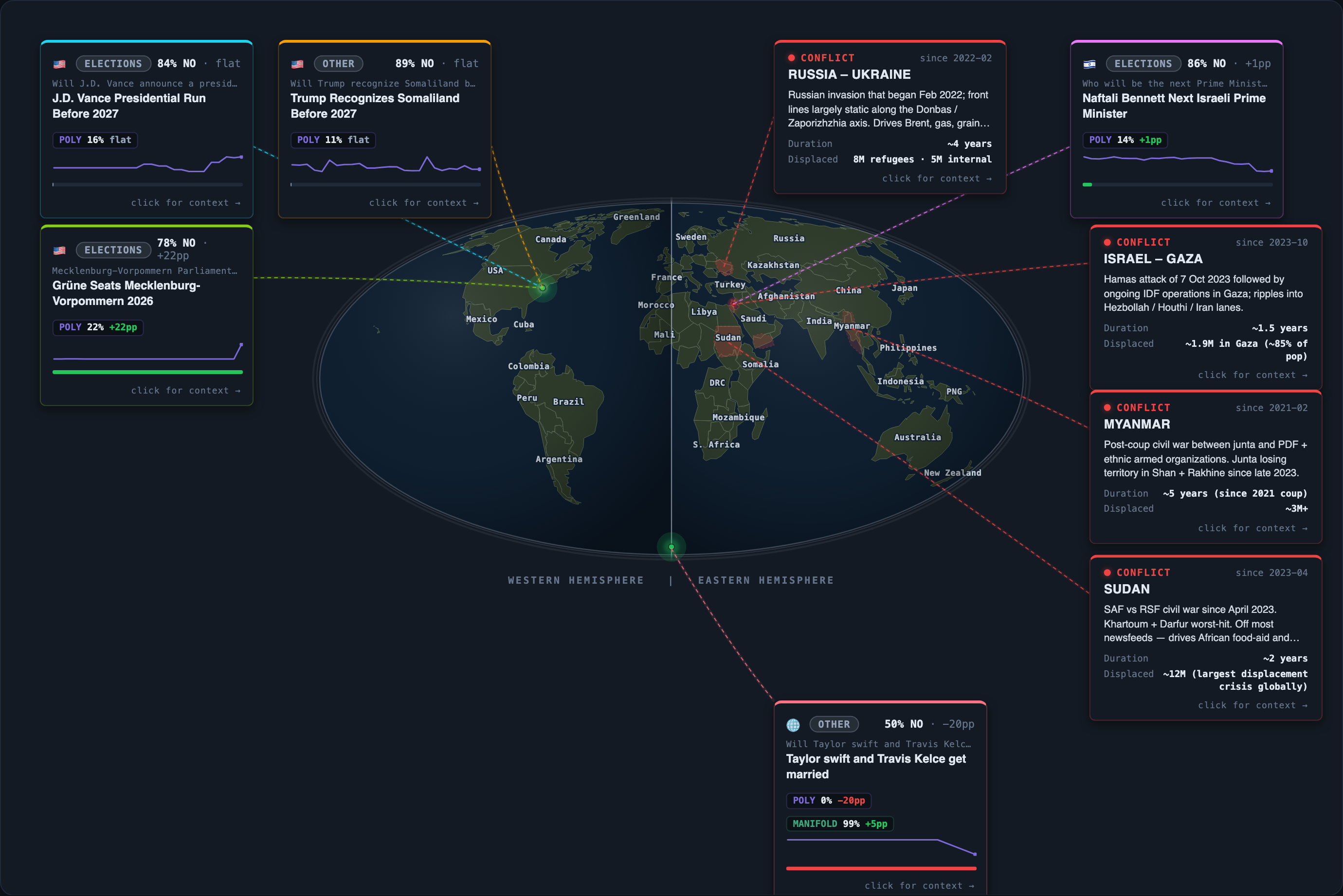
Consumer confidence has crashed to 45, the lowest in a year, which means people are genuinely worried about money. Gas is starting to creep back up at $3.83 a gallon, and mortgage rates sit stubbornly at 6.43%, squeezing household budgets on both fronts. The 30-year interest rate is at 4.97%, just barely below the 5% mark where lenders and investors get really nervous about the government's ability to pay its debts, and the 10-year rate is at 4.48%, practically at the 4.5% level where policy usually shifts course. The gap between short and long borrowing costs is shrinking, which historically means a slowdown is coming and people pull back on new houses and business expansions. With confidence down and costs up, markets are betting against any big political moves tied to the sitting administration: J.D. Vance's presidential run is at 84% NO.
→ Open the live interactive board
Get this every morning
Delivered to your inbox at 6:30, with the full archive, alerts, and the live board →
Gas at the pump cuts directly into what families spend on driving and heating, and when it rises, people tighten their belts, which slows the whole economy and matters a lot in elections.
The 10-year Treasury rate sets the baseline for mortgages and business loans, and when it nears 4.5%, investors get worried the government is spending beyond what it can pay back, which can force big policy changes.
Source: FRED
The 30-year rate affects mortgages and construction loans, and at 4.97%, it's one percentage point away from 5%, where investors worry government debt is becoming too expensive to handle.
Source: FRED
When short-term borrowing stays expensive and long-term borrowing gets cheaper, the gap flattens, which historically signals that a slowdown is coming and people pull back on borrowing.
Source: FRED
Consumer sentiment at 45 means people are worried about money, so they spend less, the economy slows, and political trouble follows for whoever is in power.
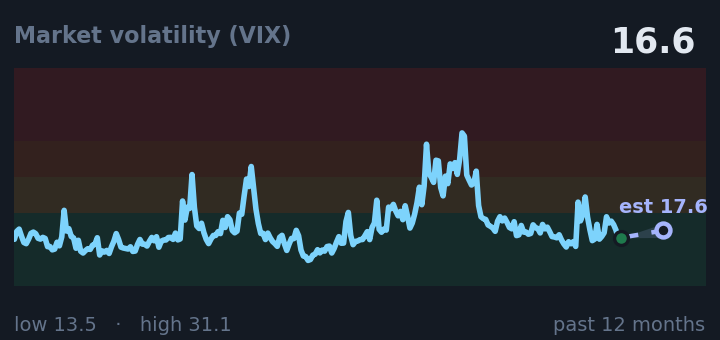
The VIX measures how likely a stock market crash is, and at 16.6, retirement accounts and 401ks are probably safe from sudden crashes, even though the real economy is showing stress elsewhere.
Source: FRED
The 30-year mortgage rate sets monthly house payments, and at 6.43%, payments are high enough to block a lot of first-time buyers, which slows the housing market and construction jobs.
Source: FREDIn plain terms: the public’s money is leaning that this will not happen, and held steady overnight.
Market consensus at 10% reflects skepticism of a near-term announcement given Vance's current VP role and weak economic conditions (gas $4.12, consumer sentiment 57) that typically disfavor incumbent administration moves. Agreement across platforms suggests genuine uncertainty ra
In plain terms: the public’s money is very confident this will not happen, and held steady overnight.
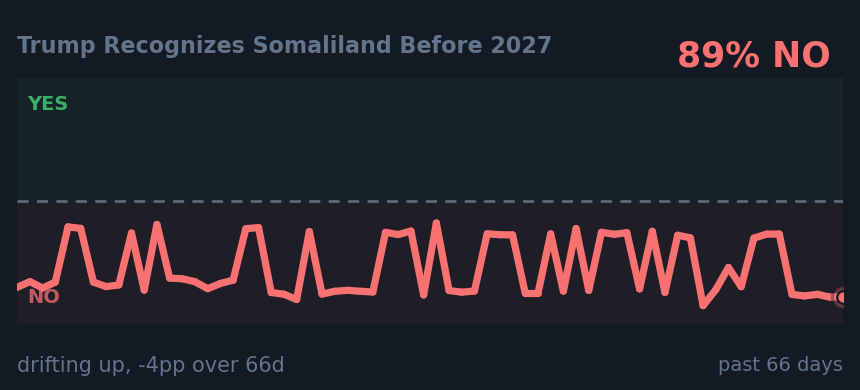
Massive 48-point spread between Kalshi (63%) and Polymarket (15%) on U.S. recognition of breakaway Somaliland. Disagreement likely reflects different interpretations of Trump's foreign policy priorities, geopolitical constraints with Somalia, and whether recognition occurs via ex
In plain terms: the public’s money is very confident this will not happen, and grew a little less sure overnight.
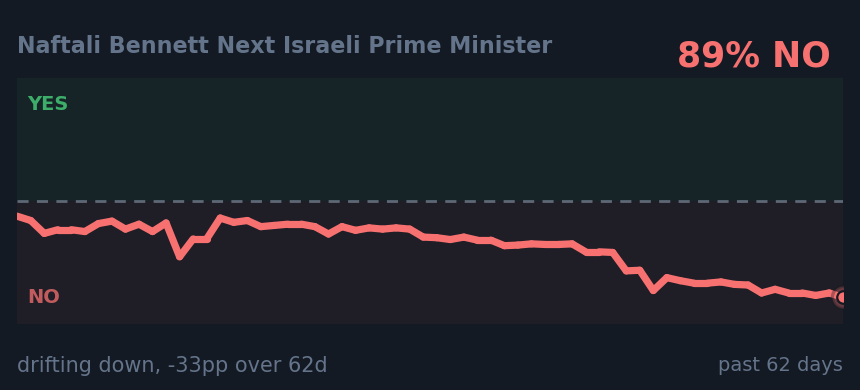
Market pricing Bennett at 40% despite no competing liquidity suggests consensus around his viability post-election. Depressed consumer sentiment and elevated gas prices could destabilize current coalition dynamics, creating opening for opposition realignment that Bennett might le
In plain terms: the public’s money is leaning that this will not happen, and grew much less sure overnight.
Polymarket prices Grüne at 0% while Kalshi shows 70% for an unrelated Kosovan election—this appears to be a data matching error rather than genuine disagreement on the German regional race. Elevated gas prices and depressed consumer sentiment suggest headwinds for incumbent parti
In plain terms: the public’s money is close to a coin flip on whether this will not happen, and grew more sure overnight.
Massive 74-point spread reveals fundamentally different question interpretations: Polymarket's deadline-specific version (by June 30) prices at 20%, while Manifold's open-ended version reaches 94%. Timeline constraints, not sentiment disagreement, drive the divergence.
Hamas attack of 7 Oct 2023 followed by ongoing IDF operations in Gaza; ripples into Hezbollah / Houthi / Iran lanes.
Russian invasion that began Feb 2022; front lines largely static along the Donbas / Zaporizhzhia axis. Drives Brent, gas, grain, defense-stock pricing.
SAF vs RSF civil war since April 2023. Khartoum + Darfur worst-hit. Off most newsfeeds — drives African food-aid and gold-flow markets.
Houthi missile/drone attacks on Red Sea shipping diverting traffic around the Cape. Bumps WTI, shipping rates, supply-chain timing markets.
Post-coup civil war between junta and PDF + ethnic armed organizations. Junta losing territory in Shan + Rakhine since late 2023.
| AMERICAS | 1 rose 0 fell 2 flat |
| EUROPE | 0 rose 0 fell 0 flat |
| ASIA | 0 rose 0 fell 0 flat |
| MENA | 0 rose 0 fell 0 flat |
| CRYPTO | 0 rose 0 fell 0 flat |