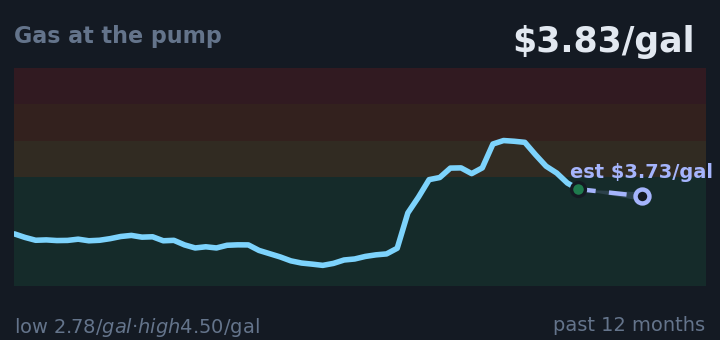
Gas prices directly hit household budgets and shape how voters judge the sitting administration, especially when they're rising into elections.
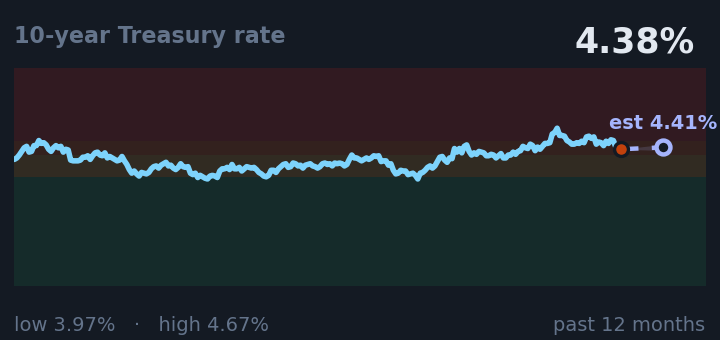
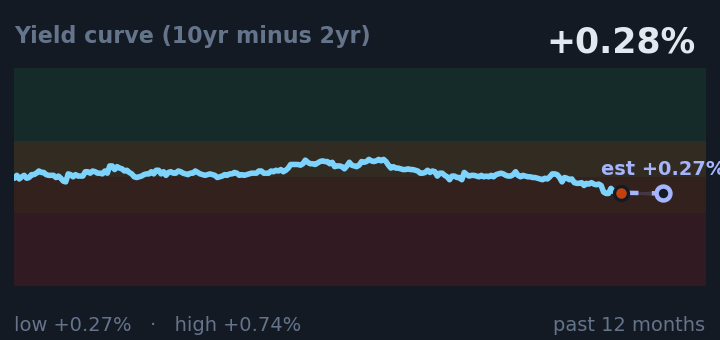
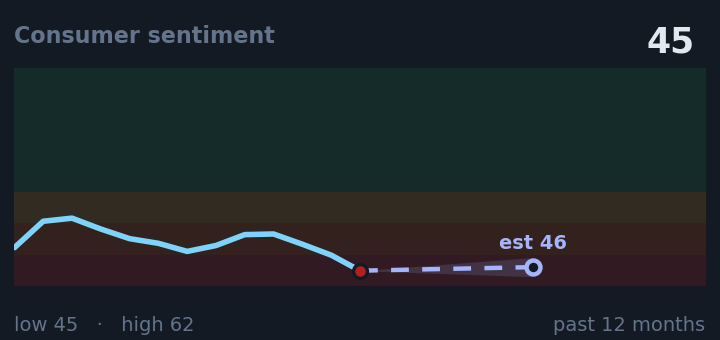
Households face mixed signals heading into the last week of June. Gas has fallen to $3.83 a gallon, down from $4.47 a month ago, but consumer confidence has collapsed to 45, the lowest we track, signaling that Americans feel pessimistic about the economy regardless of pump prices. At the same time, borrowing costs are tightening: the 10-year Treasury rate sits at 4.38%, approaching the 4.5% level where bond markets historically push back against government spending, and the yield curve continues to flatten, a pattern that has historically preceded recessions. These underlying economic stresses help explain why markets are skeptical of near-term political moves: J.D. Vance's odds of running for president in the next six months fell 6 percentage points overnight, likely reflecting the reality that voters punish sitting administrations during periods of low consumer sentiment and elevated borrowing costs.
→ Open the live interactive board
Get this every morning
Delivered to your inbox at 6:30, with the full archive, alerts, and the live board →
Gas prices directly hit household budgets and shape how voters judge the sitting administration, especially when they're rising into elections.
When this rate climbs above 4.5%, bond investors stop lending cheaply to the government, forcing spending cuts or tax increases.
Source: FRED
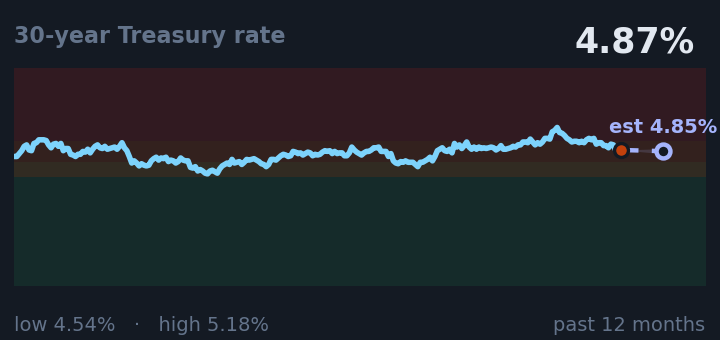
Long-term borrowing costs determine how expensive mortgages and business loans become, and at 4.87%, we're approaching levels that constrain government budgets.
Source: FRED
A flattening yield curve historically signals recession within 6-18 months; at 0.28%, the spread is narrowing toward the level that typically precedes downturns.
Source: FRED
When consumer confidence falls below 50, households cut spending and companies cut hiring, typically triggering recessions and punishing the sitting party in elections.
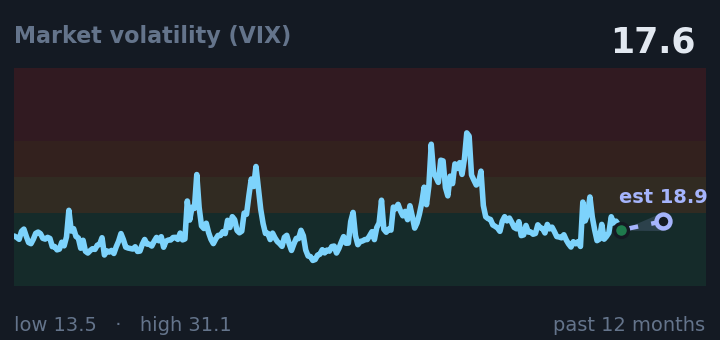
When investors get scared, they pull money out of stocks; at 17.6, markets are calm right now, but this fear index can spike quickly if economic news worsens.
Source: FRED
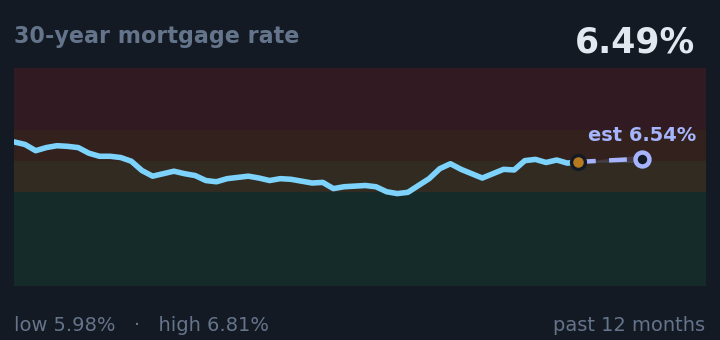
At 6.49%, monthly mortgage payments on a $400,000 home reach roughly $2,400, pricing out millions of first-time buyers and building political pressure for rate cuts.
Source: FREDIn plain terms: the public’s money is leaning that this will not happen, and grew less sure overnight.
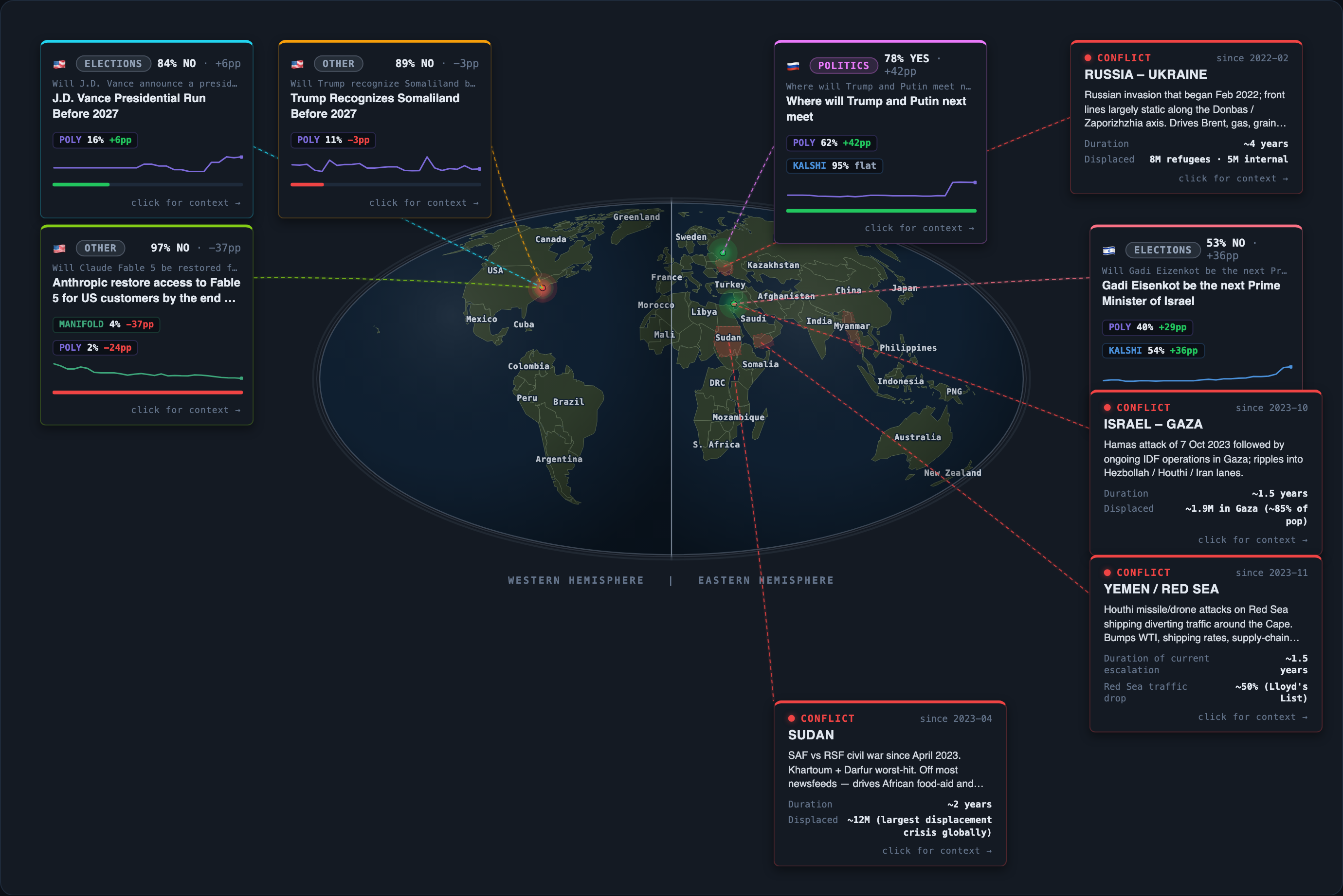
Market consensus at 10% reflects skepticism of a near-term announcement given Vance's current VP role and weak economic conditions (gas $4.12, consumer sentiment 57) that typically disfavor incumbent administration moves. Agreement across platforms suggests genuine uncertainty ra
In plain terms: the public’s money is very confident this will not happen, and grew a little more sure overnight.
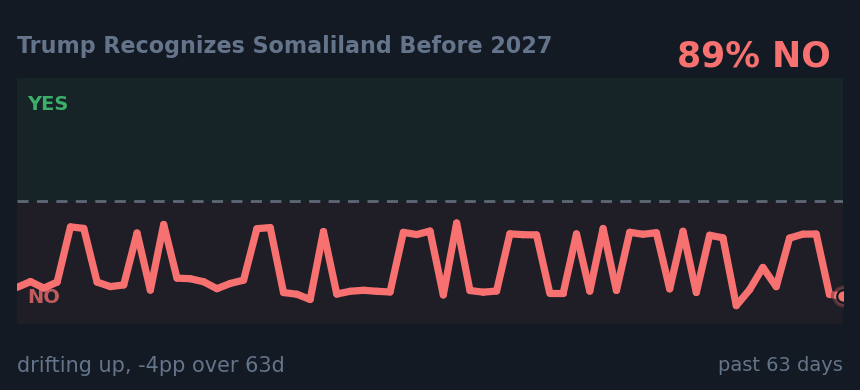
Massive 48-point spread between Kalshi (63%) and Polymarket (15%) on U.S. recognition of breakaway Somaliland. Disagreement likely reflects different interpretations of Trump's foreign policy priorities, geopolitical constraints with Somalia, and whether recognition occurs via ex
In plain terms: the public’s money is leaning that this will happen, and grew much more sure overnight.
Polymarket and Kalshi disagree on the likelihood of a meeting, with Kalshi pricing a meeting at 96% and Polymarket pricing a non-meeting at 58%, indicating a significant disagreement between the platforms.
In plain terms: the public’s money is very confident this will not happen, and grew much more sure overnight.
—
In plain terms: the public’s money is close to a coin flip on whether this will not happen, and grew much less sure overnight.
Markets unified at 12% for former IDF chief Eizenkot to become PM next, suggesting low consensus probability despite his political profile. Tight spread indicates confidence in valuation, though depressed consumer sentiment and elevated energy costs create macro headwinds for inc
Hamas attack of 7 Oct 2023 followed by ongoing IDF operations in Gaza; ripples into Hezbollah / Houthi / Iran lanes.
Russian invasion that began Feb 2022; front lines largely static along the Donbas / Zaporizhzhia axis. Drives Brent, gas, grain, defense-stock pricing.
SAF vs RSF civil war since April 2023. Khartoum + Darfur worst-hit. Off most newsfeeds — drives African food-aid and gold-flow markets.
Houthi missile/drone attacks on Red Sea shipping diverting traffic around the Cape. Bumps WTI, shipping rates, supply-chain timing markets.
Post-coup civil war between junta and PDF + ethnic armed organizations. Junta losing territory in Shan + Rakhine since late 2023.
| AMERICAS | 1 rose 2 fell 0 flat |
| EUROPE | 0 rose 0 fell 0 flat |
| ASIA | 0 rose 0 fell 0 flat |
| MENA | 0 rose 0 fell 0 flat |
| CRYPTO | 0 rose 0 fell 0 flat |