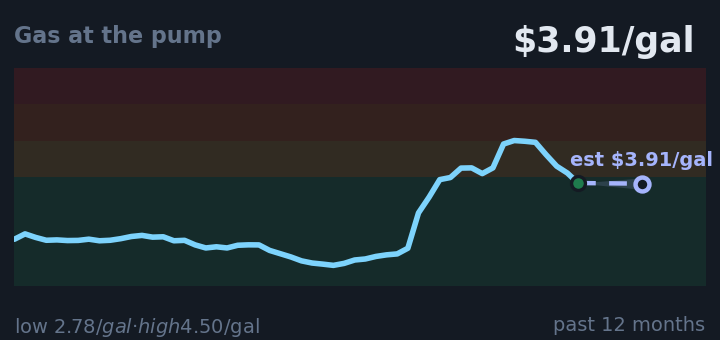
Gas at $3.91 a gallon is what you actually pay when you fill up; when prices spike, families cut other spending and voters typically punish the sitting administration in elections.
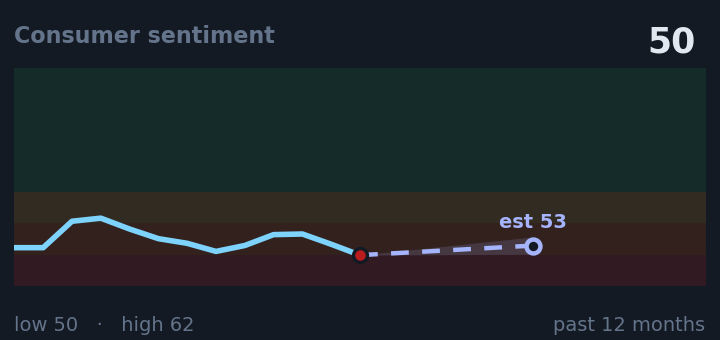
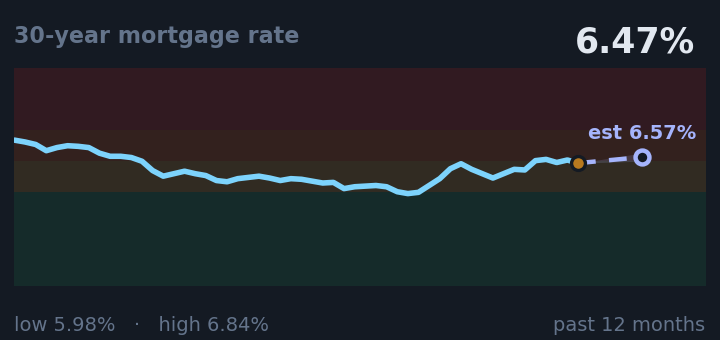
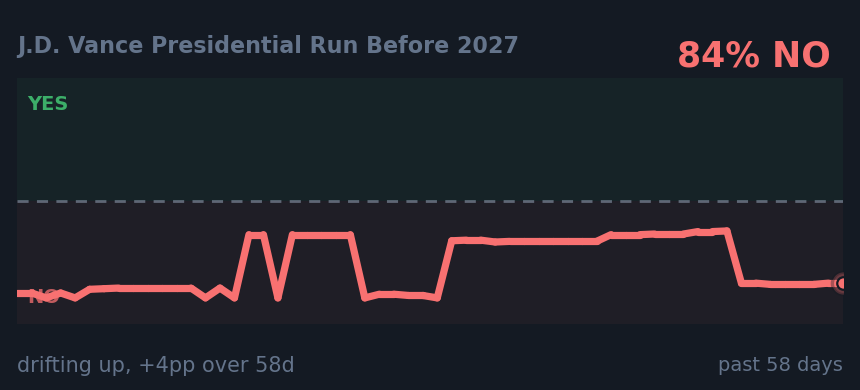
Consumer confidence has fallen to 50 out of 100, the lowest in a year, and this despair is showing up in the markets: J.D. Vance gets only a 10% chance of running for president soon, reflecting voter unhappiness with the current administration. Gas prices fell from $4.49 to $3.91, which should help household budgets, but mortgage rates at 6.47% are offsetting that relief by making home purchases much more expensive. Meanwhile, the 10-year Treasury rate at 4.50% signals that bond investors are nervous about government budgets, a level historically tied to spending cuts and policy reversals. The economy right now is split: gas is cheaper, which is good, but mortgages are expensive, confidence is low, and bond investors are nervous, which adds up to a lot of worry.
→ Open the live interactive board
Get this every morning
Delivered to your inbox at 6:30, with the full archive, alerts, and the live board →
Gas at $3.91 a gallon is what you actually pay when you fill up; when prices spike, families cut other spending and voters typically punish the sitting administration in elections.
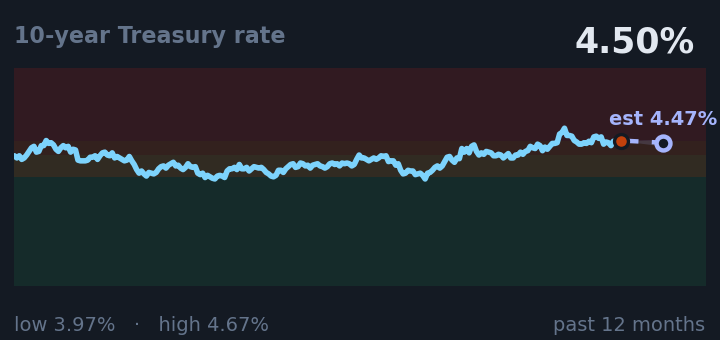
The 10-year Treasury rate at 4.50% is the benchmark that sets interest rates for mortgages and car loans; when it stays high, monthly payments climb for families trying to borrow for big purchases.
Source: FRED
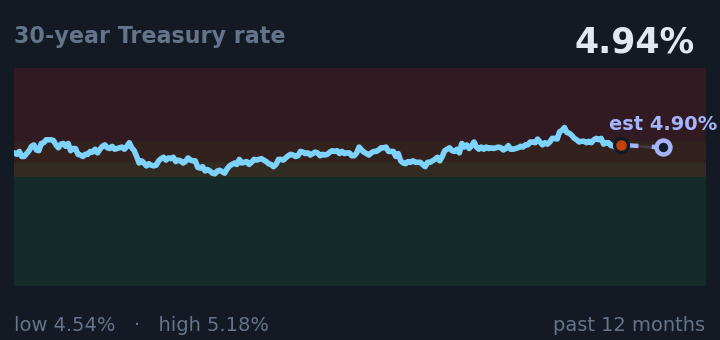
The 30-year Treasury rate at 4.94% reflects what it costs the government to borrow long-term; when it climbs past 5%, it typically forces spending cuts and policy changes because high borrowing costs squeeze government budgets.
Source: FRED
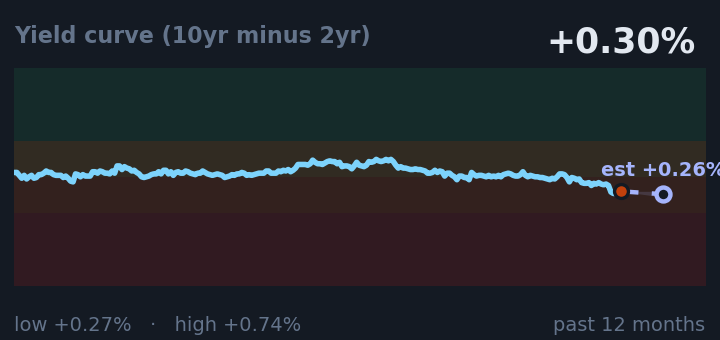
The yield curve at 0.30% is the difference between long-term and short-term borrowing costs; when this gap shrinks or flips negative, recessions typically follow within months.
Source: FRED
Consumer sentiment at 50 means Americans are seriously worried about their finances and job security; when this falls this low, families cut spending and companies stop hiring.
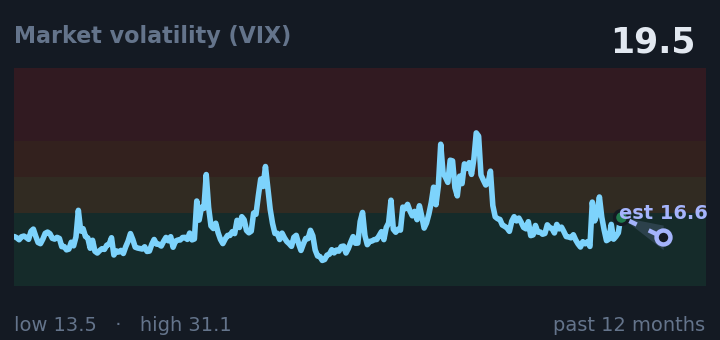
The VIX at 19.5 measures how much fear stock investors are showing right now; at this level, equity markets are calm, which contrasts with the anxiety showing up in consumer confidence and bond markets.
Source: FRED
The 30-year mortgage rate at 6.47% is what you would pay to borrow money to buy a house; higher rates squeeze first-time buyers out of the market and push more people into renting.
Source: FRED
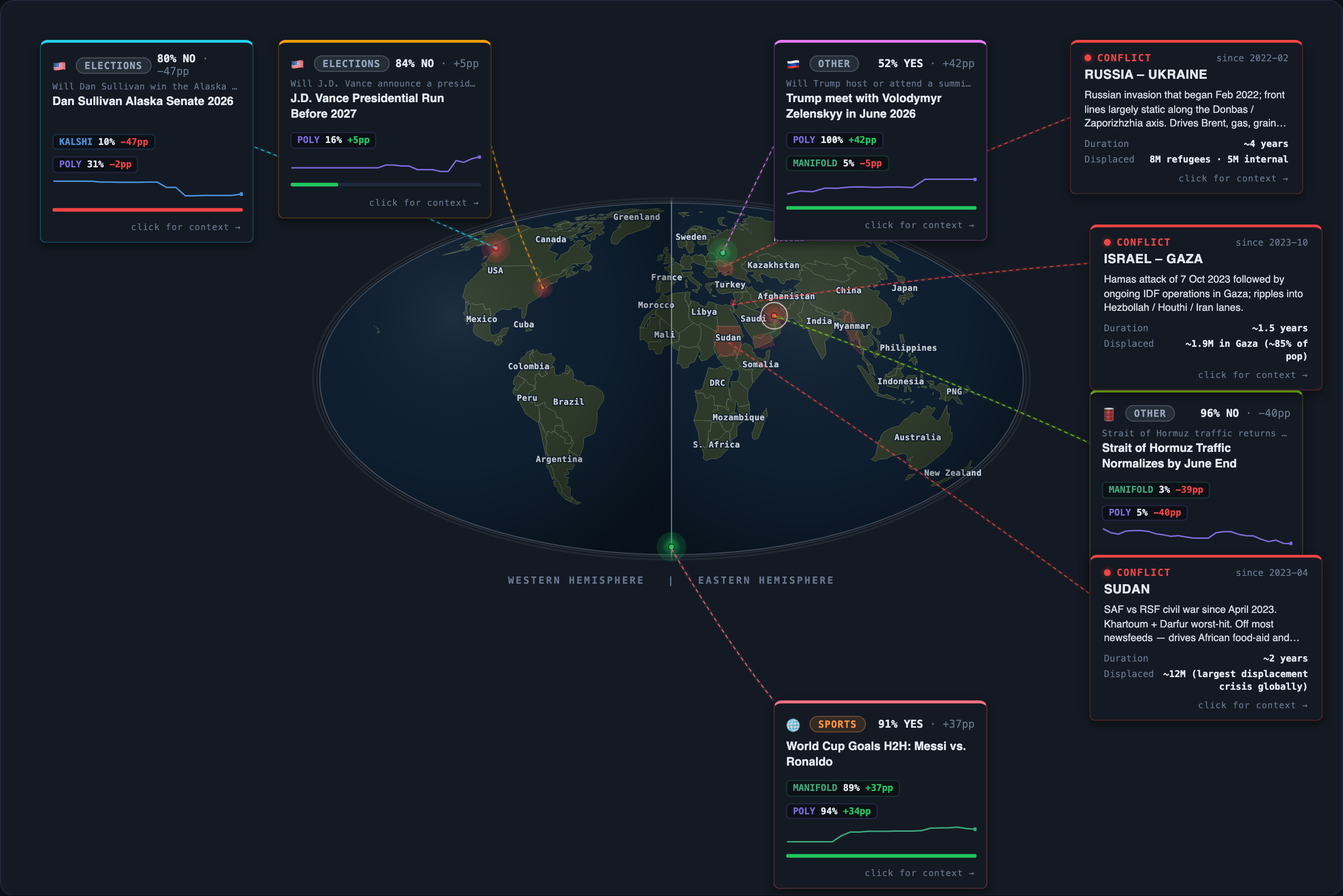
In plain terms: the public’s money is leaning that this will not happen, and grew much more sure overnight.
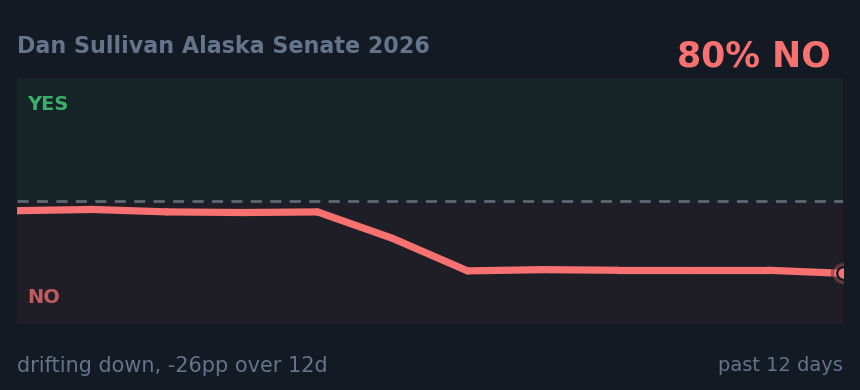
Sharp 34-point divergence between Sullivan-specific (40%) and Republican-generic (74%) odds suggests market uncertainty about Sullivan personally versus GOP retention of the seat. Consumer weakness and elevated gas prices create headwinds for incumbents, explaining Polymarket's s
In plain terms: the public’s money is leaning that this will not happen, and grew less sure overnight.
Market consensus at 10% reflects skepticism of a near-term announcement given Vance's current VP role and weak economic conditions (gas $4.12, consumer sentiment 57) that typically disfavor incumbent administration moves. Agreement across platforms suggests genuine uncertainty ra
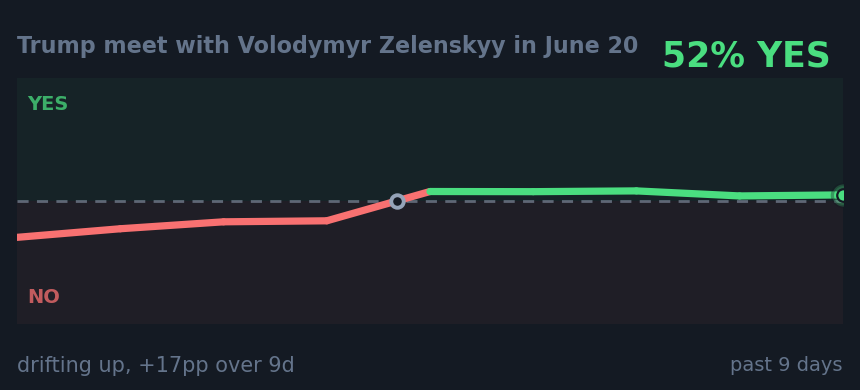
In plain terms: the public’s money is close to a coin flip on whether this will happen, and grew more sure overnight.
—
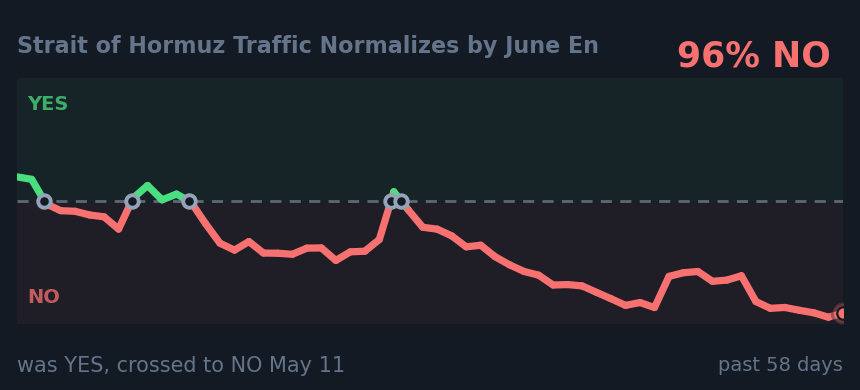
In plain terms: the public’s money is very confident this will not happen, and grew much more sure overnight.
Markets assess 29% probability that Hormuz shipping returns to normal by end of June, likely reflecting geopolitical tensions (Iran, Houthis, regional conflicts). Perfect agreement across platforms suggests genuine low conviction rather than arbitrage opportunity.
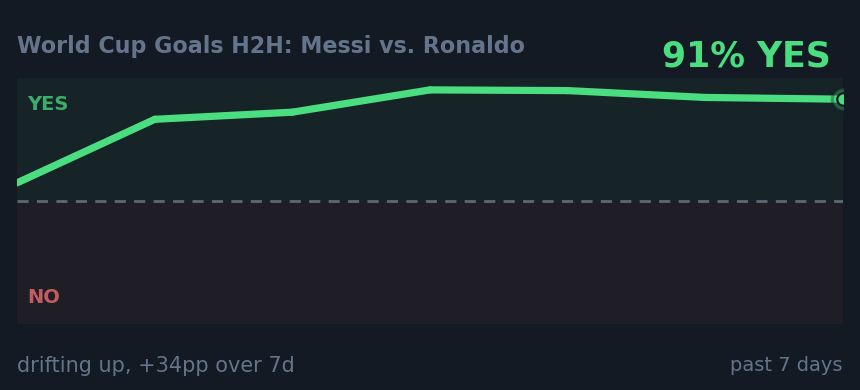
In plain terms: the public’s money is very confident this will happen, and grew much more sure overnight.
Manifold and Polymarket show a 7-point spread, with Polymarket pricing Messi vs. Ronaldo at 99% and Manifold at 92%, indicating a disagreement between the platforms on the likelihood of a goal difference between the two players.
Hamas attack of 7 Oct 2023 followed by ongoing IDF operations in Gaza; ripples into Hezbollah / Houthi / Iran lanes.
Russian invasion that began Feb 2022; front lines largely static along the Donbas / Zaporizhzhia axis. Drives Brent, gas, grain, defense-stock pricing.
SAF vs RSF civil war since April 2023. Khartoum + Darfur worst-hit. Off most newsfeeds — drives African food-aid and gold-flow markets.
Houthi missile/drone attacks on Red Sea shipping diverting traffic around the Cape. Bumps WTI, shipping rates, supply-chain timing markets.
Post-coup civil war between junta and PDF + ethnic armed organizations. Junta losing territory in Shan + Rakhine since late 2023.
| AMERICAS | 1 rose 0 fell 0 flat |
| EUROPE | 0 rose 0 fell 0 flat |
| ASIA | 0 rose 0 fell 0 flat |
| MENA | 0 rose 0 fell 0 flat |
| CRYPTO | 0 rose 0 fell 0 flat |