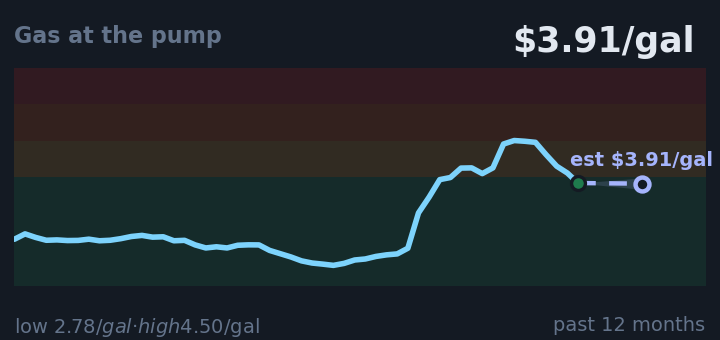
Gas at $3.91 is a major household expense that eats into what families have left for food, utilities, and other necessities.
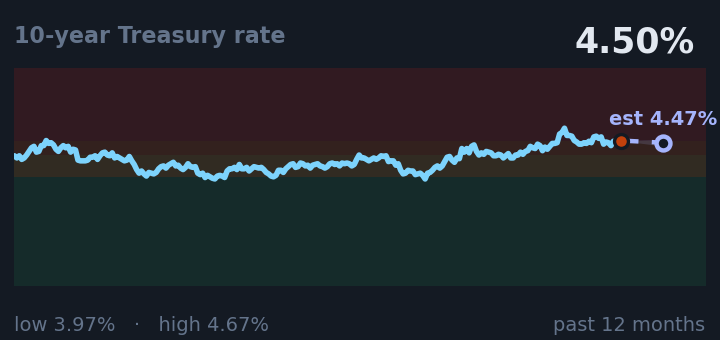
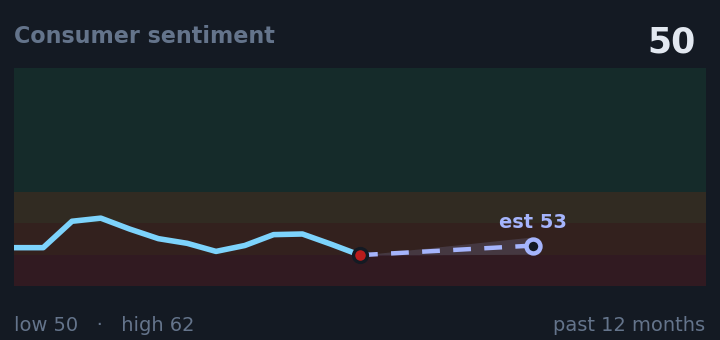
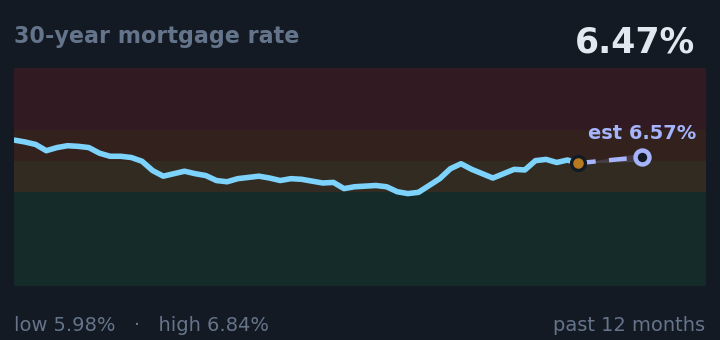
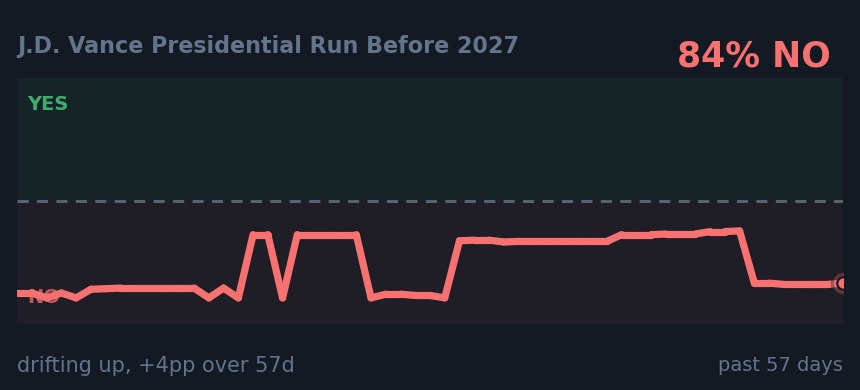
Consumer sentiment just hit 50, its lowest in months, while gas prices hold at $3.91 and mortgage rates stay at 6.47 percent. Treasury yields are at 4.51 percent, the level that has historically forced policy changes. When household mood is this dark and money is this tight, voters typically punish the sitting administration. That's showing up in the markets: traders are putting J.D. Vance at 84 percent to NOT run for president and Republican Iowa candidates at 66 percent to lose their race. The economy is tight, anxiety is high, and markets are betting that tight times hurt the incumbent party.
→ Open the live interactive board
Get this every morning
Delivered to your inbox at 6:30, with the full archive, alerts, and the live board →
Gas at $3.91 is a major household expense that eats into what families have left for food, utilities, and other necessities.
When the 10-year Treasury yield hits 4.51 percent, it means the government is paying more to borrow, and that sets the floor for mortgage and car loan rates across the whole economy.
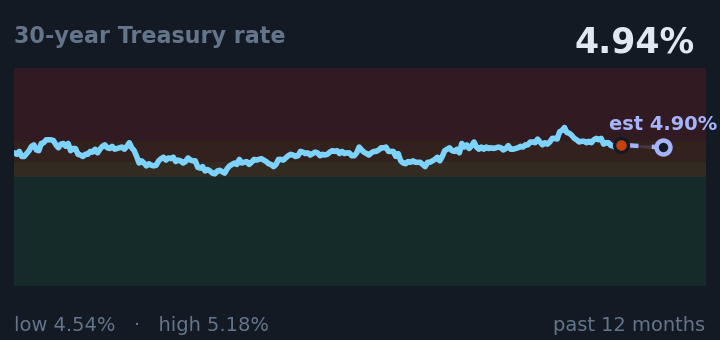
The 30-year Treasury at 4.95 percent is one of the main drivers of mortgage rates, and every 0.1 percent up means hundreds of dollars extra per month on a home loan.
Source: FRED
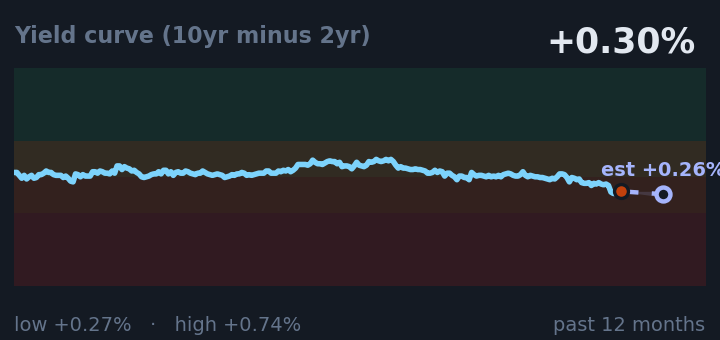
The yield curve spread of 0.34 percent has historically flattened right before recessions, so traders watch it as an early warning signal.
Source: FRED
Consumer sentiment at 50 means households feel too worried to spend, which dries up sales for stores, restaurants, and services that depend on regular customers.
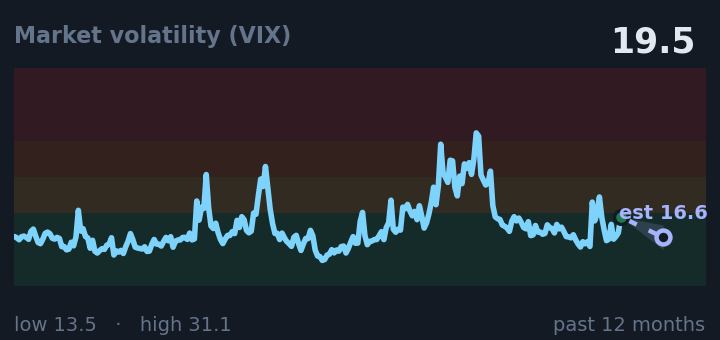
Stock market volatility at 17.3 is calm, suggesting institutional investors aren't panicking despite the economic tightness.
Mortgage rates at 6.47 percent make monthly payments hundreds of dollars higher than they were when rates were 3 percent, pricing many people out of buying a home.
Source: FRED
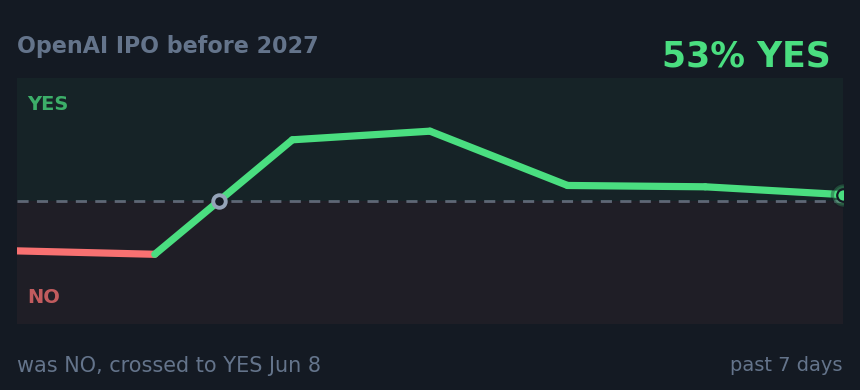
In plain terms: the public’s money is leaning that this will not happen, and grew a little less sure overnight.
Market consensus at 10% reflects skepticism of a near-term announcement given Vance's current VP role and weak economic conditions (gas $4.12, consumer sentiment 57) that typically disfavor incumbent administration moves. Agreement across platforms suggests genuine uncertainty ra
In plain terms: the public’s money is close to a coin flip on whether this will happen, and grew much more sure overnight.
Polymarket prices zero probability for 2025 IPO while Manifold estimates 22% by 2027, suggesting sharp disagreement on timing. The gap reflects uncertainty about OpenAI's regulatory path, profitability requirements, and founder Sam Altman's stated preference for remaining private
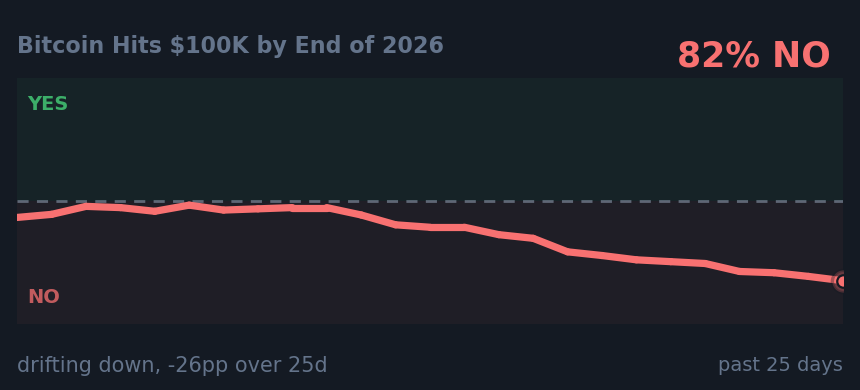
In plain terms: the public’s money is leaning that this will not happen, and grew much more sure overnight.
Manifold's 44% vs Polymarket's 36% reflects uncertainty over crypto volatility and macro conditions. The 8-point spread suggests disagreement on whether current risk appetite and potential rate cuts through 2026 provide sufficient runway for 2.5x gains from current levels.
In plain terms: the public’s money is very confident this will happen, and grew more sure overnight.
Polymarket prices Andy Burnham at 98% to be a candidate, while Manifold prices him at 88%, a 10-point spread indicating a moderate level of disagreement between the platforms about his likelihood of running.
In plain terms: the public’s money is close to a coin flip on whether this will not happen, and grew a little less sure overnight.
Polymarket prices Republican victory at 30%, suggesting significant headwinds despite traditional GOP strength in Iowa. Depressed consumer sentiment and elevated gas prices historically undermine incumbent-party performance, explaining the subdued probability despite lack of poll
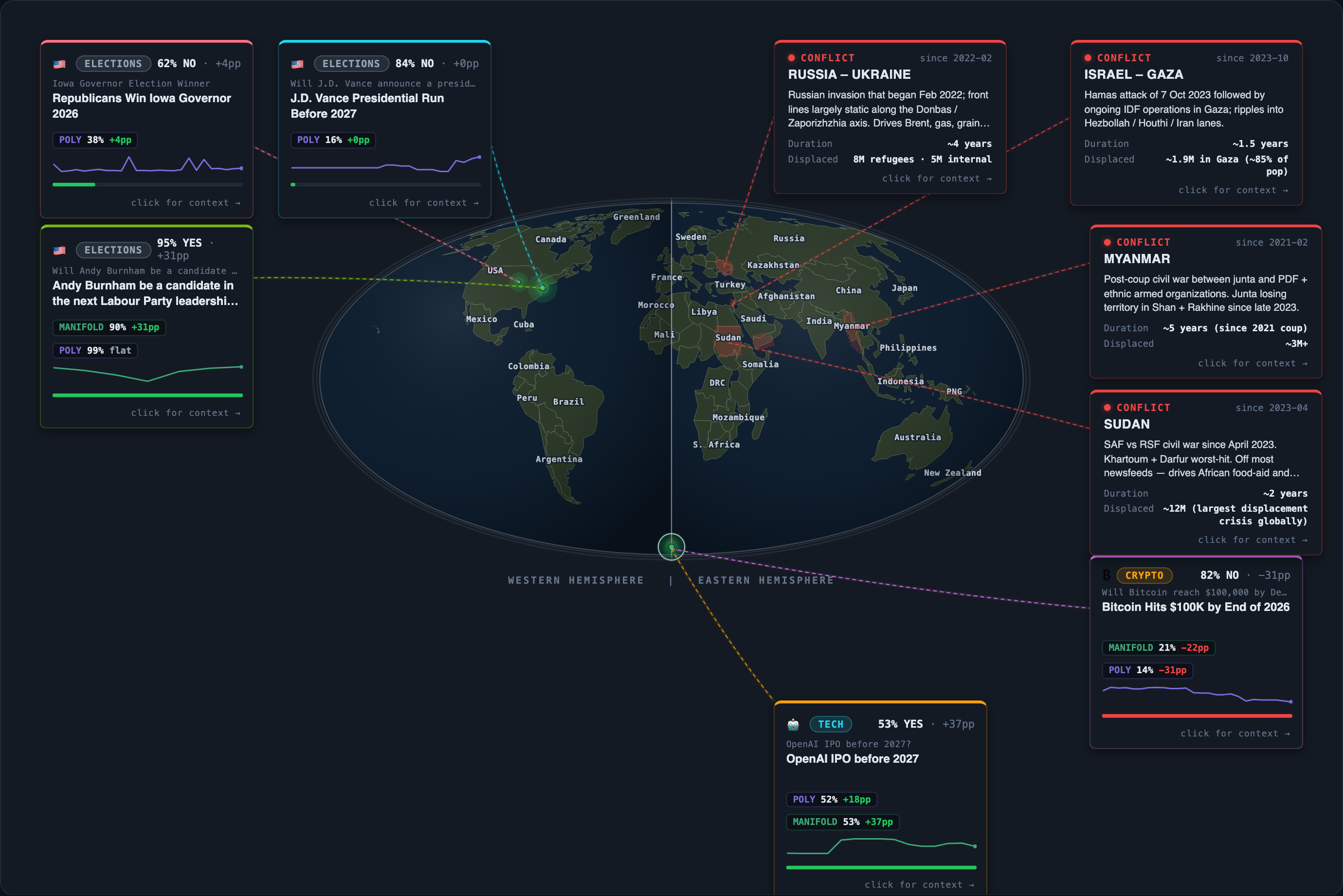
Hamas attack of 7 Oct 2023 followed by ongoing IDF operations in Gaza; ripples into Hezbollah / Houthi / Iran lanes.
Russian invasion that began Feb 2022; front lines largely static along the Donbas / Zaporizhzhia axis. Drives Brent, gas, grain, defense-stock pricing.
SAF vs RSF civil war since April 2023. Khartoum + Darfur worst-hit. Off most newsfeeds — drives African food-aid and gold-flow markets.
Houthi missile/drone attacks on Red Sea shipping diverting traffic around the Cape. Bumps WTI, shipping rates, supply-chain timing markets.
Post-coup civil war between junta and PDF + ethnic armed organizations. Junta losing territory in Shan + Rakhine since late 2023.
| AMERICAS | 3 rose 0 fell 0 flat |
| EUROPE | 0 rose 0 fell 0 flat |
| ASIA | 0 rose 0 fell 0 flat |
| MENA | 0 rose 0 fell 0 flat |
| CRYPTO | 0 rose 0 fell 0 flat |