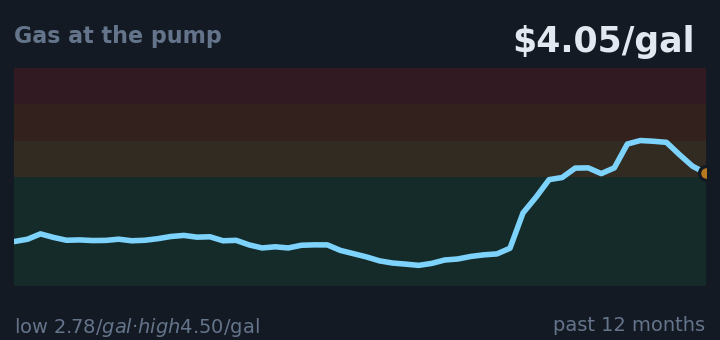
The pump price of $4.05 per gallon affects your wallet at every fill-up, and at this level historically people become frustrated with whoever is leading the government.
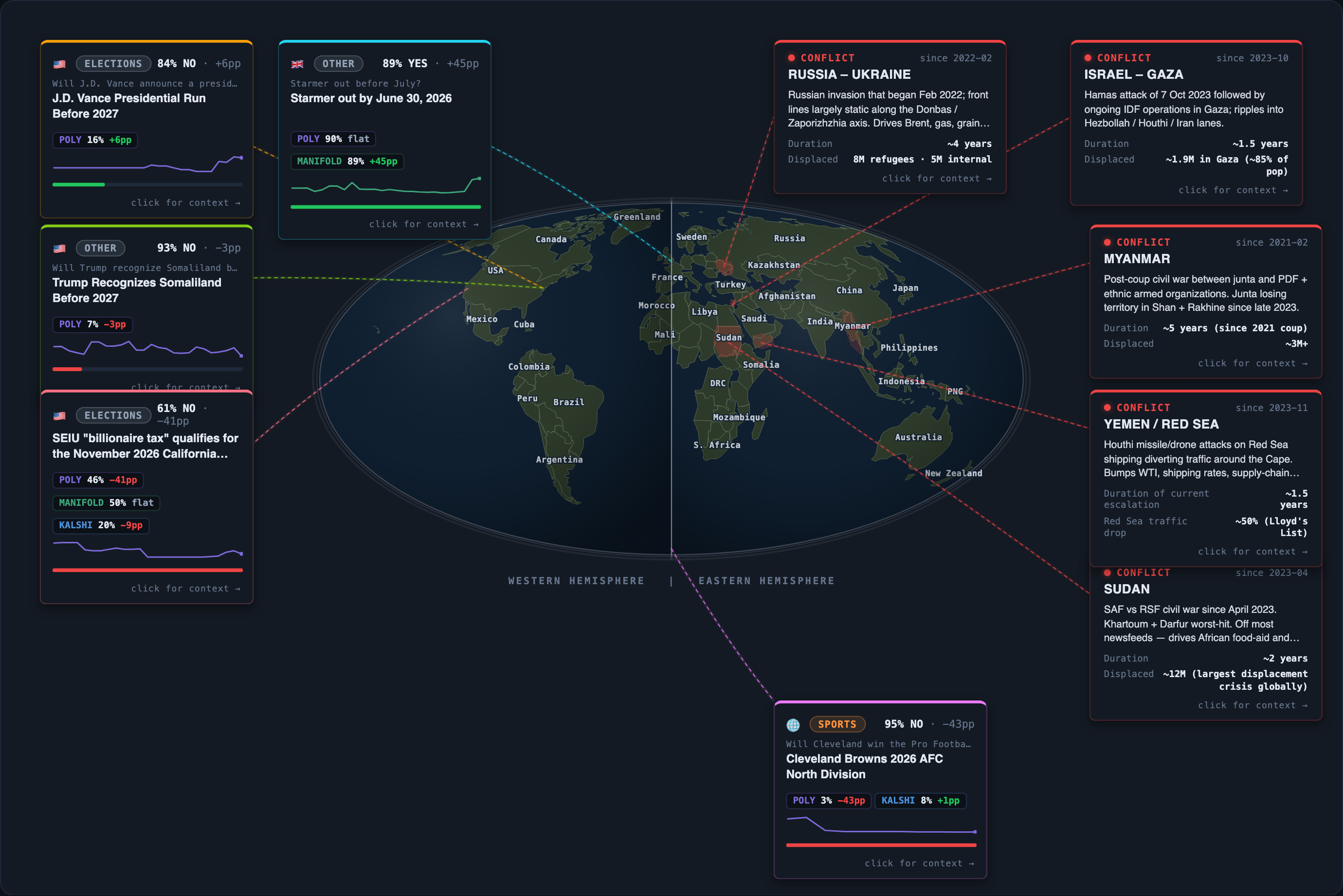
Consumer morale has hit one of its lowest points of the year, dropping to 50 from 53 just a month ago, which means people are pulling back on spending. Gas prices have eased a bit, down to $4.05 from $4.50 a month ago, but they're still elevated and at this level historically trigger voter anger toward whoever's in office. Mortgage rates have ticked up to 6.47%, making home financing more expensive, while bond markets are flashing caution: the 10-year Treasury is at 4.49%, approaching the level where policymakers typically pump the brakes on spending. These economic pressures are showing up in prediction markets, where bets on UK Prime Minister Keir Starmer's departure jumped to 89% overnight, reflecting how political instability rises when people feel economically squeezed.
→ Open the live interactive board
Get this every morning
Delivered to your inbox at 6:30, with the full archive, alerts, and the live board →
The pump price of $4.05 per gallon affects your wallet at every fill-up, and at this level historically people become frustrated with whoever is leading the government.
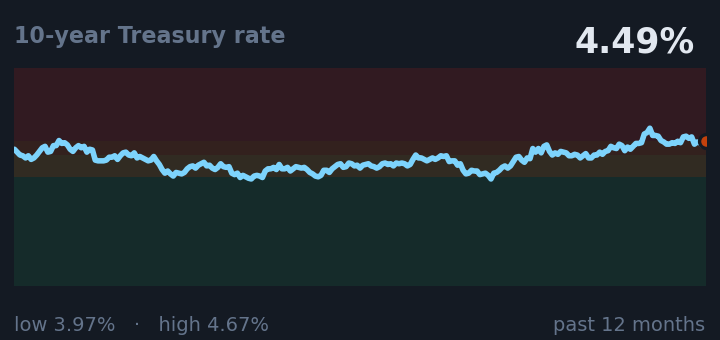
The 10-year Treasury rate of 4.49% sits just below the threshold where bond investors start forcing policy changes, and it tells us whether the government can keep spending freely.
Source: FRED
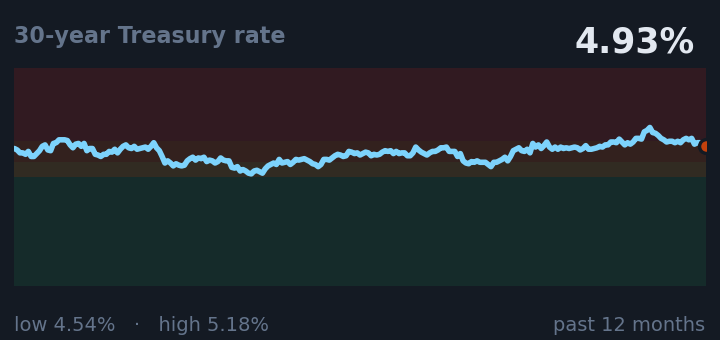
The 30-year Treasury rate at 4.93% is near the 5% level where sustained economic growth becomes much harder to maintain, reflecting stress in the financial system.
Source: FRED
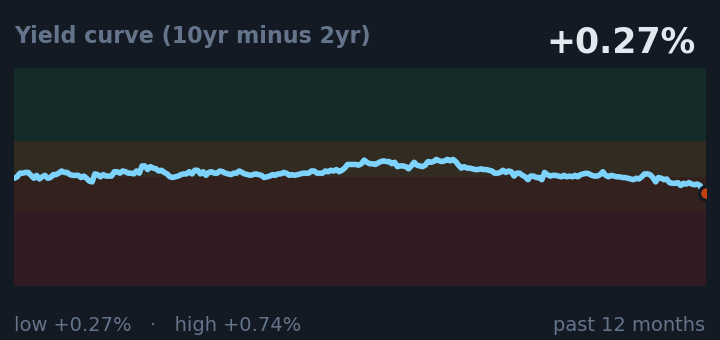
The difference between long-term and short-term interest rates is now 0.27%, and when this gap gets this small, it historically means an economic slowdown is coming.
Source: FRED
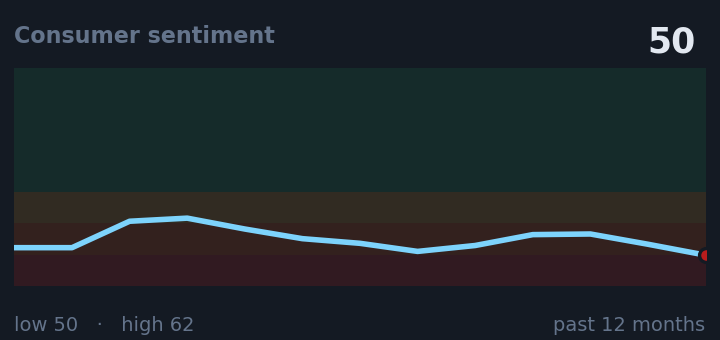
Consumer sentiment at 50 means Americans are severely pessimistic, and when people feel this gloomy about the future, they stop spending, which hurts businesses and job creation.
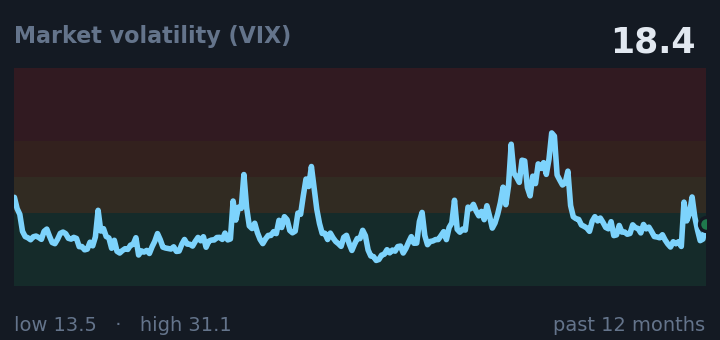
Market volatility at 18.4 is in the calm zone, meaning investors aren't panicking right now, even though the economic conditions suggest caution is warranted.
Source: FRED
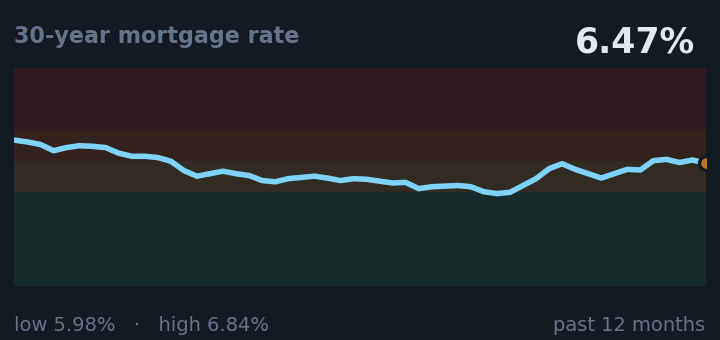
A 30-year mortgage rate of 6.47% is what homebuyers actually pay in today's market, making monthly payments unaffordable for many families compared to previous years.
Source: FREDIn plain terms: the public’s money is very confident this will happen, and grew much more sure overnight.
This tracks whether UK PM Keir Starmer loses office before July 2025. The 65-point spread (Polymarket 0% vs Manifold 65%) suggests fundamentally different event definitions—likely a date interpretation dispute (February 28 vs July deadline) rather than genuine probability disagre
In plain terms: the public’s money is leaning that this will not happen, and grew less sure overnight.
Market consensus at 10% reflects skepticism of a near-term announcement given Vance's current VP role and weak economic conditions (gas $4.12, consumer sentiment 57) that typically disfavor incumbent administration moves. Agreement across platforms suggests genuine uncertainty ra
In plain terms: the public’s money is very confident this will not happen, and grew much more sure overnight.
Polymarket and Kalshi disagree on Cleveland's chances, with Polymarket at 3% and Kalshi at 8%, indicating a 5-point spread that highlights differing opinions on the team's divisional prospects.
In plain terms: the public’s money is very confident this will not happen, and grew a little more sure overnight.
Massive 48-point spread between Kalshi (63%) and Polymarket (15%) on U.S. recognition of breakaway Somaliland. Disagreement likely reflects different interpretations of Trump's foreign policy priorities, geopolitical constraints with Somalia, and whether recognition occurs via ex
In plain terms: the public’s money is close to a coin flip on whether this will not happen, and grew more sure overnight.
—
Hamas attack of 7 Oct 2023 followed by ongoing IDF operations in Gaza; ripples into Hezbollah / Houthi / Iran lanes.
Russian invasion that began Feb 2022; front lines largely static along the Donbas / Zaporizhzhia axis. Drives Brent, gas, grain, defense-stock pricing.
SAF vs RSF civil war since April 2023. Khartoum + Darfur worst-hit. Off most newsfeeds — drives African food-aid and gold-flow markets.
Houthi missile/drone attacks on Red Sea shipping diverting traffic around the Cape. Bumps WTI, shipping rates, supply-chain timing markets.
Post-coup civil war between junta and PDF + ethnic armed organizations. Junta losing territory in Shan + Rakhine since late 2023.
| AMERICAS | 2 rose 1 fell 0 flat |
| EUROPE | 0 rose 0 fell 0 flat |
| ASIA | 0 rose 0 fell 0 flat |
| MENA | 0 rose 0 fell 0 flat |
| CRYPTO | 0 rose 0 fell 0 flat |